
Living with Prostate Cancer: Expert Support & Resources
Helping you navigate diagnosis, treatment, recovery and life beyond — with guidance, community & trusted resources.
For men (and their families) living with prostate cancer, whether newly diagnosed, undergoing treatment, or post-treatment.
“being a man gets in the way of being a man with prostate cancer….I’m a man. I haven’t got a clue how to communicate where I’m at..”
Martin Wells
The Focal Therapy Clinic patient
Why Having the Right Support Makes a Difference
You may not have discussed your health very much with your friends and family before your diagnosis. However, 1 in 8 men will get prostate cancer, and we have found that once you share your diagnosis, you might be surprised at how many people in your life have an experience of their own to share. Hearing about other peoples’ diagnosis and treatment experience can be helpful in making your own decision.
Partners carry their own version of this journey — A Partner's Perspective on Prostate Cancer explores it in depth, with guidance and support resources written for partners.
Speak to a Specialist Consultant
Get Expert Advice & The Latest Research
Subscribe to our newsletter to receive the latest updates, expert insights, and breakthrough research on prostate cancer-delivered straight to your inbox.
Our support services

Personalised Support at Every Stage
Our specially trained team of patient advocates are experienced in discussing common prostate cancer queries and explaining any terms or concepts you might be struggling with. They will be the first people you speak to when you contact us, and will help you understand your suitability.
- Specialist nurse liaison
- Out-patient clinics
- Follow-up programmes
- Telephone/email support
- Partnerships with support charities
Hear from some of our patients about the effect focal therapy has had on their lives.


Frequently asked questions
Support Options:
- Pelvic floor exercises: Strengthen muscles controlling urination; often guided by specialist physiotherapists
- Medications: PDE5 inhibitors (Viagra, Cialis) for erectile dysfunction; anticholinergics for urinary urgency
- Vacuum devices: Non-invasive options to support erectile function during recovery
- Specialist nurse consultations: Ongoing guidance throughout your recovery journey
Key Points:
- Most side effects are temporary, especially with focal therapy
- Early intervention improves outcomes
- Your clinical team monitors function at follow-up appointments
Learn More: Discuss your specific concerns at your follow-up consultation.
Practical Steps:
- Stay physically active: Light exercise within days of focal therapy; gradually increase intensity
- Eat well: Mediterranean-style diet supports recovery and general health
- Monitor your mental health: Anxiety after diagnosis is normal; seek support if needed
- Attend all follow-up appointments: PSA monitoring and clinical reviews catch any issues early
Key Points:
- Focal therapy patients typically return to normal activities within 1-2 weeks
- 95% of focal therapy patients report good to excellent quality of life at one year
- Open communication with your partner supports emotional wellbeing
Learn More: Ask your consultant about personalised recovery guidance.
Available Support:
- Couples counselling: Address relationship changes and intimacy concerns together
- Family information sessions: Help loved ones understand treatment and recovery
- Prostate Cancer UK helpline: Free support for patients and families (0800 074 8383)
- Online forums: Connect with other families navigating similar experiences
Key Points:
- Partners often experience anxiety alongside the patient
- Including family in consultations improves understanding and support
- Sexual health discussions can include partners when appropriate
Learn More: Your clinical nurse specialist can provide family-specific resources.
Recommended Changes:
- Exercise: 150 minutes moderate activity weekly; improves energy and reduces recurrence risk
- Diet: Increase vegetables, reduce red meat and processed foods; consider Mediterranean diet
- Weight management: Maintain healthy BMI to support overall health
- Limit alcohol: Moderate consumption; avoid excess
- Stop smoking: Reduces risk of complications and improves healing
Key Points:
- Lifestyle changes may reduce risk of cancer progression
- Physical activity helps manage fatigue and improves mood
- Small, consistent changes are more sustainable than dramatic shifts
Learn More: Discuss personalised recommendations with your healthcare team.
Comparison:
| Factor | Focal Therapy | Surgery | Radiotherapy |
|---|---|---|---|
| Recovery time | Days to weeks | Weeks to months | Months |
| Incontinence support | Rarely needed (<2%) | Often needed (10-30%) | Sometimes (5-10%) |
| Sexual function support | Minimal (80-90% preserved) | Extensive (20-70% affected) | Moderate (50-80% affected) |
Key Points:
- Most focal therapy patients need minimal ongoing support
- Day-case procedure means faster return to independence
- All future treatment options remain available if needed
Learn More: Book a consultation to understand your specific support pathway.
Options:
- Prostate Cancer UK: Local support groups across the UK; find yours at prostatecanceruk.org
- Macmillan Cancer Support: Offers peer support and online community forums
- NHS services: Many hospitals run prostate cancer support groups; ask your clinical nurse specialist
- Online communities: Healthunlocked.com hosts active prostate cancer forums
Key Points:
- Peer support reduces isolation and provides practical advice
- Groups welcome patients at any stage of their journey
- Many men find talking to others with similar experiences helpful
Learn More: Contact Prostate Cancer UK on 0800 074 8383 or ask your clinical team for local groups.

Learn more about Focal Therapy and Prostate Cancer
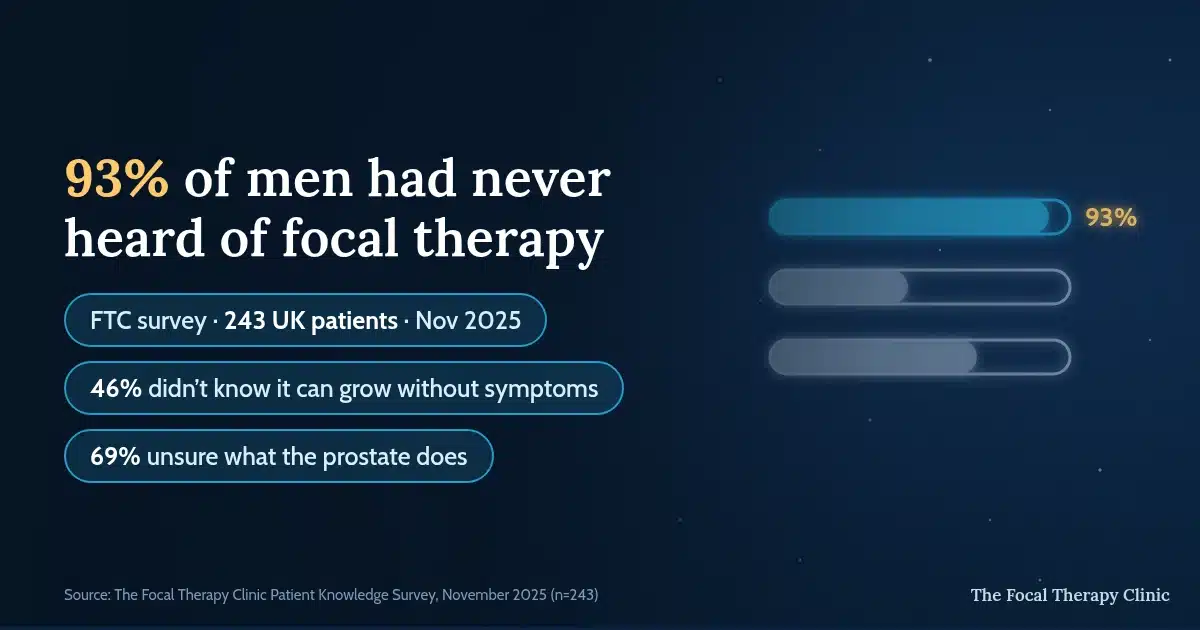
Prostate Cancer Survey: 93% of Men Had Never Heard of Focal Therapy
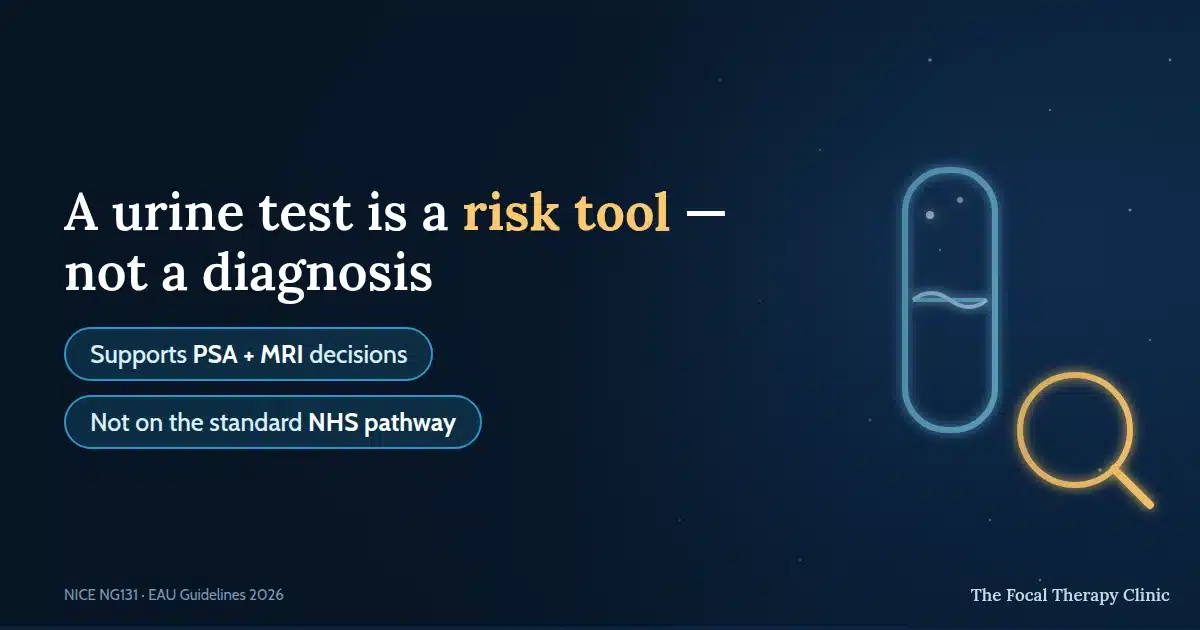
How Accurate Is a Urine Test for Prostate Cancer — and Can It Replace PSA or MRI?
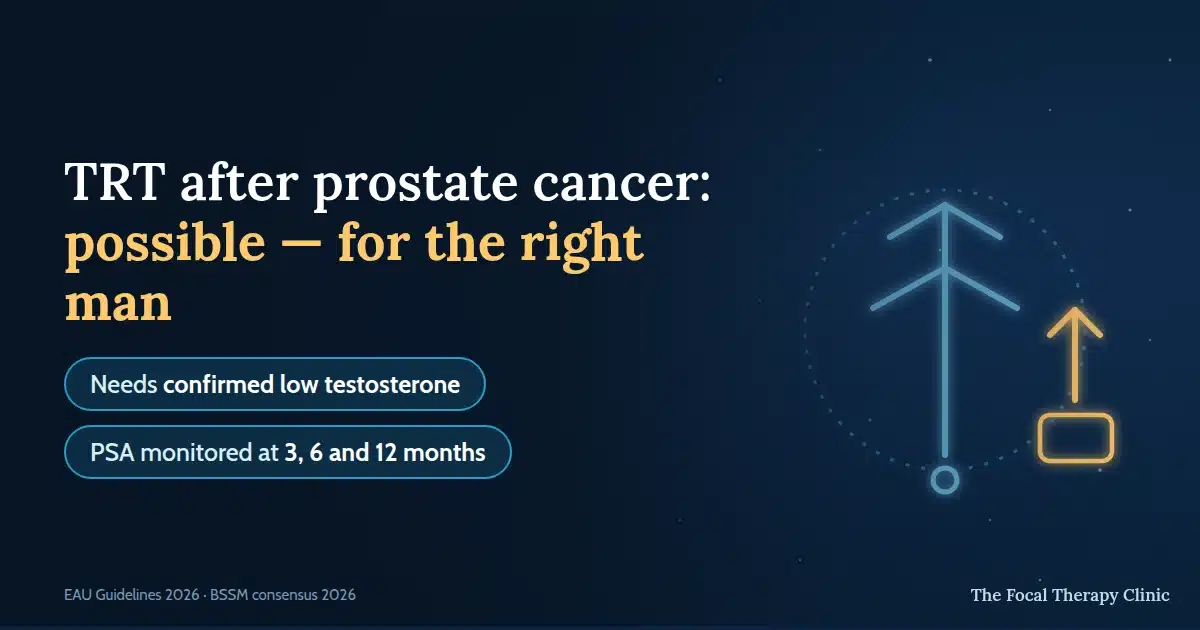
Is Testosterone Replacement Therapy Safe After Prostate Cancer Treatment?
Any questions?
If you’ve got any questions about your prostate cancer diagnosis or want to know more about HIFU or NanoKnife, don’t hesitate to get in touch with our friendly, knowledgeable team.
Contact the team
Reference List
Geometric Anatomy Basis for Safe and Effective Focal Ablation of Prostate Cancer by Irreversible Electroporation (IRE). Anatomia. 2023.
The demographic features, clinical outcomes, prognosis and treatment options for patients with sarcomatoid carcinoma of the urinary bladder: a single centre experience. International Brazilian Journal of Urology. 2018.
Subscribe to our newsletter
Get expert advice & the latest prostate cancer research - straight to your inbox.