
Prostate Cancer & Incontinence
Incontinence is one of the most well-known side effects of prostate cancer surgery, with an estimated 87% of people experiencing urinary incontinence after surgery.
However, focal therapy is less invasive and more targeted, so it gives you more chance of preserving control.
Incontinence after prostate surgery
Incontinence is a major concern for men considering whole gland therapies for prostate cancer. For many men incontinence can significantly impact their quality of life and their independence. Incontinence symptoms typically moderate over time not for all men.
Focal Therapy has very limit impact upon urinary continence. 98% of men are fully continent within 2 weeks of treatment.
| Treatment | Incontinence rate |
|---|---|
| Focal Therapy | 0%-5% |
| Radical Prostatectomy | 4% – 31% (average ~16%) |
| Radiation Therapy | ~5% – 15% (can vary by type) |
Targeted treatments and incontinence
With focal therapy, only the tumour is targeted, not your entire prostate gland. This means that you’re a lot less likely to suffer damage to the critical structures which affect your urinary system and help you control when you need to go to the bathroom.
For example, HIFU destroys your tumour through targeted ultrasound wave and is one of the focal therapies offered at The Focal Therapy Clinic. According to our own research, around 98% of men had no urinary incontinence after a HIFU procedure.
Learn more about HIFUThis content is not intended to be a substitute for professional medical advice, diagnosis, or treatment.
“…for us, one of the biggest problems was the bladder and that part of it. I think Barry would have been absolutely mortified if he didn’t have bladder control…”
Jackie
Partner of one of our Focal Therapy Clinic patients
Managing Urinary Incontinence
At The Focal Therapy Clinic, we have an abundance of resources to help manage your symptoms.
To help you understand your diagnosis and make a treatment decision, we recommend getting as much support as possible.
Support for you and your family
Whether you’re preparing for treatment like focal therapy, undergoing active surveillance, or recovering, making thoughtful dietary choices can make a difference.
Learn More
At The Focal Therapy Clinic, we’ve assembled a team of urology, radiology, oncology and patient care experts to support and provide world-class treatment to people with prostate cancer.
Meet our consultants
We know that it can be difficult to share that you are struggling with Mental Health. That’s why at every consultation, we are here to support you in making a confident decision about your treatment.
Mental health support
For many men, what their life will look like after prostate cancer treatment is one of the most important considerations in choosing the right treatment for them.
Quality of life after treatment
Whatever your age, we know that having sex is an important part of many peoples' relationships, and that the prospect of losing this due to impotence can be distressing.
Sex and relationships after treatment
Questions to ask your doctor

To determine if you are a good candidate for focal therapy, here are the key factors to consider:
-
Cancer Stage and Grade
Focal therapy is most suitable for men with early or intermediate-stage prostate cancer.
Ideal candidates have a Gleason score of 7 or lower (Grade Groups 1–3), indicating low- to intermediate-risk cancer. -
Tumour Location and Size
The cancer should be confined to the prostate and visible on an MRI.
It works best for single, localised tumours rather than multi-focal or large tumours. -
PSA Levels
Candidates typically have a PSA level of 20 ng/mL or lower. -
No Evidence of Spread
The cancer must not have spread to lymph nodes, bones, or other areas. -
Overall Health
Your general health and fitness are important to ensure the safety and success of the treatment. -
Preference for Less Invasive Treatment
Focal therapy is ideal for men who want to avoid the side effects of surgery or whole-gland radiation.
If you meet these criteria, you may be a good candidate. However, eligibility requires further assessment through tests like an MRI, biopsy, and possibly a PSMA PET CT scan to confirm the cancer’s size, location, and aggressiveness.
Yes, focal therapy is available at The Focal Therapy Clinic. The clinic specialises in advanced, minimally invasive treatments like HIFU (High-Intensity Focused Ultrasound) and NanoKnife. These treatments target cancer precisely while preserving healthy prostate tissue, reducing side effects like incontinence and erection problems.
Experience of the Team
- The clinic’s urologists are among the most experienced in the UK, with over 20 years of expertise in focal therapy.
- They use cutting-edge MRI-US fusion technology for precision treatment.
- Clinical results are excellent, with 90% of men being free from clinically significant prostate cancer one year after treatment.
- Side effects are minimal, with less than 2% experiencing incontinence and 95% maintaining erectile function.
The team includes world-leading specialists like:
- Mr. Tim Dudderidge (Southampton and South West)
- Mr. Marc Laniado (London and West Country)
- Mr. Raj Nigam (London, South East, and Scotland)
- Mr. Alan Doherty (Midlands and North of England)
If you’re considering private treatment, The Focal Therapy Clinic offers faster access and highly experienced consultants.
Focal therapy can often be repeated if prostate cancer comes back. Around 1 in 5 men may need another treatment after their initial focal therapy. This is because focal therapy targets only the visible cancer, preserving the rest of the prostate.
If cancer recurs, retreatment with focal therapy is a common option. It allows for precise targeting of new or remaining cancer while still avoiding the side effects of more invasive treatments. Additionally, having focal therapy doesn’t rule out other treatments like surgery or radiotherapy in the future, giving you flexibility in managing your cancer.
The success rates and side effects of focal therapy depend on your specific case, such as your Gleason score, PSA level, and tumour location. Here’s a general overview:
Success Rates
- Cancer Control: 88% of men avoid further treatment (like surgery or radiotherapy) for at least 5 years after one or more HIFU sessions.
- Survival: 98% have no cancer spread, and 99% are still alive overall.
- Gleason 6 or 7 Cancers: Success rates are even higher for these lower-risk cases.
Potential Side Effects
- Urinary Control: Only 2% of men need a pad for leaks.
- Erection Problems: Rare, with most men maintaining function.
- Temporary Symptoms: Mild discomfort, increased urination, or blood in urine for a few days.
- Incontinence: Very rare (<2%) and only for a short period.
- Repeat Treatment: Around 25% may need another session later.
Focal therapy is designed to treat cancer effectively while preserving your quality of life.
After focal therapy, follow-up care is essential to monitor your recovery and check for any signs of cancer returning. Here’s what you can expect:
Follow-Up Schedule
- PSA Tests:
Every 3 months during the first year to track progress. - MRI Scans:
Typically done at 9–12 months to confirm all cancer has been removed. - Biopsy:
Only if the MRI scan shows something unusual. - Regular Checks:
Monitoring urinary and sexual function to ensure recovery is on track.
This schedule helps catch any signs of recurrence early. If cancer does return, further focal therapy or other treatments like surgery or radiotherapy remain options.
Get Expert Advice & The Latest Research
Subscribe to our newsletter to receive the latest updates, expert insights, and breakthrough research on prostate cancer-delivered straight to your inbox.
Frequently asked questions
Surgery (Prostatectomy)
- The prostate is located near the bladder and the sphincter muscles that control urine flow.
- Removing the prostate can disturb these muscles and nearby nerves, leading to leakage.
- Most men experience some incontinence immediately after surgery, but it often improves over time. However, around 30% may still need at least one pad a day after 12 months.
Radiotherapy
- Radiotherapy can irritate the bladder, causing a frequent or urgent need to urinate.
- It may also weaken the sphincter muscles over time, leading to leakage.
- These issues can occur during or shortly after treatment and may persist in some cases.
Focal Therapy
- Focal therapy targets only the tumour, sparing the rest of the prostate and surrounding structures.
- This significantly reduces the risk of incontinence, with less than 2% of men needing pads after treatment.
Precision Targeting
- Focal therapy uses advanced imaging (like MRI) to precisely locate the tumour.
- Only the cancerous area is treated, sparing the sphincter muscles and nerves that control urine flow.
Minimally Invasive Approach
- Unlike surgery, which removes the entire prostate, focal therapy avoids disrupting the bladder and sphincter.
- This significantly lowers the chance of damage to the urinary system.
Proven Results
- Less than 2% of men experience incontinence after focal therapy, compared to up to 87% after surgery.
- Most men maintain full bladder control and do not need pads.
Low Risk of Incontinence
- Focal therapy targets only the tumour, sparing the sphincter muscles and nerves that control urine flow.
- Less than 2% of men need pads after treatment, making it one of the safest options for preserving bladder control.
Temporary Changes
- Some men may notice mild, temporary changes in urinary flow right after treatment.
- These usually improve within a few weeks as the body heals.
Long-Term Outcomes
- Most men maintain full bladder control and do not experience ongoing issues.
- Regular follow-ups ensure any rare problems are addressed early.
Minimally Invasive
- Focal therapy targets only the tumour, sparing the rest of the prostate and surrounding structures.
- This approach significantly reduces the risk of damaging the sphincter muscles and nerves that control urine flow.
Low Risk of Incontinence
- Less than 2% of men experience incontinence after focal therapy, compared to up to 87% after surgery.
- Most men maintain full bladder control and do not need pads.
Preserves Quality of Life
- Focal therapy is designed to minimise side effects, helping you stay dry and maintain your daily activities.
Pre-Treatment Assessment
- Your doctor will evaluate your urinary symptoms and check how they might affect treatment.
- Focal therapy is designed to minimise further impact on urinary function, even if you have mild issues.
Post-Treatment Effects
- You might notice temporary changes, like mild urgency or leakage, but these usually improve within weeks.
- Most men maintain or even improve their bladder control after focal therapy.
Long-Term Outcomes
- Focal therapy’s precision reduces the risk of worsening urinary problems.
- Regular follow-ups ensure any concerns are managed early.

Learn more about Focal Therapy and Prostate Cancer
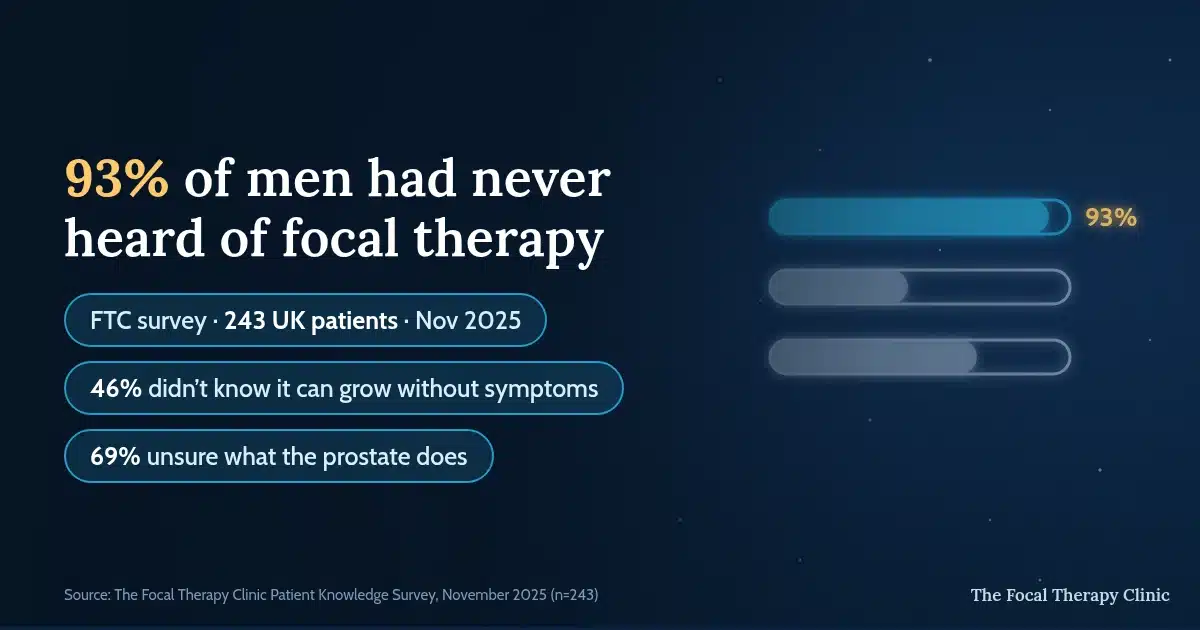
Prostate Cancer Survey: 93% of Men Had Never Heard of Focal Therapy
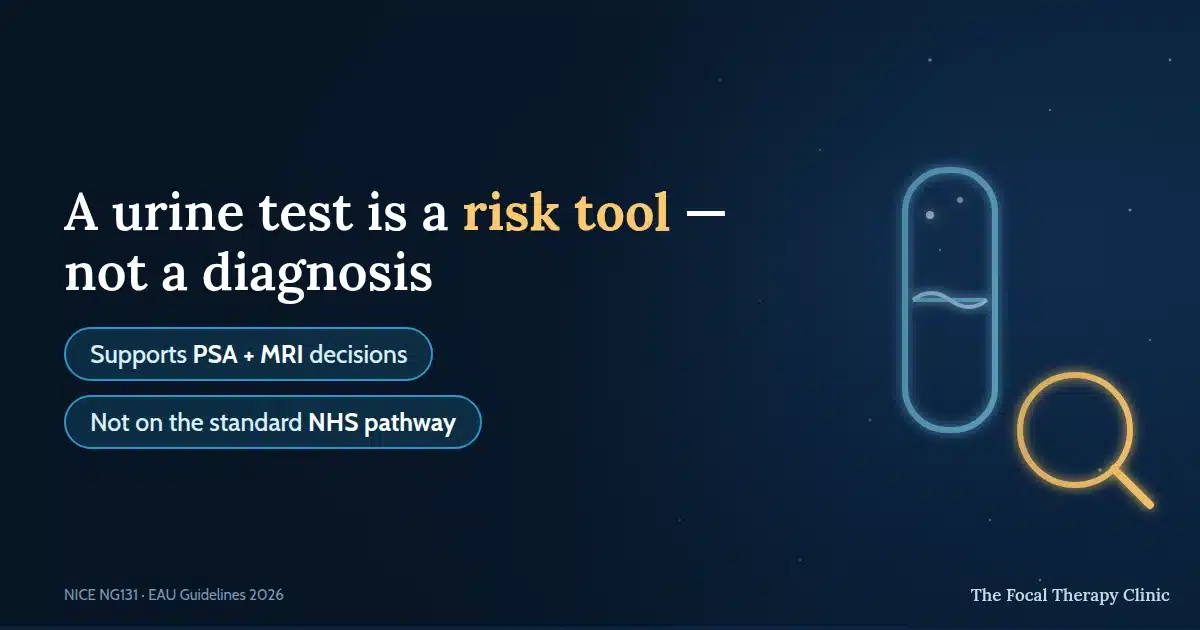
How Accurate Is a Urine Test for Prostate Cancer — and Can It Replace PSA or MRI?
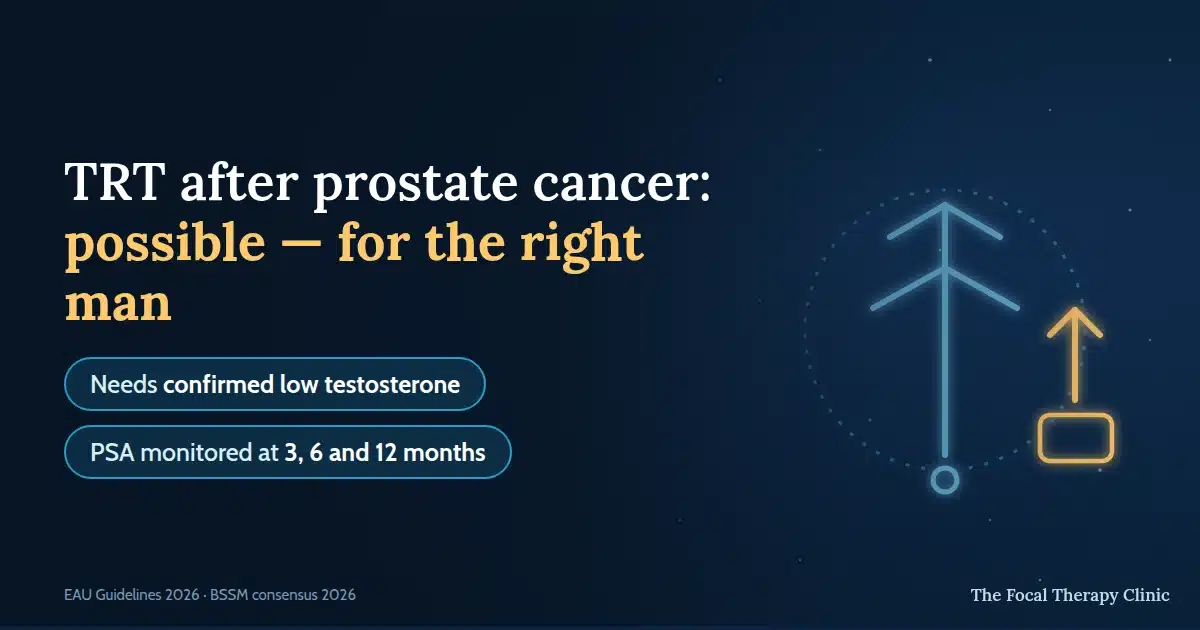
Is Testosterone Replacement Therapy Safe After Prostate Cancer Treatment?
Any questions?
If you’ve got any questions about your prostate cancer diagnosis or want to know more about HIFU or NanoKnife, don’t hesitate to get in touch with our friendly, knowledgeable team.
Contact the team
Reference List
Ahmed HU et al. (2015). Focal therapy for localized prostate cancer: a systematic review of the literature. Nature Reviews Urology.
Ganzer R, Fritsche HM, Brandtner A, et al. (2017). Five-year outcome of HIFU treatment for localized prostate cancer. Urologia Internationalis.
The Focal Therapy Clinic – Prostate Cancer Treatments (Internal Resource).
NHS Resources on Prostate Cancer (Internal/External Resource).
Subscribe to our newsletter
Get expert advice & the latest prostate cancer research - straight to your inbox.