
Quality of life after prostate cancer treatment
For many men, what their life will look like after prostate cancer treatment is one of the most important considerations in choosing the right treatment for them. At The Focal Therapy Clinic, we know that no two people are the same, and everyone we speak to has different priorities for what would give them the best quality of life.
Some of the most common questions we are asked are around how prostate cancer treatment will affect their sex life, relationship with their partner, fertility and incontinence. Thanks to new advancements such as focal therapy, getting treatment for your prostate cancer doesn’t necessarily mean diminishing or losing these.
Looking for treatment details? This page focuses on quality of life outcomes after focal therapy. For detailed information about specific treatments, visit our HIFU treatment page or our NanoKnife treatment page.
Factors influencing quality of life
| Extent and Location of Cancer |
|
| Type of Focal Therapy Used | Each type of focal therapy has a different risk profile, including HIFU and NanoKnife. Learn more about the types of focal therapy you can receive. |
| Baseline Health & Function |
|
| Post-Treatment Monitoring and Follow-Up |
|
| Lifestyle and Support System |
|
How Focal Therapy can support you
Understanding how treatment could affect or improve your mental health is also something to consider, although you might not feel as comfortable speaking about it. Our experienced consultants are here to support you throughout your journey and champion what matters to you.
Find out more about how focal therapy can support you:
Learn more about the side effects of treatment
Because focal therapy only treats the cancerous area of your prostate gland, it is much less likely that the nerves that control how you get and maintain erections will be damaged. Over 90% of men maintain erectile function after focal therapy (FTC audit, n=265).
Sex and relationships after treatment
With focal therapy, only the cancerous area is targeted, not your entire prostate gland. This means that you are much less likely to suffer damage to the critical structures which affect your urinary system — 97% of men maintain full bladder control after focal therapy.
Continence after treatment
We know that it can be difficult to share that you are struggling with Mental Health. That’s why at every consultation, we are here to support you in making a confident decision about your treatment.
Mental health support
Hear from some of our patients about the effect focal therapy has had on their lives.


“I want to encourage all men to be honest [about the potential side effects] because if they can’t deal with this before they have a procedure, then it’s too late for many of them, with a dramatic effect on their lifestyle.”
Graham Pipe
The Focal Therapy Clinic patient
Questions to ask your doctor

Success Rates
- 90% of men are cancer-free at 1 year.
- 88% of men are cancer-free at 5 years (Ganzer et al., 2017).
Quality of Life Outcomes
- Continence: 97% of men maintain full bladder control.
- Sexual function: 90%+ of men maintain erectile function (FTC audit, n=265).
- Recovery: Most men return to normal activities within 1-2 weeks.
Focal therapy is particularly suitable if you want to preserve your quality of life. Learn more about HIFU treatment or NanoKnife treatment. Potential Side Effects
- Urinary control: Only 2% of men need a pad for leaks temporarily.
- Erections: Over 90% of men maintain erections.
- Other risks: Mild urinary infections in about 8.5% of men within 6 months, but no severe bleeding reported.
HIFU is particularly suitable if you want to minimize side effects like incontinence or erection problems, which are more common with surgery or radiotherapy.
Follow-Up Schedule
1. PSA Tests: Every 3 months during the first year.
2. MRI Scan: At 12 months to check for any areas of concern.
3. Biopsy: Only if the MRI scan shows something unusual.
4. Quality of Life Monitoring: Regular checks on urinary and sexual function to ensure your quality of life is maintained.
This schedule helps catch any signs of recurrence early and ensures side effects are managed effectively.
Get Expert Advice & The Latest Research
Subscribe to our newsletter to receive the latest updates, expert insights, and breakthrough research on prostate cancer-delivered straight to your inbox.
Frequently asked questions
It is particularly suitable if you want to preserve your quality of life — avoiding side effects like incontinence or erectile dysfunction that are more common with surgery or radiotherapy.
MRI and biopsy should show a clearly targetable cancer spot, and you should be in good health with an expected lifespan of at least 8-10 more years. Learn more about HIFU treatment or NanoKnife treatment.
Since focal therapy targets only the cancerous area, retreatment preserves healthy tissue, making it safer than whole-gland treatments.
PSA tests, MRI scans, and sometimes biopsies guide whether further treatment is needed.
Quality of life outcomes are excellent:
- 97% maintain full bladder control.
- 90%+ maintain erectile function (FTC audit, n=265).
- Most men return to normal activities within 1-2 weeks.
- PSA tests every 3 months for the first year.
- An MRI at 12 months.
- Biopsy only if the MRI shows a concern.
- Regular quality-of-life monitoring of urinary and sexual function.
Focal Therapy: Preserves bladder control and sexual function for most men (85–95% maintain erections) and allows quick recovery within 1–2 weeks with mild short-term side effects.
Surgery: Has higher risks of incontinence (10–30%) and erectile dysfunction (40–70%) with longer recovery (4–6 weeks).
Radiotherapy: Carries moderate risks of urinary and bowel problems.
Active Surveillance: Has minimal physical side effects but may cause anxiety about cancer progression.
- Treatment type and its side effects.
- Overall health and lifestyle habits (diet, exercise, smoking, stress management).
- Emotional health (stress, anxiety, support systems).
- Personal priorities regarding sexual function, bladder control, and recovery time.
The choice between focal therapy, surgery, radiotherapy, or active surveillance should align with your individual quality of life goals.
1. Preserves Bladder Control
- Minimal risk of incontinence by avoiding unnecessary tissue damage.
2. Maintains Sexual Function
- Protects surrounding nerves critical for erections.
3. Quick Recovery
- Most men return to light activities within days to a week.
4. Fewer Side Effects
- Only mild and short-term urinary symptoms compared to surgery or radiotherapy.
5. Emotional Well-Being
- Effective cancer control with preserved quality of life reduces anxiety and supports overall confidence.
Patient Perspective
> "Focal therapy lets us treat the cancer while preserving the patient's quality of life." – Mr Tim Dudderidge.

Learn more about Focal Therapy and Prostate Cancer
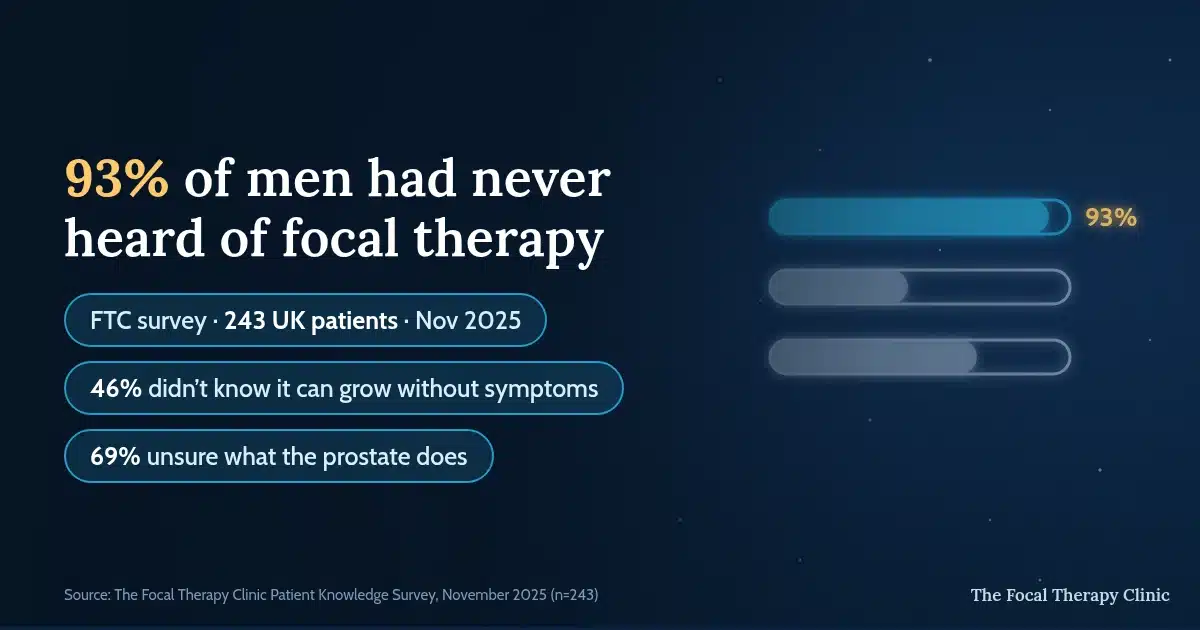
Prostate Cancer Survey: 93% of Men Had Never Heard of Focal Therapy
Is Testosterone Replacement Therapy Safe After Prostate Cancer Treatment?
How Accurate Is a Urine Test for Prostate Cancer — and Can It Replace PSA or MRI?
A Guide to Prostate Cancer Survivorship Care Plans
Any questions?
If you have any questions about quality of life after prostate cancer treatment, or want to know more about how focal therapy can help preserve your wellbeing, do not hesitate to get in touch with our friendly, knowledgeable team. We also offer detailed information about HIFU treatment and NanoKnife treatment.
Contact the team
Reference List
Ahmed HU et al. (2015). Focal therapy for localised prostate cancer: a systematic review of the literature. Nature Reviews Urology.
Ganzer R, Fritsche HM, Brandtner A, et al. (2017). Five-year outcome of HIFU treatment for localised prostate cancer. Urologia Internationalis.
The Focal Therapy Clinic – Prostate Cancer Treatments (Internal Resource).
NHS Resources on Prostate Cancer (Internal/External Resource).
Subscribe to our newsletter
Get expert advice & the latest prostate cancer research - straight to your inbox.