
Where does prostate cancer spread first – Bones, Lymph Nodes or Organs?
Prostate cancer spreads first to the pelvic lymph nodes and bones, particularly the spine, pelvis, ribs, and hips. Bone involvement occurs in around 80% of metastatic prostate cancer cases, according to NCCN Guidelines v3 2024 and EAU Guidelines 2024. Liver, lung, and brain involvement is less common and usually occurs in more advanced disease.
Bones and lymph nodes first: Prostate cancer typically reaches the pelvic lymph nodes and axial skeleton before other organs.[5]
Grade drives risk: A higher Gleason score / ISUP Grade Group means a greater chance of spread.[6]
PSMA-PET finds it earliest: It is the most sensitive scan for detecting early metastasis.[7]
Early detection matters most: Cancer found before it spreads gives men the widest choice of treatments, including focal therapy.
Advanced disease is treatable: Modern hormone, targeted, and radioligand therapies help many men live well for years.[3]
Where does prostate cancer spread first?
| Spread Site | Approximate Frequency in Metastatic Cases | Typical Symptoms |
|---|---|---|
| Bones | ~80–90% | Deep bone pain, night pain, fractures, spinal cord compression |
| Pelvic lymph nodes | ~25–30% | Pelvic pressure, groin swelling, leg swelling |
| Liver | ~10% | Right-sided abdominal pain, jaundice, weight loss |
| Lungs | ~10% | Shortness of breath, persistent cough, chest pain |
| Brain | Rare, <5% | Headaches, confusion, seizures, weakness |
*Clinical metastatic frequencies per NCCN Guidelines v3.2024.[4] Autopsy series (Bubendorf et al., 1,589 patients[5]) show higher visceral (liver and lung) involvement at end-stage than the clinical figures shown here.
How does prostate cancer progress and spread?
Dr Christos Mikropoulos explains what advanced prostate cancer means — how doctors describe cancer that has spread beyond the prostate, and what that means for treatment.
Prostate cancer usually progresses from disease confined to the prostate, to locally advanced disease involving nearby tissue, to metastatic disease where cancer cells have reached distant sites. Most prostate cancers diagnosed in the UK are still localised at the time of diagnosis.
This is why early testing and accurate staging matter. When cancer is found before it spreads, men often have more treatment choices and a better chance of preserving urinary and sexual function.

Localised vs advanced disease:
| Localised Prostate Cancer | Advanced Prostate Cancer |
|---|---|
| Confined to prostate | Spread to lymph nodes/bones/organs |
| Widest treatment options (active surveillance, focal therapy, surgery, radiotherapy) | Systemic treatment required; M1a/b/c staging |
| Best chance of preserving function | Outcomes have significantly improved |
TNM staging uses M0 when there is no metastasis, M1a for distant lymph nodes, M1b for bone, and M1c for other organs, as set out in EAU Guidelines 2024.
Learn More About Localised Prostate Cancer Learn More About Advanced Prostate Cancer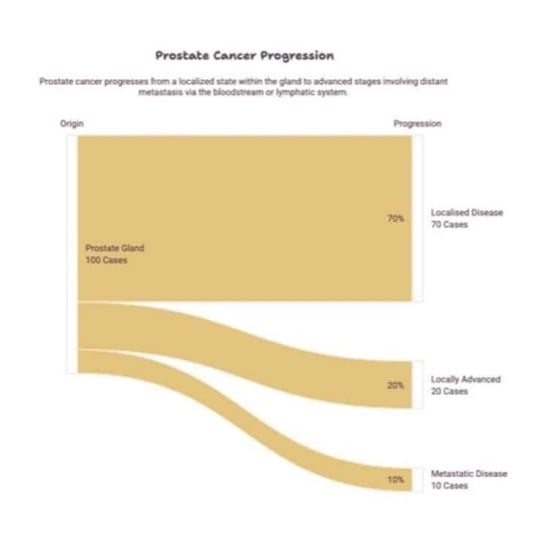
What causes cancer to spread?
Prostate cancer spreads when cancer cells break away from the original tumour and travel through the bloodstream or lymphatic system to settle in new tissue. This process is called metastasis, and it happens when cancer cells enter a blood or lymph vessel, survive while travelling, leave the vessel, and begin growing in another part of the body. These new cancer cells can then form secondary tumours in areas such as lymph nodes, bones, or organs. Higher-grade cancers are biologically more likely to metastasise because their cells tend to grow and invade surrounding tissue more aggressively.
Role of Gleason score:
The Gleason score is the single most important predictor of whether prostate cancer will spread. The Gleason score usually runs from 6 to 10, with Gleason 6 considered low risk and Gleason 8–10 considered high risk. ISUP Grade Groups 1–5 are now also used alongside Gleason grading.
Gleason 8–10 cancers have a much higher chance of metastasis than Gleason 6 or 3+4=7 cancers. Men often ask how quickly does prostate cancer spread, and the answer depends strongly on grade, PSA doubling time, and stage at diagnosis.
Learn More About Gleason Scores
Where does prostate cancer spread to in the body?
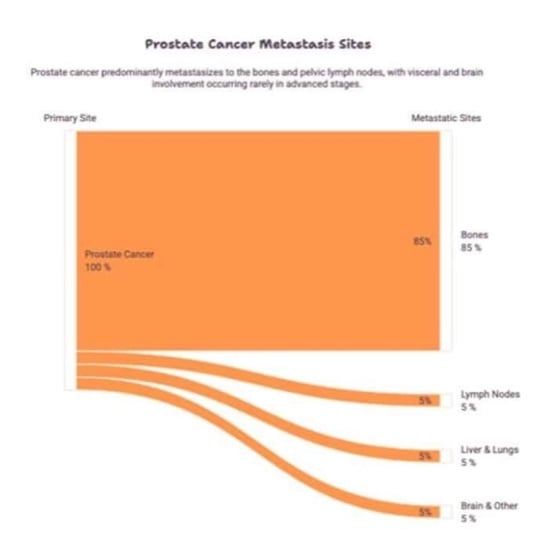
Prostate cancer spreads predominantly to the bones and pelvic lymph nodes, with the liver, lungs, and brain affected less commonly in advanced stages.
The pattern is not random. Prostate cancer spread often follows the body’s lymphatic drainage routes and the blood supply to the axial skeleton. This helps doctors predict where would prostate cancer spread to and which scans are most useful.

Spread to the bones
The bones are the most common site of prostate cancer metastasis, with bone involvement occurring in approximately 80–90% of men with metastatic disease, according to NCCN Guidelines v3 2024. The lumbar spine, pelvis, ribs, thoracic spine, hips, and femur are among the most commonly affected areas. Prostate cancer has a bone-tropic pattern, which means it has a strong tendency to settle and grow in bone tissue.
Bone metastasis symptoms may include:
Persistent deep aching bone pain, especially at night
Weakness or numbness in the legs if the spine is affected
Increased fracture risk
Spinal cord compression, which is a medical emergency
The STAMPEDE trial[1] found that radiotherapy to the primary tumour can improve outcomes in selected men with low-volume metastatic prostate cancer. This is one reason accurate staging is important before treatment starts.
Spread to the lymph nodes
Pelvic lymph nodes are typically the first site where prostate cancer spreads outside the gland, often before bone involvement is detectable. The prostate drains into nearby lymph node groups, including obturator, internal iliac, external iliac, common iliac, and para-aortic nodes. Small-volume lymph node disease may cause no symptoms and may only be found on imaging.
Possible symptoms include:
Swelling in the lower abdomen or groin
Fluid build-up in the legs, called lymphoedema
Pain, heaviness, or pressure in the pelvic area
Small lymph node metastases are often picked up on PSMA-PET imaging before they cause symptoms. This can help doctors stage the disease more accurately and choose the right treatment plan.


Spread to the liver and lungs
Liver and lung metastases occur in roughly 10% of metastatic prostate cancer cases each and usually develop in more advanced disease, particularly castration-resistant prostate cancer.
Lung spread may cause:
Shortness of breath
A persistent cough
Chest pain, or repeated chest infections.
Liver spread may cause:
Right-sided abdominal pain
Jaundice
Appetite loss, or unexplained weight loss.
Visceral involvement is linked with a poorer outlook than bone-only metastatic disease, according to NCCN Guidelines v3 2024[2]. This does not mean treatment is no longer useful, but it usually means doctors need a more intensive systemic treatment plan.
Spread to the brain and other organs
Prostate cancer spreads to the brain or adrenal glands rarely, typically only in very advanced or castration-resistant disease.
Brain metastases can cause:
New headaches
Vision changes
Confusion
Seizures
Weakness on one side of the body
These symptoms should always be taken seriously. Brain metastases require multidisciplinary care from oncology, radiology, neurology, and sometimes neurosurgery teams, so any new neurological symptom in a man with known prostate cancer should be assessed promptly.


How do doctors detect prostate cancer spread?
Doctors detect prostate cancer spread using a combination of imaging scans, blood tests, and tissue analysis, with PSMA-PET imaging now considered the most sensitive method for identifying early metastasis. The right test depends on PSA level, cancer grade, symptoms, and previous treatment. The Focal Therapy Clinic’s specialist consultants review each case in detail before advising on next steps.
Worried your cancer may have spread? Our specialists can review your staging — and if your cancer is still localised, talk you through your focal therapy options.
Book a consultation
PSMA-PET and advanced imaging
PSMA-PET, or prostate-specific membrane antigen positron emission tomography, is the most sensitive imaging test for detecting prostate cancer spread and can identify metastases that conventional CT and bone scans miss. A PSMA-PET scan uses a tracer that attaches to prostate cancer cells. This can show small areas of disease in lymph nodes, bones, or other tissues.
Multiparametric MRI is used for local staging of the prostate and surrounding structures. CT scans can assess lymph nodes and organs, while technetium-99m bone scans remain a traditional option for bone disease. EAU-EANM-ESTRO-ESUR-ISUP-SIOG Guidelines 2024 [3] recommend considering PSMA-PET for staging in men with high-risk prostate cancer.


PSA and alkaline phosphatase
The PSA test is the primary blood test used to monitor for prostate cancer recurrence or spread, with rising levels often providing the earliest signal of disease progression. PSA does not show where cancer is located, but it helps doctors decide when imaging is needed. PSA doubling time is useful because a fast rise can suggest more active disease. Alkaline phosphatase is another blood marker that can rise when prostate cancer involves the bones, while NCCN Guidelines v3 2024 support PSA monitoring as part of ongoing prostate cancer assessment.
Learn More About PSA Tests
Genetic and genomic testing
Genetic testing for BRCA1 and BRCA2 mutations is now recommended for men with metastatic prostate cancer because these mutations influence both treatment selection and family screening. BRCA2 mutations are linked with more aggressive prostate cancer and a higher chance of spread. Men with these mutations may be eligible for PARP inhibitor therapy. Genetic results can also guide family counselling, as male relatives may have a higher prostate cancer risk and female relatives may have increased breast or ovarian cancer risk.
Learn More About Genetic Screening

What are the treatment options for metastatic prostate cancer?
Hormone therapy and chemotherapy
Hormone therapy, also called androgen deprivation therapy, lowers testosterone to slow prostate cancer growth and is the cornerstone of treatment for metastatic disease. Common treatments include LHRH agonists such as goserelin and androgen receptor pathway inhibitors such as enzalutamide or abiraterone. These drugs reduce or block the hormonal signals that prostate cancer cells use to grow.
Docetaxel chemotherapy may be added for men with higher-volume metastatic hormone-sensitive prostate cancer. Triplet therapy combines hormone therapy, docetaxel, and an androgen receptor pathway inhibitor. Evidence from STAMPEDE supports treatment intensification for suitable men with metastatic disease.
Learn More
Targeted and radioligand therapies
Targeted therapies and radioligand treatments are newer options for metastatic prostate cancer that has stopped responding to hormone therapy. PARP inhibitors such as olaparib and rucaparib may be used in men with BRCA or other DNA repair gene mutations. These treatments target weaknesses in cancer cell repair pathways.
Lutetium-177-PSMA-617 is a PSMA-targeted radioligand therapy for PSMA-positive castration-resistant prostate cancer. It delivers radiation directly to cells that express PSMA. The VISION trial showed that Lutetium-177-PSMA-617 improved outcomes in selected men with metastatic castration-resistant prostate cancer.
Learn More
Radiotherapy for symptom control
Radiotherapy is used in metastatic prostate cancer to control symptoms, particularly bone pain, and in selected cases to treat the primary tumour itself. External beam radiotherapy can reduce pain from bone metastases and help stabilise areas at risk of fracture. The STAMPEDE trial found that radiotherapy to the prostate improved survival in men with low-volume metastatic disease. Radium-223 may be considered for bone-predominant castration-resistant prostate cancer without significant visceral disease.
Learn More
What is the outlook for men with metastatic prostate cancer?
Modern treatments have significantly improved survival for men with metastatic prostate cancer, with many now living for several years with a good quality of life. The outlook depends on how far the disease has spread, how aggressive the cancer is, and how well it responds to first-line hormone therapy. Bone-only disease usually has a better prognosis than disease involving the liver, lungs, or brain.
Key factors affecting outlook include:
Initial cancer grade and stage
Sites of metastasis, with bone-only disease typically better than visceral disease
Response to first-line hormone therapy
Overall health and fitness
Access to modern systemic therapies

What to do if you’re at risk
When to seek medical advice
Speak with your GP or oncology team promptly if you notice
- new persistent bone pain
- unexplained weight loss
- lasting fatigue
- neurological symptoms or changes in urinary or bowel function.
- New night pain, leg swelling, weakness, numbness, appetite loss, or a rising PSA level should also be discussed.
Early discussion of symptoms can lead to faster diagnosis, clearer staging, and better treatment planning.
Importance of regular monitoring
Men already diagnosed with prostate cancer require regular monitoring through PSA testing, imaging, and symptom review to detect any signs of progression early. After focal therapy or active surveillance, monitoring is often every three to six months for the first two years, then less often if results remain stable. A common question is: can prostate cancer spread even when symptoms are absent, and regular follow-up helps doctors answer this through test results rather than symptoms alone. The exact schedule should match the man’s risk category and treatment plan.
Why Choose The Focal Therapy Clinic?
Only clinic using advanced MRI US fusion technologies for precision treatment
Learn MoreWe have helped thousands of people with prostates understand their diagnosis and choose the right treatment for them and their prostate cancer.
Learn MoreWe've assembled a team of urology, radiology, oncology and patient care experts with over 75 years of experience.
Learn MoreOur own data shows that, after 1 year of focal therapy for localised prostate cancer, 90% of clinically significant cancer is eliminated (FTC audit, n=265).
Learn MoreQuestions to ask your doctor or nurse

Bring these to your appointment, or speak to our team first.
Frequently asked questions

Learn More About Living With Prostate Cancer

Prostate Cancer Survey: 93% of Men Had Never Heard of Focal Therapy

How Accurate Is a Urine Test for Prostate Cancer — and Can It Replace PSA or MRI?

Is Testosterone Replacement Therapy Safe After Prostate Cancer Treatment?
Any questions?
If you’ve got any questions about your prostate cancer diagnosis or want to know more about HIFU or NanoKnife, don’t hesitate to get in touch with our friendly, knowledgeable team.
Contact the team
Reference List
- Parker CC, James ND, Brawley CD, et al. Radiotherapy to the primary tumour for newly diagnosed, metastatic prostate cancer (STAMPEDE): a randomised controlled phase 3 trial. Lancet. 2018;392(10162):2353-2366. DOI: 10.1016/S0140-6736(18)32486-3
- NCCN Clinical Practice Guidelines in Oncology: Prostate Cancer, Version 3.2024. National Comprehensive Cancer Network. nccn.org/guidelines
- EAU-EANM-ESTRO-ESUR-ISUP-SIOG Guidelines on Prostate Cancer, 2024. European Association of Urology. uroweb.org/guidelines/prostate-cancer
- NCCN Clinical Practice Guidelines in Oncology: Prostate Cancer, Version 3.2024 (metastatic site frequencies). National Comprehensive Cancer Network.
- Bubendorf L, Schöpfer A, Wagner U, et al. Metastatic patterns of prostate cancer: an autopsy study of 1,589 patients. Hum Pathol. 2000;31(5):578-583. PMID: 10836297. Autopsy series; end-stage visceral involvement is higher than clinical metastatic frequencies.
- Epstein JI, Egevad L, Amin MB, et al. The 2014 ISUP Consensus Conference on Gleason Grading (ISUP Grade Groups). Am J Surg Pathol. 2016;40(2):244-252.
- Hofman MS, Lawrentschuk N, Francis RJ, et al. Prostate-specific membrane antigen PET-CT in patients with high-risk prostate cancer before curative-intent surgery or radiotherapy (proPSMA): a prospective, randomised, multicentre study. Lancet. 2020;395(10231):1208-1216. DOI: 10.1016/S0140-6736(20)30314-7
Medically authored by Dr Aqua Asif (Clinical Research Fellow, UCL Division of Surgery and Interventional Sciences; co-author of the VISION MRI-biopsy meta-analysis, European Urology 2024, and PI-QUAL, Radiology 2023). Clinically reviewed by Mr Alan Doherty (Consultant Urological Surgeon, GMC 3279241) and Dr Christos Mikropoulos (Consultant Clinical Oncologist, GMC 4692210; co-author of the IMPACT BRCA-screening study, Lancet Oncology 2021, and a review of serum biomarkers in metastatic prostate cancer, Diagnostics 2020). Featured: Mr Marc Laniado (Consultant Urological Surgeon, GMC 3343931).
Subscribe to our newsletter
Get expert advice & the latest prostate cancer research - straight to your inbox.