
At a Glance
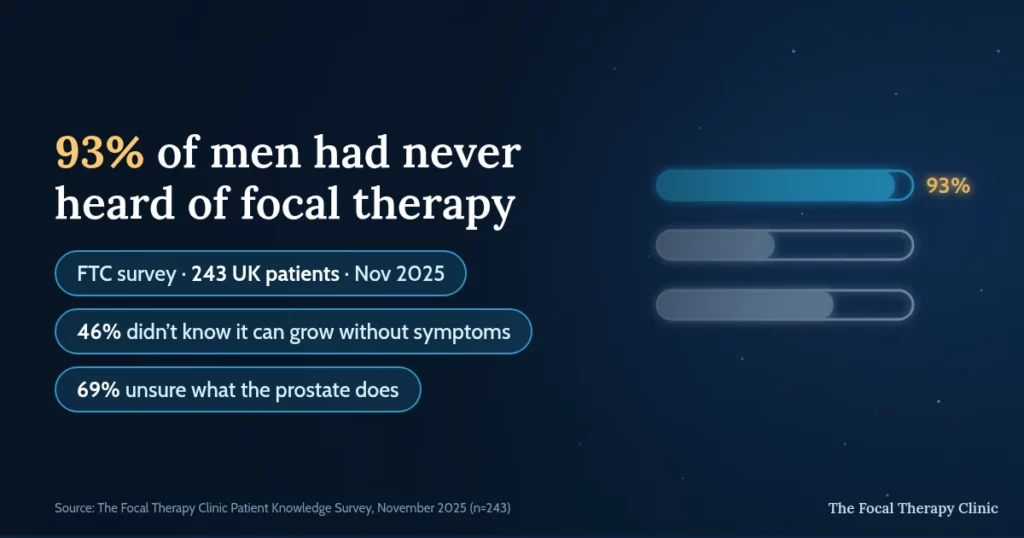
A survey of 243 prostate cancer patients treated at The Focal Therapy Clinic found wide gaps in men’s knowledge before diagnosis. Almost half (46%) did not know prostate cancer can develop without symptoms, and 93% had never heard of focal therapy. The findings point to a clear need for earlier, smarter, personalised screening.
- 243 men surveyed — all treated for prostate cancer at The Focal Therapy Clinic; most learned the key facts only after diagnosis
- Silent progression — 46% did not know prostate cancer can advance without noticeable symptoms
- Limited prostate knowledge — 69% had poor understanding of what the prostate does; 40% knew little about PSA testing
- Treatment awareness low — 31% knew nothing of treatment options before diagnosis; 93% had never heard of focal therapy
- Smarter screening — experts call for personalised, risk-based PSA screening to catch aggressive cancers early, when less invasive options remain open
A recent prostate cancer survey conducted by The Focal Therapy Clinic reveals significant gaps in men’s understanding of prostate cancer symptoms, screening, and available treatments. Many respondents reported limited knowledge of how the disease develops and how it is detected. The findings highlight the need for improved education so men can recognise risks earlier and make informed decisions about their care.
The survey gathered responses from 243 patients who had received treatment at The Focal Therapy Clinic, and the results reveal that many men only learned key information about the condition after their diagnosis.
A large proportion of respondents did not realise that prostate cancer may develop silently. Nearly half of those surveyed were unaware that the disease can progress without symptoms. This reinforces the importance of screening and early detection, which can allow men to access less invasive treatments such as focal therapy.
What Did Men Know About Prostate Cancer Before Diagnosis?
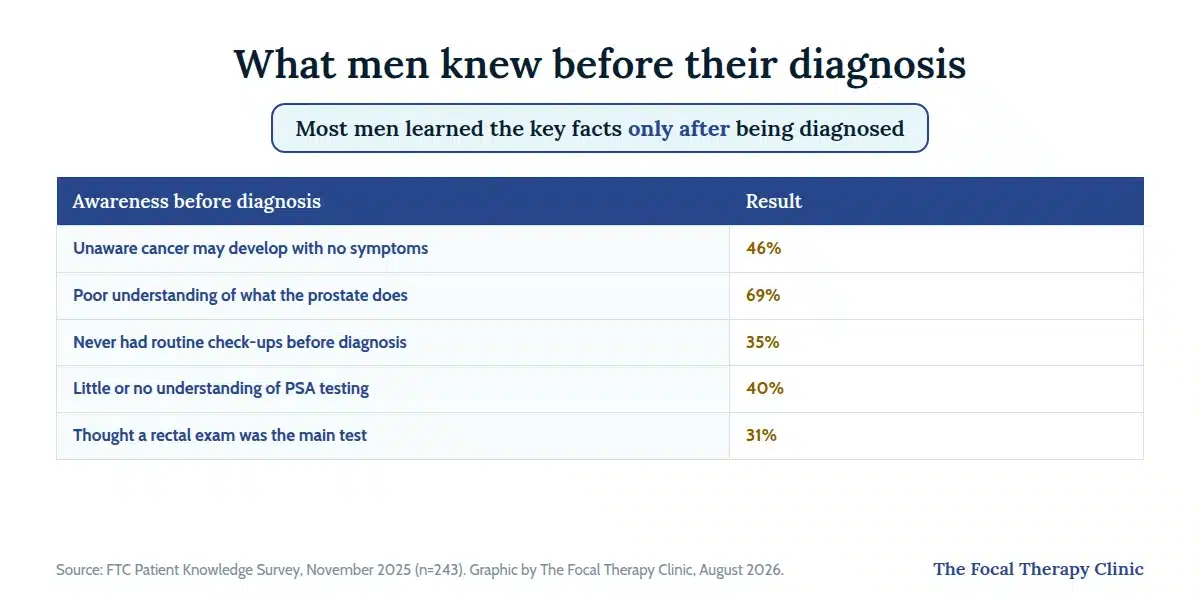
Many men had limited understanding of the disease before their diagnosis. Awareness of screening, symptoms, and prostate function was often low. These knowledge gaps can delay diagnosis and reduce opportunities for early treatment.
Almost half of respondents said they did not know that prostate cancer may develop without physical warning signs. Many also lacked a clear understanding of how screening works or when to seek medical advice.
| Awareness before diagnosis | Result |
|---|---|
| Unaware cancer may develop with no symptoms | 46% |
| Poor understanding of what the prostate does | 69% |
| Had never had routine check-ups before diagnosis | 35% |
| Had little or no understanding of PSA testing | 40% |
| Thought a rectal exam was the main prostate cancer test | 31% |
Many respondents said they had only a limited understanding of the prostate before diagnosis. 11% said they did not know what the prostate is, while others said they had heard of it but did not understand its role. Understanding the function of the prostate helps men recognise potential health changes and know when to seek advice.
Knowledge of screening tests was also limited. Some men believed that a rectal examination is the primary diagnostic test, even though a PSA blood test and MRI play a larger role in detection. A simple blood test can measure prostate-specific antigen (PSA) levels and help identify potential concerns earlier.
Many patients reported that they did not recognise early symptoms or risk factors before diagnosis. Some cancers develop quietly without noticeable warning signs. Men often only seek advice once a cancer spreads to nearby tissues or organs, which can make treatment more complex.
The findings also show that routine medical visits remain important. Regular discussions with a doctor can help men understand their risk factors and ask the right questions about a referral. Access to clear information and ongoing support can help men and their families recognise warning signs sooner.
Expert View: Why Earlier Detection Matters
Mr Marc Laniado explains why early diagnosis of prostate cancer matters — how catching it sooner keeps every treatment option open.
“Education about prostate cancer helps men and their families understand risk, recognise problems early, and feel confident about when to seek help rather than just keeping their fingers crossed. Screening smartly — that is, testing men at risk when they can benefit, with the right tests — can catch aggressive cancers early when they’re highly curable with fewer side effects, while avoiding unnecessary tests, biopsies and anxiety for those at low risk.” — Mr Marc Laniado, Consultant Urological Surgeon (FRCS(Urol), GMC: 3343931)
The survey also explored how well men understood prostate anatomy and function before diagnosis. Most respondents said their knowledge was limited or incomplete. Only a small number reported feeling very confident in their understanding of the prostate.
These findings highlight how important education is for men and their families. Clear information can help people understand how prostate cancer develops and how it is monitored. Better awareness may encourage men to speak with healthcare professionals earlier and ask about screening.
What Did Men Know About Treatment Options?
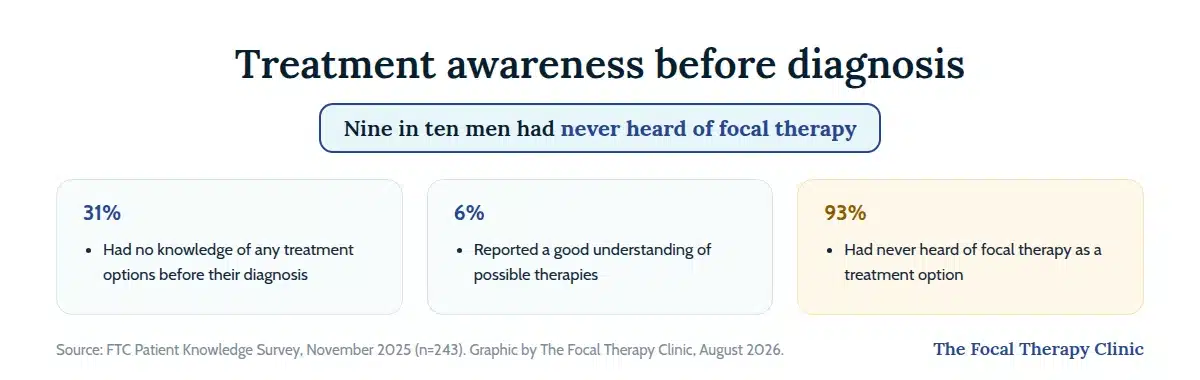
The survey also examined how much men knew about treatment options before their diagnosis. Many respondents said they had little understanding of available treatments or how doctors choose between them. This suggests that treatment discussions often begin only after diagnosis.
Almost one third of men said they had no knowledge of prostate cancer treatments before they were diagnosed. Only a very small number reported having a good understanding of possible therapies. Awareness was particularly low among men aged 55 to 64.
| Treatment awareness | Result |
|---|---|
| No knowledge of treatment options before diagnosis | 31% |
| Good understanding of treatments | 6% |
| Unaware of focal therapy as a treatment | 93% |
Asked which individual treatments they had been aware of before their diagnosis, men’s answers show how patchy that knowledge was — these are awareness-of-option figures, not treatment recommendations or preferences:
| Treatment option | Aware of it before diagnosis |
|---|---|
| Hormones or chemotherapy | 30% |
| Watchful waiting | 30% |
| Active surveillance | 28% |
| Focal therapy | 28% |
| Hormone therapy with radiotherapy | 5% |
| Surgery | 3% |
Some men may benefit from treatments that target only the cancerous part of the gland rather than the entire prostate. Options such as NanoKnife IRE (NICE HTG688) and HIFU (NICE HTG667) are designed to treat localised tumours while preserving surrounding healthy tissue. These approaches may help reduce the risk of complications compared with more extensive procedures.
Understanding how doctors assess the severity of prostate cancer is also important. Specialists often use tools such as imaging scans and biopsy results to determine a patient’s Gleason score. This information helps guide decisions about appropriate treatment and monitoring.
Get Expert Advice & The Latest Research
Subscribe to our newsletter to receive the latest updates, expert insights, and breakthrough research on prostate cancer-delivered straight to your inbox.
Expert View: Treatment Awareness and Focal Therapy
“These findings are a real wake-up call. Too many men still do not realise that prostate cancer can grow quietly without any symptoms, and more than nine in ten in this survey had never heard of focal therapy as a gentler treatment option. I want men, especially those in their 50s and those at higher risk, to come forward earlier for smart, personalised screening using PSA and risk assessment so we can catch cancers when there is still a choice of less invasive treatments. For carefully selected men, focal therapy can offer good early cancer control with fewer side effects. However, we acknowledge that the very long-term data are still developing, and some men may require more extensive treatment — but this is still possible after focal therapy. With better education and clearer information, men can act sooner, understand this staged pathway, and choose the approach that best fits their cancer and their quality-of-life priorities.” — Mr Marc Laniado, Consultant Urological Surgeon (FRCS(Urol), GMC: 3343931)
Frequently Asked Questions
Can prostate cancer develop without symptoms?
Yes. Prostate cancer often develops silently with no warning signs, which is why 46% of men in The Focal Therapy Clinic’s survey of 243 patients did not realise it. Regular PSA testing and MRI can detect it before symptoms appear, when less invasive treatments remain possible.
What is focal therapy for prostate cancer?
Focal therapy treats only the cancerous part of the prostate while sparing healthy tissue, reducing the risk of side effects. NICE-approved options include HIFU (HTG667) and NanoKnife IRE (HTG688). In the FTC survey, 93% of men had never heard of it before diagnosis.
Who should consider PSA screening for prostate cancer?
Men in their 50s, and those at higher risk earlier, may benefit from smart, personalised PSA-based screening with risk assessment. This helps catch aggressive cancers early while avoiding unnecessary tests and biopsies for those at low risk.
Methodology
The survey was conducted by The Focal Therapy Clinic to understand men’s knowledge and beliefs about prostate cancer before diagnosis. A total of 243 patients responded. All respondents were men living in the United Kingdom who had been diagnosed with prostate cancer.
Participants represented a range of age groups: 23% were aged 55–64, 44% were aged 65–74, 30% were aged 75 or older, and 3% were aged 54 or younger. The survey was conducted during November 2025.
References
- The Focal Therapy Clinic’s survey of 243 UK prostate cancer patients, conducted November 2025.
- NICE HealthTech guidance HTG667 — Focal therapy using high-intensity focused ultrasound for localised prostate cancer.
- NICE HealthTech guidance HTG688 — Irreversible electroporation for treating prostate cancer.
This article is for general information and does not replace personalised medical advice. If you have concerns about prostate cancer or your PSA level, speak to your GP or a consultant urologist. Suitability for focal therapy depends on individual assessment, including MRI and biopsy findings.