
Gay men and prostate cancer – an inclusive guide
Prostate cancer affects gay and bisexual men at the same rate as other men, and the medical treatments are broadly the same — but the impact on sexual function, intimacy, relationships and the overall care experience can be meaningfully different. This guide has been written by clinicians at Focal Therapy Clinic with gay and bisexual men, and men who have sex with men (MSM), directly in mind.
Prostate cancer basics for gay and bisexual men
What is the prostate?
The prostate is a small, walnut-sized gland that sits just below the bladder and surrounds the upper part of the urethra. Its primary job is to produce seminal fluid, which nourishes and helps transport sperm.
How does prostate cancer develop?
Prostate cancer develops when cells within the gland begin to grow abnormally and out of control. It is one of the most common cancers in men. Risk is influenced by age, family history, diet and ethnicity — but not by sexual behaviour or sexual orientation.
Are gay men at higher risk for prostate cancer?
Overall, gay and bisexual men develop prostate cancer at broadly similar rates to heterosexual men. Some studies suggest small differences when accounting for STI history or HIV status, but findings are inconsistent and research is ongoing. Source: Dickstein et al., Nature Reviews Urology 2023.

Coming out (or not) in healthcare settings
Research consistently shows that gay and bisexual men often experience poorer communication with healthcare providers than their heterosexual peers (Dickstein et al., Nature Reviews Urology 2023). Many avoid disclosing their sexual orientation altogether. The consequence is that clinicians may not discuss the sexual side-effects most relevant to them.
At Focal Therapy Clinic, patients are explicitly invited to share their sexual orientation. That information directly shapes the advice we give and the treatment options we discuss.
You do not need to make a formal announcement — something simple works well: "I should mention I'm gay, because I think it's relevant to the side-effects we're discussing."
If you have not come out to your GP before, a prostate cancer consultation is a reasonable moment to do so — it is clinically relevant information.
You are welcome to bring your partner to any appointment. You can ask at the start that he be included in the conversation and that your relationship is noted in your records.
For the fundamentals that apply to every man, start with our complete guide to prostate cancer.
Why is it difficult for gay men to talk about prostate cancer?
- Communication barriers
— "Being a gay man gets in the way of being a man with prostate cancer," says Martin Wells, highlighting how masculinity itself blocks open discussion. - Inclusive support — Martin's groups address needs overlooked by mainstream prostate cancer services, including those of LGBTQ+ men and their partners
- Creative approaches — Simple visual tools (like a collapsible toy giraffe to explain fatigue) can communicate what medical language cannot
- Early action saves lives — Overcoming reluctance to visit the GP is the first and most important step; a PSA test is a simple blood test, not a painful procedure
Unique sexual and relationship concerns for gay and bisexual men
| Sexual Activity | Key Treatment Effects | Common Concerns Reported |
|---|---|---|
| Receptive anal sex | Reduced erections, altered anal sensation, incontinence risk, changes in stimulation | Anal pain during sex, anxiety around incontinence, reduced arousal from prostate stimulation |
| Insertive anal sex | Erectile dysfunction, orgasm changes, dry orgasms (anejaculation) | Difficulty maintaining erections for penetration, identity disruption when unable to fulfil preferred role |
| Oral sex | Orgasm changes, dry orgasms, altered sensation | Changed experience of climax, grief over loss of ejaculation |
Sources: Dickstein et al., Nature Reviews Urology 2023; Ussher et al., Archives of Sexual Behavior 2016. Note: prostate cancer treatment trials rarely collect data specific to gay and bisexual men, so some outcomes are based on emerging and qualitative evidence.
| Theme | What the evidence shows |
|---|---|
| Shock & depression | Qualitative research documents reactive depression and intense shock following diagnosis and treatment — often amplified by the specific sexual losses involved |
| Sexual anxiety & grief | High levels of situational anxiety around sex and enduring grief about the loss of spontaneity after radical prostatectomy are consistently reported in gay and bisexual men |
| Role and identity | Stress related to changing sexual roles (e.g. top to bottom) can carry significant identity implications, particularly when gay identity is strongly tied to sexual function and role |
| Relationships | Some couples adapt by experimenting with new roles, non-penetrative sex, or periods of reduced intimacy — though these adjustments can be emotionally demanding for both partners |
| Loss of confidence | Enduring loss of sexual confidence is a recurrent theme in the literature, distinct from the physical side-effects themselves |
Source: Ussher et al., Archives of Sexual Behavior 2016 (study of 124 gay and bisexual men and 21 partners); Rosser et al., Restore study.
How focal therapy may help preserve sexual function
Targeted approach
Focal therapy treats only the cancerous area of the prostate, aiming to spare the nerves and structures responsible for erections and continence.
Preserving sexual options
By protecting key anatomy, focal therapy can help maintain both insertive and receptive sexual function for many men — a meaningful distinction for gay and bisexual patients.
Published evidence
Published focal therapy series report urinary continence preserved in 96-100% of men and erectile function in 74-95% — substantially better than radical surgery or whole-gland radiotherapy (Hopstaken et al., European Urology 2022). Evidence specific to gay and bisexual men is still emerging.
Treatment options if you're gay or bisexual
| Treatment Type | Invasiveness | Side Effects & Risks | Recovery Time | Ideal Candidate | Sexual function considerations |
|---|---|---|---|---|---|
| Active Surveillance | Low | Minimal | Ongoing | Low-risk cases | No immediate impact on sexual function |
| Surgery | High | High | 6–8 weeks | Localised cancer | Highest rates of ED and dry orgasm; affects both insertive and receptive sex. Loss of prostate-derived sensation after surgery. |
| Radiation therapy | Moderate | Moderate | 4–6 weeks | Various stages | Gradual ED onset; can cause altered rectal/anal sensation and dryness, affecting receptive sex. |
| Chemotherapy | High | High | Ongoing | Advanced stages | Significant systemic effects; ED and loss of libido common. |
| Focal Therapy | Low | Low | 1–2 weeks | Localised, intermediate-risk cancer | Best preservation of erectile and receptive function. Urinary continence preserved in 96-100% of men (Hopstaken et al., European Urology 2022). |
How side-effects may feel different for gay men
Prostate cancer treatments are designed to control disease, but their side-effects don't land the same way for every man. For gay and bisexual men, the sexual consequences of treatment can affect a wider range of activities — and carry a particular emotional weight when they touch on identity, role, and the kind of intimacy that matters most to you.

Erections and spontaneity
The loss of spontaneous erections can erode sexual confidence even when penetration remains possible. Focal therapy aims to spare the nerves responsible for erections, with published series showing erectile function preserved in 74-95% of men (Hopstaken et al., European Urology 2022) — lower rates of ED than radical treatments.
Ejaculation and orgasm
Dry orgasms and reduced ejaculatory fluid are common after prostatectomy and radiotherapy, affecting body image and orgasm quality. Focal therapy's targeted approach is less likely to disrupt the structures involved (Dickstein et al., Nature Reviews Urology 2023).
Receptive anal sex
Anal pain, changed sensation, or altered nerve supply can follow radiotherapy or surgery — yet are rarely discussed in consultations. Focal therapy aims to spare surrounding tissue and preserve receptive function where whole-gland treatments cannot always do so (Ussher et al., Archives of Sexual Behavior 2016).
Incontinence
Urinary leakage carries specific anxiety for men who have receptive anal sex. Focal therapy is associated with substantially lower rates of incontinence — continence preserved in 96-100% of men in published series (Hopstaken et al., European Urology 2022) — with meaningful benefits for sexual confidence after treatment.
Prostate cancer treatment if you are living with HIV
Men living with HIV are diagnosed with prostate cancer at a similar rate to the general population, when adjusted for screening frequency (Marcus et al., Kaiser Permanente cohort).
Men with HIV have historically been screened less often, so prostate cancer can be detected at a later, more advanced stage — which is why proactive PSA discussion matters. (CROI 2024, US veterans data.)
For most men with well-controlled HIV, prostate cancer treatments — including surgery, radiotherapy, and focal therapy — are safe and effective.
Some prostate cancer treatments — particularly certain hormone therapies — can interact with antiretroviral (ARV) medications, reducing their effectiveness or increasing the risk of side-effects.
It is essential that your oncologist and HIV specialist communicate directly throughout your treatment.
Speak to a Specialist Consultant
Talking openly with your doctor, nurse or radiographer
Research consistently shows that gay and bisexual men often find it difficult to disclose their sexuality or relationship status to healthcare providers — and that this silence has real consequences. When clinicians don't know who you are or how you have sex, important conversations don't happen: your partner may not be included, treatment decisions may not reflect what matters most to you, and side-effects that are directly relevant to your sex life may go unaddressed.

Making your needs clear at Focal Therapy Clinic
At Focal Therapy Clinic, consultations are designed to be genuinely open. Our clinicians:
Ask non-judgemental questions about sexual partners and practices as a routine part of every assessment
Welcome partners — including male partners — into consultations at any stage
Discuss proactively how each treatment option may affect the specific kinds of sex you have or want to continue having
Understand that quality of life after treatment is not a secondary concern — it is central to finding the right path forward
Starting the conversation: questions worth asking
If you are unsure how to raise your priorities, these questions can help open the discussion:
"How might this treatment affect my ability to have anal sex — both giving and receiving?"
"What are the realistic chances of maintaining erections firm enough for penetration after treatment?"
"How might orgasm or ejaculation change, and is that likely to be permanent?"
"How do you weigh cancer control against quality of life — and is there more than one option that would work for my situation?"


Emotional wellbeing, community, and support for gay men
Recovering from prostate cancer is about more than just physical healing — it's about navigating the unique impact on your identity, relationships, and sex life. Post-treatment, many gay and bisexual men report common emotional challenges that deserve specialised attention:
Common themes: Feelings of shock, reactive depression, and grief.
Sexual identity: Navigating sex-focused anxiety, loss of sexual confidence, and shifts in sexual roles.
How we help: We emphasise the value of specialist psycho-sexual support and peer groups where you can speak openly about gay sex and identity without judgement.
Support groups and resources
You don't have to navigate this journey alone. There are dedicated spaces designed specifically for our community:
| Resource type | Organisation |
|---|---|
| Peer support groups | Out with Prostate Cancer, >METRO Walnut, and Guys Cancer Academy resources. |
| Clinical advice | Prostate Cancer UK specialist nurses (offering dedicated services for gay and bisexual men). |
| Inclusive guides | Prostate Cancer UK LGBTIQA+ booklet and the Australian LGBTIQA+ guide. |

How The Focal Therapy Clinic can help
While we do not provide therapy in-house, The Focal Therapy Clinic (FTC) is committed to your holistic recovery. We provide expert signposting to the right organisations and are always happy to liaise directly with your psycho-sexual therapist to ensure your physical and emotional care are aligned.
How The Focal Therapy Clinic cares for gay and bisexual men
Inclusive and non-assumptive care
We don't make assumptions about your identity, relationships, or sex life. From your first consultation, we provide a safe, inclusive space where your identity is respected.
Protecting your sexual identity
We don't shy away from the details. We understand that "quality of life" means maintaining the sexual roles and acts that matter to you.
Precision focal therapy
Our clinical focus is on treating the cancer while protecting your body's function through world-class precision.
Why choose The Focal Therapy Clinic?
Only clinic using advanced MRI US fusion technologies for precision treatment
MRI scans explainedWe have helped thousands of people with prostates understand their diagnosis and choose the right treatment for them and their prostate cancer.
Your treatment journeyWe've assembled a team of urology, radiology, oncology and patient care experts with over 75 years of experience.
Meet our consultantsPublished series of focal HIFU and NanoKnife report elimination of clinically significant cancer in 76-95% of treated zones on post-treatment biopsy at 12 months (Hopstaken et al., European Urology 2022).
See the clinical evidenceQuestions to ask your doctor or nurse

Bring these to your GP appointment, or speak to our team first.
Frequently asked questions
No. Prostate cancer affects gay and bisexual men at broadly the same rate as heterosexual men. Risk is driven by age, genetics, family history and ethnicity — not by sexual orientation (Dickstein et al., Nature Reviews Urology 2023). Any man with a prostate gland can develop prostate cancer. What can differ for gay and bisexual men is the experience of treatment and its sexual side-effects, and in some cases later diagnosis due to lower screening rates.
Receptive anal sex does not invalidate a PSA test, but vigorous prostate stimulation in the days before a test can cause a mild, temporary rise in PSA. Most specialists recommend avoiding receptive anal sex and prostate stimulation for at least 48 hours (some suggest up to a week) before a PSA blood test. If you have had receptive anal sex shortly before a test, simply let your clinician know — it is routine clinical detail. Source: Prostate Cancer UK, guide for gay and bisexual men.
Treatment can affect insertive and receptive sex differently. Common effects include erectile dysfunction, dry orgasm (anejaculation), urine leakage at climax (climacturia), reduced penile length, and altered or painful sensation during receptive anal sex (anodyspareunia) (Dickstein et al., Nature Reviews Urology 2023; Ussher et al., Archives of Sexual Behavior 2016). Focal therapy treats only the cancerous area, aiming to spare the nerves and structures involved in erections, continence and sexual sensation — which can preserve both insertive and receptive function for many men.
There is no good evidence that sexual role — being the receptive or insertive partner — affects your risk of developing prostate cancer. Risk is determined by age, genetics, family history and ethnicity, not by the kind of sex you have (Dickstein et al., Nature Reviews Urology 2023). Receptive anal sex can, however, cause a temporary rise in PSA, so it is worth avoiding for 48 hours before a PSA test.
Yes. At The Focal Therapy Clinic, partners — including male partners — are welcome at any appointment and at any stage. You can ask at the start of a consultation that your partner be included in the conversation and that your relationship is noted in your records.
Yes. Men with well-controlled HIV are diagnosed with prostate cancer at a similar rate to the general population, and prostate cancer treatments — including surgery, radiotherapy and focal therapy — are safe and effective. Two cautions matter: men with HIV have historically been screened less often, so cancer can be detected later; and some treatments, particularly certain hormone therapies, can interact with antiretroviral (ARV) medication. It is essential that your oncologist and HIV specialist communicate directly throughout treatment. Sources: Marcus et al. (Kaiser Permanente cohort); CROI 2024.
The procedure itself is the same, but the benefits can matter differently. Because focal therapy treats only the cancerous area and spares surrounding nerves, tissue and the sphincter, it is associated with lower rates of erectile dysfunction and incontinence than radical surgery or whole-gland radiotherapy (Hopstaken et al., European Urology 2022). For men who have receptive anal sex, value insertive function, or whose sexual identity is closely tied to sexual role, preserving this anatomy can be especially important.
Dedicated support exists. Peer support groups include Out with Prostate Cancer, METRO Walnut and the Guys Cancer Academy. Prostate Cancer UK offers a guide for gay and bisexual men and specialist nurses experienced in supporting this community. The Focal Therapy Clinic signposts to the right organisations and will liaise directly with your psycho-sexual therapist to align your physical and emotional care.

Learn more about focal therapy and prostate cancer
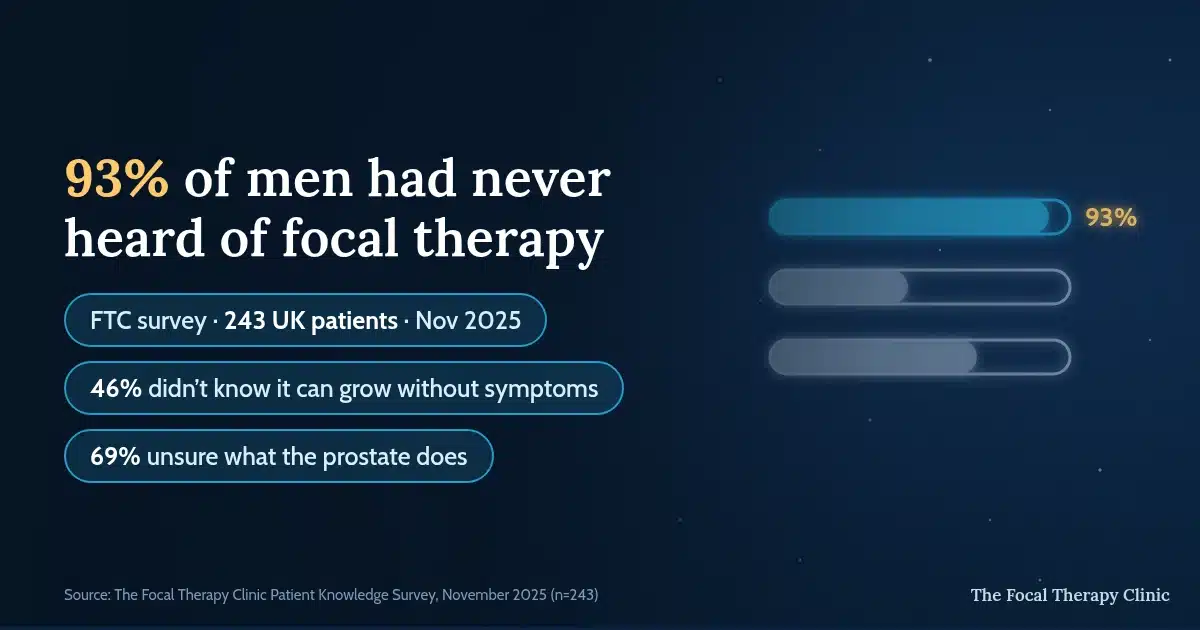
Prostate Cancer Survey: 93% of Men Had Never Heard of Focal Therapy
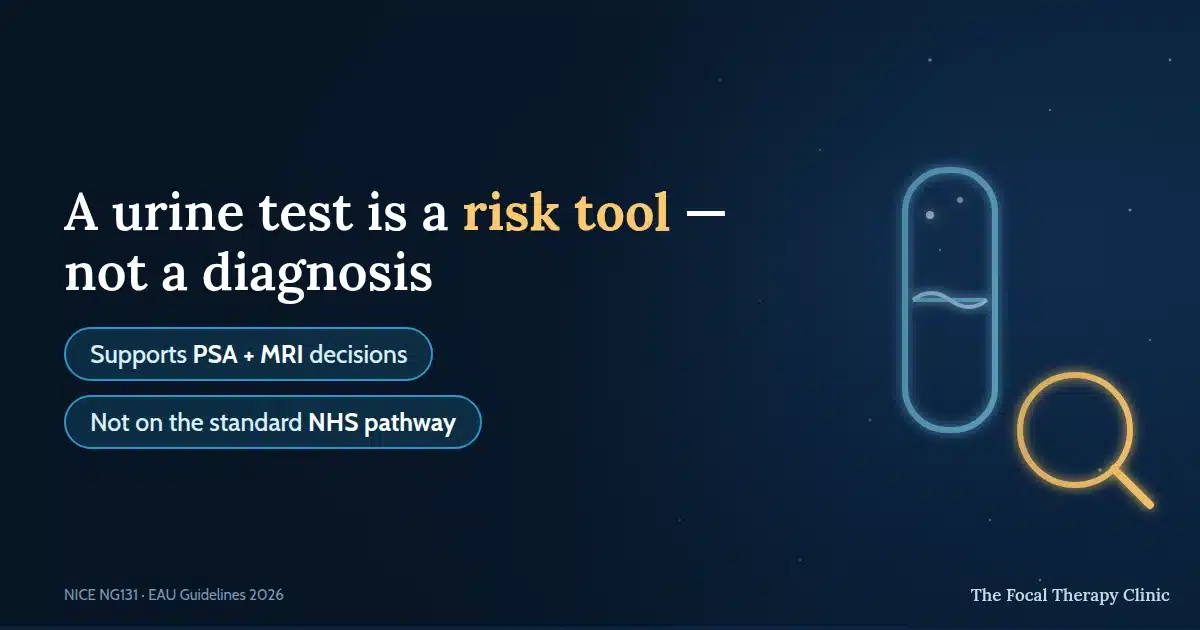
How Accurate Is a Urine Test for Prostate Cancer — and Can It Replace PSA or MRI?
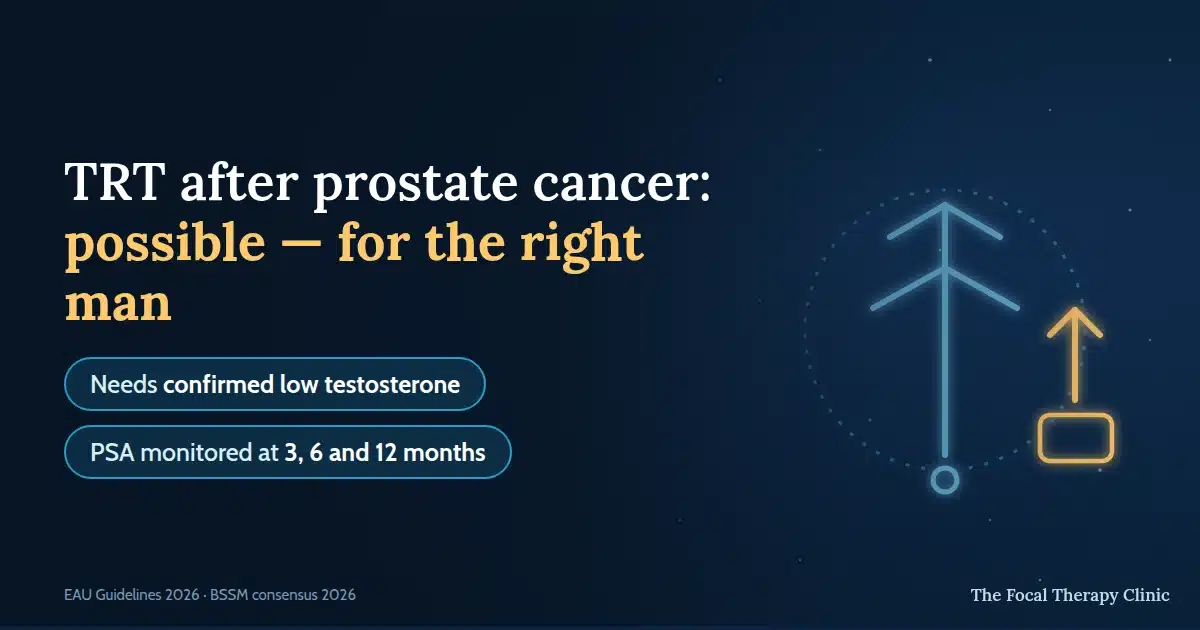
Is Testosterone Replacement Therapy Safe After Prostate Cancer Treatment?
Any questions?
If you've got any questions about your prostate cancer diagnosis or want to know more about HIFU or NanoKnife, don't hesitate to get in touch with our friendly, knowledgeable team.
Contact the team
Methodology and sources
This page references the following published evidence:
1. Dickstein DR, Edwards CR, Lehrer EJ, Tarras ES, Gallitto M, Sfakianos J, Galsky MD, Stock R, Safer JD, Rosser BRS, Marshall DC. Sexual health and treatment-related sexual dysfunction in sexual and gender minorities with prostate cancer. Nature Reviews Urology, 2023;20(6):332-355. DOI: 10.1038/s41585-023-00778-3. The canonical review of sexual function outcomes in sexual and gender minority men after prostate cancer treatment.
2. Ussher JM, Perz J, Rose D, Dowsett GW, Chambers S, Williams S, Davis I, Latini D. Threat of Sexual Disqualification: The Consequences of Erectile Dysfunction and Other Sexual Changes for Gay and Bisexual Men With Prostate Cancer. Archives of Sexual Behavior, 2016;46(7):2043-2057. DOI: 10.1007/s10508-016-0728-0. Study of 124 gay and bisexual men and 21 partners; ED reported by 72%.
3. Rosser BRS et al. The Sexual Functioning of Gay and Bisexual Men Following Prostate Cancer Treatment: Results from the Restore Study. University of Minnesota.
4. Marcus JL et al. Prostate cancer incidence and prostate-specific antigen testing among HIV-positive and HIV-negative men. (Kaiser Permanente cohort.) PMID: 24820107.
5. Hopstaken JS et al. An Updated Systematic Review on Focal Therapy in Localized Prostate Cancer. European Urology, 2022;81(1):5-33.
6. Donovan JL et al. Patient-Reported Outcomes after Monitoring, Surgery, or Radiotherapy for Prostate Cancer (ProtecT). NEJM, 2023.
7. Prostate Cancer UK. Prostate cancer tests and treatment: a guide for gay and bisexual men. prostatecanceruk.org
8. Understanding Prostate Cancer in Gay, Bisexual, and Other Men Who Have Sex with Men and Transgender Women: A Review of the Literature. PMC6953377.
9. Martin Wells quote used with permission.
This page was last reviewed by The Focal Therapy Clinic clinical team.
Subscribe to our newsletter
Get expert advice & the latest prostate cancer research - straight to your inbox.