
Recurrence After Radiation Therapy: Focal Therapy Can Help
If prostate cancer returns after radiotherapy, you still have curative options. Salvage focal therapy (HIFU or cryotherapy) can treat the recurrence while avoiding the high complication rates of salvage surgery: in a UK study co-authored by our consultants, salvage focal therapy achieved 92% ten-year cancer-specific survival — no significant difference from salvage prostatectomy — with 24 times fewer complications (Light et al., JAMA Oncology, 2026).
Around 20-30% of men experience prostate cancer recurrence within 10 years of radiotherapy. When that happens, most are offered lifelong hormone therapy or salvage surgery. Salvage focal therapy is a third option — targeting only the area of recurrence, with similar 10-year survival to salvage surgery but around 24 times fewer perioperative complications.
- Fewer side effects: Salvage focal therapy carries roughly 24 times lower odds of perioperative complications than salvage radical prostatectomy (Light et al., JAMA Oncology 2026).
- Delay systemic treatment: Salvage focal therapy can defer the need for hormone therapy in many suitable men. In a UK salvage HIFU series, 48% of men avoided hormone therapy altogether over a median follow-up of just over five years (Shah et al., Prostate Cancer and Prostatic Diseases 2016).
- Preserve quality of life: Targeted treatment avoids the whole-body side effects of long-term hormone suppression — fatigue, muscle loss, bone density loss and hot flushes.

When Prostate Cancer Returns After Radiotherapy
Even after successful radiotherapy, prostate cancer can return. For many men, this possibility feels distant—until a routine follow-up test changes everything. Finding out your cancer has returned after radiotherapy is a difficult moment that often brings a wave of shock, frustration, and the fear that you've run out of options.
Around 20-30% of men experience prostate cancer recurrence within 10 years of radiotherapy (Espinós-Jover et al., Scientific Reports 2022). Recurrence is defined by the Phoenix criteria — a PSA rise of 2.0 ng/mL or more above the post-radiotherapy low point.
Rising PSA is often the first warning sign
Shock, frustration, and uncertainty are common
Many men feel their treatment options are suddenly limited
Why Hormone Therapy Is Commonly Offered After Recurrence
Hormone therapy is commonly used after radiotherapy because salvage surgery becomes technically harder once tissue has been irradiated, and many centres are not equipped to offer salvage focal therapy.
When surgery is no longer ideal, many men are offered hormone therapy (also known as androgen deprivation therapy) as the next step. Hormone therapy works by lowering or blocking testosterone — the hormone that fuels most prostate cancers.
Radiotherapy can make later surgery more complex and higher risk
Frequently prescribed long-term — sometimes for life
Controls cancer, but comes with important trade-offs
Learn more about Hormone Therapy
Get Expert Advice & The Latest Research
Subscribe to our newsletter to receive the latest updates, expert insights, and breakthrough research on prostate cancer-delivered straight to your inbox.

The Physical Cost of Hormone Therapy as You Get Older
The physical cost of hormone therapy rises with age: muscle loss, fatigue, bone thinning and other effects that reduce strength and independence — summarised in the table below.
| Symptom | What It Means for You |
|---|---|
| Men starting hormone therapy lose around 3-5% of lean muscle mass within the first 6 months (Smith J Clin Endocrinol Metab 2002; Alibhai Cancer 2015). Particularly in men aged 65 and over. | Rapid decline in physical power and stamina shortly after starting treatment |
| Reduced bone density | Bones become thinner and more fragile |
| Increased risk of falls | Less muscle strength and balance increases instability |
| Higher risk of fractures and broken hips | Injuries that can significantly affect mobility and recovery |
| Greater impact at age 65+ | Physical decline at this stage can affect independence, recovery potential, and long-term survival |
What Treatment Options do You Have After Recurrence?
After recurrence, the main options are salvage focal therapy and salvage radical prostatectomy — both offer high success rates, but the physical impact of each procedure varies significantly. Deciding on a follow-up treatment for prostate cancer involves balancing survival rates with long-term quality of life.
High Success Across the Board: Both treatment paths provide excellent survival outcomes, ranging from 92% to 99%.
A Closer Look at Risks: While survival rates are statistically similar, radical prostatectomy carries a 24 times higher odds of any perioperative complication compared to focal therapy.
For a fuller overview of the road ahead when cancer returns, read our guide to recurrent prostate cancer.
Learn More about focal therapy
Source: Light et al., JAMA Oncology 2026 (DOI: 10.1001/jamaoncol.2025.6448). Mr Tim Dudderidge, Mr Raj Nigam and Mr Marc Laniado of The Focal Therapy Clinic are co-authors.

What Is Focal Therapy for Post-Radiotherapy Recurrence?
Salvage HIFU and other focal therapies are available in the UK for men whose prostate cancer has returned after radiotherapy, provided the recurrence is confined to the prostate and confirmed on imaging and biopsy. In the largest published comparison (923 men across 27 centres), salvage focal therapy achieved 10-year cancer-specific survival of 92% — no statistically significant difference from salvage surgery (Light et al., JAMA Oncology 2026).
Focal therapy is a targeted treatment designed to treat only the area where the cancer has returned — not the whole prostate, and not the whole body.
At The Focal Therapy Clinic, salvage focal therapy is delivered using HIFU, cryotherapy or NanoKnife (irreversible electroporation), depending on the location of recurrence, tissue characteristics and imaging findings.
Unlike whole-gland surgery or lifelong systemic treatment, focal therapy:
Targets the site of recurrence only
Is guided by advanced imaging and careful mapping
Avoids treating the entire prostate unnecessarily
Does not expose the whole body to hormone therapy
How Focal Therapy Can Delay Further Treatment by 5–10 Years
By treating only the site of recurrence, salvage focal therapy can defer hormone therapy and other systemic treatment for years — in a UK salvage HIFU series, 48% of men avoided hormone therapy altogether over a median follow-up of just over five years (Shah et al. 2016).
Delay Hormone Therapy
Focal therapy can delay the need for hormone therapy by 5–10 years in suitable men — preserving time without systemic treatment.
Maintain Strength & Energy
By avoiding immediate testosterone suppression, many men retain their physical strength, stamina, and day-to-day energy levels.
Avoid Systemic Side Effects
Because treatment is targeted only to the area of recurrence, it avoids the whole-body side effects associated with hormone therapy.
92% cancer-specific survival at 10 years — similar to salvage surgery
Salvage focal therapy achieves 10-year cancer-specific survival of 92% — no statistically significant difference from salvage surgery — with around 24 times fewer perioperative complications (Light et al., JAMA Oncology 2026).
“Well, if you're deemed suitable for the procedure, it really is a no-brainer.”
Brian Bishop
Verified
The Focal Therapy Clinic patient
Who May Be Suitable for Focal Therapy?
Even if it's not, they can talk you through your other treatment options so that you can make an informed decision about the next steps in your care.
Ideal patients for Focal Therapy
- Low-Risk and Intermediate-Risk Prostate Cancer
Patients with a Gleason score of 6 or 7, with grade group 1 to 3 cancers (which indicates less aggressive cancer) are the best candidates. - Tumors Confined to the Prostate
The effectiveness of focal therapy depends on whether the cancer is restricted to one or a few distinct areas within the prostate. - PSA Levels Below a Certain Threshold
Candidates typically have a prostate-specific antigen (PSA) level of 20 ng/mL or lower. - No Evidence of Metastasis
Focal therapy is only suitable for patients whose cancer is localized and has not spread to lymph nodes, bones, or other distant areas. - Patients Seeking a Less Invasive Treatment
Men who prefer to avoid the potential side effects of surgery or whole-gland prostate radiation may find focal therapy a more attractive option. - Localised recurrence confined to the prostate
Identified within 2 years of completing radiotherapy and confirmed on MRI and targeted biopsy.
Patients who may not be eligible
- High-Risk or Aggressive Tumors
Patients with Gleason scores of 8–10, with grade group 4 or 5 cancers, typically have more aggressive cancers that are more likely to recur. - Widespread Cancer in Multiple Extensive Areas of the Prostate
If cancer is spread outside the capsule of the prostate, focal therapy may leave untreated areas, leading to recurrence. - Very High PSA Levels
Patients with PSA levels significantly above 20 ng/mL are more likely to have extensive disease that cannot be effectively treated with focal therapy alone. - Men Who Want a Single Definitive Treatment
Some patients prefer a one-time treatment option that eliminates cancer with minimal risk of recurrence, and also accept the potential side effects of traditional treatment. - Recurrence outside the prostate
(lymph nodes, bones or distant sites) confirmed on PSMA PET imaging.

What Happens If Cancer Progresses Later?
Focal therapy does not remove future options: it only treats a specific area, so it does not prevent you from having surgery, radiotherapy, or hormone therapy later if the cancer returns.
Choosing Focal Therapy is a strategic move that addresses the immediate threat while keeping all your future safety nets intact.
Hormones and Radiation Remain Available: If the cancer becomes more aggressive in the future, traditional treatments like hormone therapy remain just as effective.
Postponing the use of invasive treatments: By using focal therapy first, many men successfully push back the need for harsher systemic drugs by 5 years or more, ensuring they only use them if and when they absolutely have to.
Why Choose The Focal Therapy Clinic?
Only clinic using advanced MRI US fusion technologies for precision treatment
MRI scans explainedWe have helped thousands of people with prostates understand their diagnosis and choose the right treatment for them and their prostate cancer.
Your treatment journeyWe've assembled a team of urology, radiology, oncology and patient care experts with over 75 years of experience.
Meet our consultantsOur own data shows that after 1 year of treatment, 90% of clinically significant cancer is eliminated.
See the clinical evidenceQuestions to ask your doctor or nurse

Bring these to your GP appointment, or speak to our team first.
Frequently asked questions

Learn more about Focal Therapy and Prostate Cancer
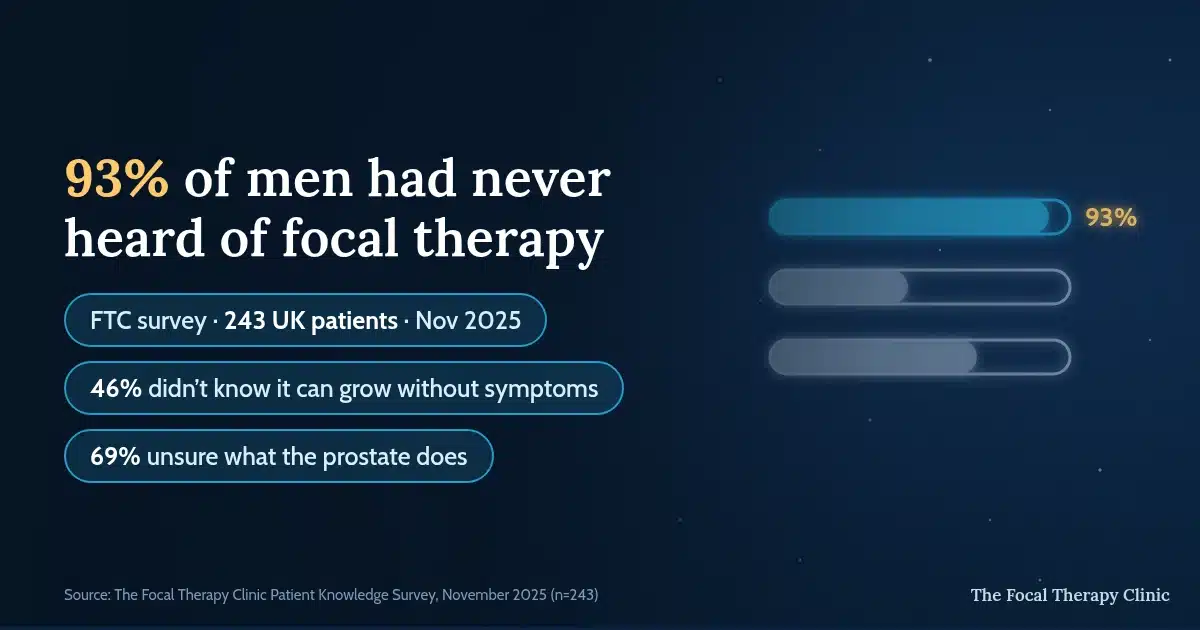
Prostate Cancer Survey: 93% of Men Had Never Heard of Focal Therapy
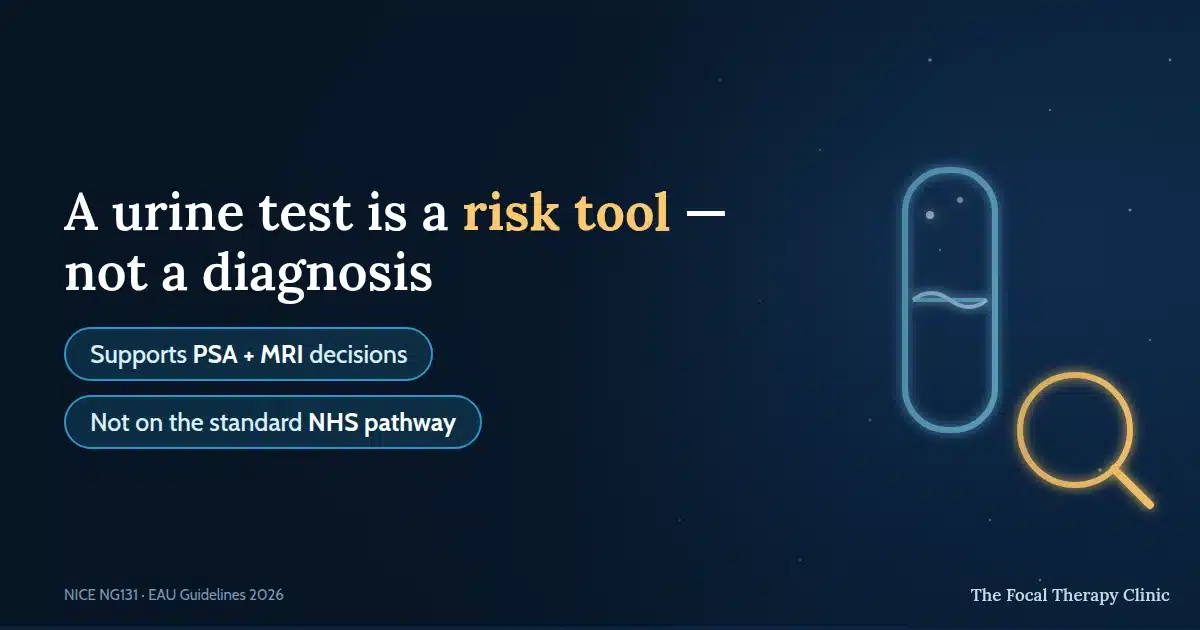
How Accurate Is a Urine Test for Prostate Cancer — and Can It Replace PSA or MRI?
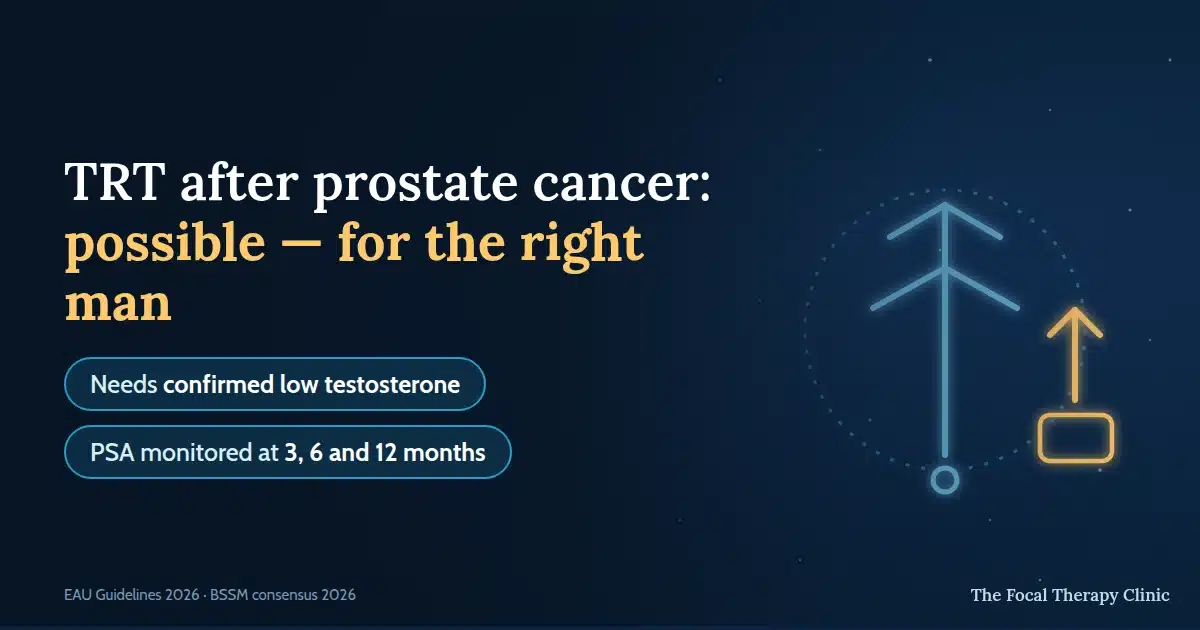
Is Testosterone Replacement Therapy Safe After Prostate Cancer Treatment?
Any questions?
If you’ve got any questions about your prostate cancer diagnosis or want to know more about HIFU or NanoKnife, don’t hesitate to get in touch with our friendly, knowledgeable team.
Contact the team
Reference List
- Light A, Peters M, Arya M, Bertoncelli Tanaka M, Dudderidge T, Emara A, Emberton M, Grey A, Hindley R, Laniado M, McCraken S, Moore CM, Nigam R, Noureldin M, Orczyk C, Reddy D, Virdi J, Ahmed M, Albisinni S, Cathcart P, Joniau S, Karnes RJ, Persad R, Rajwa P, Sanchez-Salas R, Shariat SF, Smith JA, Tilki D, van der Poel H, Calleris G, Gontero P, Marra G, Ahmed HU, Shah TT. Salvage Focal Therapy vs Radical Prostatectomy for Localized Radiorecurrent Prostate Cancer. JAMA Oncology. 2026 Apr 1;12(4):364-373. PMID: 41678176. DOI: 10.1001/jamaoncol.2025.6448. The 10-year cancer-specific survival and complication-rate comparisons cited above are drawn from this study. Mr Tim Dudderidge, Mr Raj Nigam and Mr Marc Laniado of The Focal Therapy Clinic are named co-authors.
- Espinós-Jover JA et al. Mortality and biochemical recurrence after surgery, brachytherapy, or external radiotherapy for localized prostate cancer: a 10-year follow-up cohort study. Scientific Reports. 2022;12:12389. DOI: 10.1038/s41598-022-16395-w
- Smith MR. Changes in fat and lean body mass during androgen-deprivation therapy for prostate cancer. J Clin Endocrinol Metab. 2002;87(2):599-603. DOI: 10.1210/jcem.87.2.8210
- Alibhai SMH et al. Changes in physical function in men receiving androgen-deprivation therapy: prospective controlled study. Cancer. 2015;121(14):2350-2357. PMC4805468
- Roach M III et al. Defining biochemical failure following radiotherapy with or without hormonal therapy in men with clinically localized prostate cancer: recommendations of the RTOG-ASTRO Phoenix Consensus Conference. Int J Radiat Oncol Biol Phys. 2006;65(4):965-974.
- NICE NG131: Prostate cancer: diagnosis and management. National Institute for Health and Care Excellence (UK), 2019, updated 2021. nice.org.uk/guidance/ng131
- EAU Guidelines on Prostate Cancer (2024). European Association of Urology. uroweb.org/guidelines/prostate-cancer
- FTC salvage focal therapy outcomes register (internal): confirm with FTC clinical team before publication.
Subscribe to our newsletter
Get expert advice & the latest prostate cancer research - straight to your inbox.