
Understanding a Urology Referral.
A urology referral is the step between your GP and a specialist diagnosis. After a raised PSA or abnormal examination, your GP refers you to a urologist, who will usually arrange an MRI scan before any biopsy — the sequence NICE guidance recommends. NHS referrals for suspected cancer are seen within two weeks; private referrals can usually be seen within days. This page explains each step, what to bring, and the questions worth asking.
Common referral triggers include elevated PSA levels, abnormal DRE results, visible blood in the urine, or persistent urinary symptoms.
A first urology appointment involves a detailed discussion of your medical history, a physical examination, and the arrangement of accurate tests, usually starting with an MRI scan.
The Focal Therapy Clinic offers specialised, minimally invasive prostate cancer treatments with a multidisciplinary team approach and a focus on patient wellbeing.

What is a urology referral?
A urology referral is when your GP decides you need to see a specialist for further checks on symptoms affecting your urinary or prostate health. It's a step that simply means your doctor wants a second opinion from someone with more focused expertise. In most cases, it's not about confirming a serious diagnosis, it's about making sure you get the right information, tests, and next steps from a urologist.
What does a urologist do?
What conditions do urologists treat?
Urologists treat a wide range of conditions that affect the urinary and reproductive systems. Some of the most common include:
- Kidney stones and infections
- Bladder problems, including overactivity and incontinence
- Prostate enlargement or inflammation
- Prostate, kidney, and bladder cancers
- Male fertility issues and erectile dysfunction
- Urinary tract infections (UTIs)
Urologist vs oncologist
In modern cancer care, patients benefit from the expertise of a Multidisciplinary Team (MDT). A urologist is typically the diagnostic lead and surgeon.
A clinical oncologist is a specialist in non-surgical cancer treatments like external beam radiotherapy and chemotherapy.
Both specialists, along with radiologists, pathologists, and clinical nurse specialists, work collaboratively to formulate the best treatment plan for each individual.
How do urologists diagnose prostate cancer?
Early detection & diagnosis
While there is no national screening programme in the UK, early detection can improve outcomes. Urologists are experts in interpreting the PSA blood test. It is important to realise that PSA is prostate-specific, not cancer-specific. An elevated level can be caused by benign enlargement or inflammation. A urologist assesses the PSA level in the context of your age, prostate size, family history, and the trend over time. They may also perform a DRE (digital rectal examination).
Learn More About PSA
Advanced imaging & precision testing
Current best practice, supported by landmark trials like PROMIS and PRECISION, dictates that men with a raised PSA should have a high-quality MRI scan of their prostate first. MRI scans help urologists identify suspicious areas and can sometimes avoid unnecessary biopsies. When a biopsy is needed, MRI-guided techniques—including MRI/ultrasound fusion biopsies—allow highly accurate cancer detection and treatment planning.
Landmark trials such as PROMIS and PRECISION — and the 2024 VISION meta-analysis, co-authored by Dr Aqua Asif, who medically reviewed this page — show that an MRI before biopsy detects significantly more clinically important cancer while reducing over-diagnosis. MRI is now recommended as part of the standard diagnostic pathway.
Learn More MRI Scans
Monitoring & personalised care
For low-risk cancers, urologists may recommend active surveillance, using regular PSA tests, MRI scans, and occasional biopsies to safely monitor the disease. When treatment is required, precise diagnostic information helps determine the most appropriate option, including focal therapy for suitable candidates.
Learn More About Suitability
Transperineal vs. transrectal biopsy methods
Prostate biopsies can be performed either transrectally (through the rectum) or transperineally (through the skin between the scrotum and anus). The transperineal approach is increasingly preferred due to its lower infection risk and greater accuracy. Advanced MRI–ultrasound fusion biopsies combine MRI and ultrasound images to precisely target suspicious areas, enabling millimetre-level accuracy for diagnosis and treatment planning.
Practice still varies considerably across the UK — in the quality of imaging, the expertise of the radiologist reporting it, and the biopsy approach offered. Because each of these shapes the treatment choices you are offered later, it is reasonable to ask your GP where you are being referred, and whether that service offers pre-biopsy MRI and MRI-targeted transperineal biopsy.
Learn More About Transperineal Biopsy
When and why GPs refer patients
GPs refer patients to urologists based on established national guidelines, such as those from the National Institute for Health and Care Excellence (NICE). They do this when specific criteria are met that warrant specialist investigation. The goal is to ensure that conditions are diagnosed accurately and in a timely manner, which is particularly critical for managing cancers.
There is no national screening programme for prostate cancer in the UK, so if nothing has been offered to you, you may need to start the conversation yourself. Under national guidance, any man aged 50 or over has the right to request a PSA test from his GP after discussing the pros and cons — even with no symptoms. If the result raises concern, that is one of the most common routes into a urology referral.

Common referral triggers
Men are often referred for issues related to prostate health, but there are other triggers too. You might be referred if you have:
A raised PSA level
Unusual symptoms like frequent urination or pain
Blood in your urine (visible or found in a test)
An abnormal DRE result
Recurring urinary tract infections
A family history of prostate cancer
Any of these signs may lead your GP to recommend further investigation. A referral helps rule out serious conditions or confirm if anything needs treatment.


Urgent vs routine referrals
Urgent (Two-Week Wait)
Some referrals are marked urgent, especially if your symptoms suggest a higher risk of cancer. For example, if you’re over 45 and see blood in your urine with no infection, that could lead to an urgent referral.
Routine (18-week target)
Routine referrals are for less urgent conditions where this timeframe is not clinically as urgent.
Waiting times vary — finding the next available prostate cancer treatment slot explains the options when time matters.
What to expect at your urology appointment
Initial consultation & medical history
The specialist will begin by taking a comprehensive medical history, asking detailed questions about your symptoms, their duration, and their impact on your quality of life. They will also review your general health, past medical problems, and any medications you are taking. Bring a list of any questions to ask during your appointment.
Common diagnostic tests ordered
Depending on your symptoms, you may have:
- A urine test
- Blood tests (including PSA)
- A DRE (digital rectal exam)
- An MRI scan
- A CT scan
- An ultrasound
- Flexible cystoscopy
- A prostate biopsy
Not all of these tests will be needed. Your urologist will select the most appropriate ones based on your individual symptoms and PSA result
Communication of findings & next steps
Once the results of your investigations are available, your urologist will see you again to explain them in detail. They will discuss the diagnosis and outline potential management options, ensuring you have a full understanding and can participate in any decisions about your care.

How to prepare for your urology appointment.
A little preparation before your appointment can help you get the most value from your visit and ensure your urologist has the information needed to make an accurate assessment.
Bring a list of your current medications: Include prescription medications, over-the-counter medicines, vitamins, and supplements, along with their dosages if possible.
Make notes about your symptoms: Write down when your symptoms first started, how often they occur, and whether they have improved, worsened, or changed over time.
Bring previous test results: If you've had any relevant tests, such as PSA blood tests, digital rectal examinations (DREs), urine tests, ultrasounds, MRI scans, or CT scans, bring copies of the results if available.
Prepare your questions in advance: It's easy to forget important concerns during an appointment. Writing down your questions beforehand can help you leave with the information you need. For ideas, read our guide on questions to ask your urologist.
Bring a partner or family member: Having someone with you can provide support, help you remember information discussed during the consultation, and offer another perspective when making treatment decisions.
Urology referral for suspected prostate cancer
One major reason for a urology referral is to investigate signs that may point to prostate cancer. The earlier these signs are caught, the more options you’ll have. And not every referral means cancer, often, it’s about ruling things out.
Read video transcript
Transcript — Ms Eva Tomopoulou, Patient Advocate, The Focal Therapy Clinic: You do not need a referral for your initial consultation at The Focal Therapy Clinic. When might a referral be needed? A referral may be required if you proceed with treatment. If this is the case, our office will assist you in managing the referral process. We aim to make the process as seamless as possible, so if you have any questions about booking a consultation or obtaining a referral, feel free to reach out for support.
Role of PSA and MRI in the referral process
A raised PSA is often one of the first signs that something’s up. If that happens, your urologist might arrange an MRI before deciding on a biopsy. These tools are used together to get accurate results and avoid unnecessary procedures.
Importance of early detection
Investigating symptoms promptly through a urology referral is the cornerstone of early diagnosis. Detecting prostate cancer when it is still confined to the prostate gland (localised) provides the widest array of treatment options and the highest chance of curative outcomes. Early detection is what makes less invasive treatments, such as focal therapy, possible for many men.
Possible outcomes & diagnoses
After tests, there are a few different outcomes you might hear, including:
- No abnormality found
- An enlarged prostate, which is often not cancer
- Signs of inflammation or infection
- Localised prostate cancer that needs further planning
From here, your urologist will explain if treatment, active surveillance, or another step is right for you.
NHS vs private urology referral — what are the differences?
When you’re referred to a urologist, you may have the option to go through the NHS or choose private care. Both pathways offer expert support, but there are key differences in timing, flexibility, and access to tests. Knowing how they compare can help you decide what works best for your situation.
| NHS | Private (The Focal Therapy Clinic) | |
|---|---|---|
| First appointment wait | Waiting times vary depending on location, demand, and referral urgency. | Appointments are often available sooner, allowing for earlier specialist assessment. |
| Diagnostic tests availability | Tests are arranged according to clinical need, but scheduling may depend on local service capacity. | Diagnostic investigations can often be arranged promptly as part of the assessment pathway. |
| Choice of specialist | Patients are typically referred within local NHS services, although some choice may be available. | Patients can usually choose to see a specific consultant with expertise relevant to their condition. |
| Flexibility of scheduling | Appointment dates and times are determined by service availability. | Greater flexibility is often available when selecting appointment times and locations. |
| Cost | Care is provided free at the point of use for eligible patients. | Consultations, tests, and treatments are self-funded or covered by private medical insurance where applicable. |
Timeline & process differences
An urgent “two-week wait” referral has a target of 14 days for the first appointment. For routine conditions, the target is to start treatment within 18 weeks of referral, though actual waiting times for appointments can be long due to high demand. Private referrals usually move faster and may offer more flexibility with scheduling.
Benefits of choosing private consultation
- Rapid access to leading consultants and diagnostic scans
- Appointment times that can be scheduled more conveniently
- The ability to choose a specific specialist with expertise in your area of concern
- Access to diagnostic tests and scans that might not be standard in every NHS clinic
How The Focal Therapy Clinic fits in
The Focal Therapy Clinic provides private access to specialist urologists, advanced mpMRI-guided diagnosis, and minimally invasive prostate cancer treatments. The clinic offers NICE-approved focal therapies, including HIFU (NICE HTG667, formerly IPG756) and NanoKnife (HTG688), and has performed more than 2,500 focal therapy procedures in six UK cities. Their focus is on accurate diagnosis, personalised care, and timely access to treatment.

What happens after a urology referral?
Once your initial referral is complete, you’ll either go for more tests or start treatment discussions. Not everyone needs immediate treatment, some men can simply be monitored. It depends on what’s found during those early checks.
Additional Imaging or Biopsy: Sometimes, your specialist may want more information before deciding what to do next. That could mean:
- A repeat MRI
- A targeted prostate biopsy
- A follow-up PSA test
Monitoring vs Treatment Discussions: If you have low-risk or slow-growing prostate cancer, active surveillance may be recommended. This involves careful monitoring with PSA tests and MRI scans, avoiding immediate treatment and its potential side effects. For higher-risk cancers, treatment discussions will begin.
A useful starting point for these conversations is Predict Prostate, a free online decision tool developed at the University of Cambridge for men whose cancer has not spread and for whom both conservative management and radical treatment are realistic options. Enter your age, PSA level, biopsy results and cancer stage, and it shows — in plain percentages — how men with your characteristics fare over ten and fifteen years with different initial approaches, alongside realistic side-effect rates for each.
A worked example shows how balanced the tool is. For a 65-year-old man with a PSA of 6 and a Gleason 3+4 (Grade Group 2) cancer confined to the prostate, it estimates that 83 out of 100 such men are alive ten years after diagnosis with initial conservative management alone — and that of the 17 who are not, 12 die of causes unrelated to prostate cancer and only 5 of the cancer itself. Alongside this, it sets out each approach's potential harms at three years, drawn from the UK ProtecT trial: urinary incontinence (needing one or more pads a day) affects about 1 in 100 men on conservative management, 19 in 100 after radical prostatectomy and 3 in 100 after external-beam radiotherapy, while erectile dysfunction affects about 53, 79 and 66 in 100 respectively — figures that include men who already had erection problems before any treatment.
Two caveats. These numbers apply to that one example — your own inputs will produce different figures, which is the point of the tool. And Predict Prostate compares conservative management with radical treatments only; focal therapy is not yet included. But the trade-off it makes visible — that for many men with localised cancer, radical treatment adds modest survival benefit at a real cost in side effects — is precisely the middle ground focal therapy is designed to occupy. Use the tool with your GP or specialist rather than in isolation.
Exploring Minimally Invasive Options: If treatment is needed, you may not need major surgery. At The Focal Therapy Clinic, our expertise lies in minimally invasive procedures like focal therapy, which aims to target only the cancerous cells within the prostate. This approach aims to provide effective cancer control while preserving urinary and sexual function.
What Is Your GP's Role After a Referral?
A referral doesn't mean your GP steps out of the picture. Your GP remains the doctor who knows your history best, and many men find them a valuable sounding board when weighing up the options the specialist team puts forward.
Dr Sam Merriel, a GP and academic researcher who has studied how primary care can better support men with prostate cancer, put it this way in the British Journal of General Practice: "Most patients place a high level of trust in their GP — it is one of the privileges of our profession that we build relationships through continuity of care, and some patients seek their GP's opinion on big treatment decisions for conditions such as cancer."
He adds: "Men value receiving clear information about their treatment choices for prostate cancer. Discussions with a specialist are important, but prostate cancer patients also want to be able to talk to a healthcare professional about any questions or concerns that arise prior to or during their treatment."
This matters in practice. Many of our patients tell us they first learned about focal therapy through their own research rather than from their GP — so it is worth asking both your GP and your specialist about the full range of treatment options, including how each could affect your urinary function, sexual function and day-to-day quality of life.
And if you are placed on active surveillance, your GP often becomes a regular part of your care as your PSA is tested at intervals. Some men find this ongoing monitoring stressful — living as a "cancer patient" without having treatment. Your GP can support you here too: raise how you're coping, not just your latest PSA number, at each review.
Treatment options when prostate cancer is found early
Finding prostate cancer early gives you the widest range of treatment options. The table below compares the key outcomes across the main approaches so you can have an informed conversation with your urologist.
| Outcome | Focal Therapy (FTC data) | Radical Prostatectomy | Radiotherapy |
|---|---|---|---|
| Sexual function preserved | 90%+ (FTC audit, n=265) | 30-70% | 50-70% |
| Urinary continence | 97% (FTC audit, n=265) | 80-95% | 90-95% |
| Recovery time | 1-2 weeks | 4-6 weeks | 6-8 weeks (fatigue) |
| Hospital stay | Day-case (home same day) | 1-3 nights | Outpatient sessions |
| NICE status | Approved (HIFU HTG667; NanoKnife HTG688) | Standard care | Standard care |
Source: FTC one-year outcome audit (n=265) and published literature. Individual outcomes depend on cancer grade, location, and baseline function.
Why choose The Focal Therapy Clinic for your urology care?
The Focal Therapy Clinic is trusted by thousands of men looking for expert care and modern treatments. Their team has years of experience and a commitment to helping patients avoid unnecessary surgery. With personalised care and advanced tech, they offer a smarter way forward.
Whether you've just received a referral letter or are looking for a second opinion on a diagnosis, the Focal Therapy Clinic team can help you understand your options. Our consultants see patients in six UK cities.
Their urologists have over 75 years of combined experience in focal therapy. They also include top prostate surgeons, radiologists, and specialists in male fertility and sexual health. This means you’ll get balanced advice from experts who know every option.
MRI scans explainedOver 2,500 focal therapy procedures have been performed by The Focal Therapy Clinic's consultants, and thousands of men have chosen the clinic for their care. They offer quick consultations and in-depth second opinions. You’ll have access to accurate tests and detailed explanations, helping you feel confident about your next steps.
Your treatment journeyEvery patient is reviewed by a full multidisciplinary team (MDT), not just one doctor. That includes experts in imaging, pathology, surgery, and oncology. This collaborative approach ensures that the treatment recommendation you receive is robust, evidence-based, and tailored specifically to you.
Meet our consultantsQuestions to ask your doctor or nurse

Bring these to your GP appointment, or speak to our team first.
Frequently asked questions

Learn more about living with prostate cancer
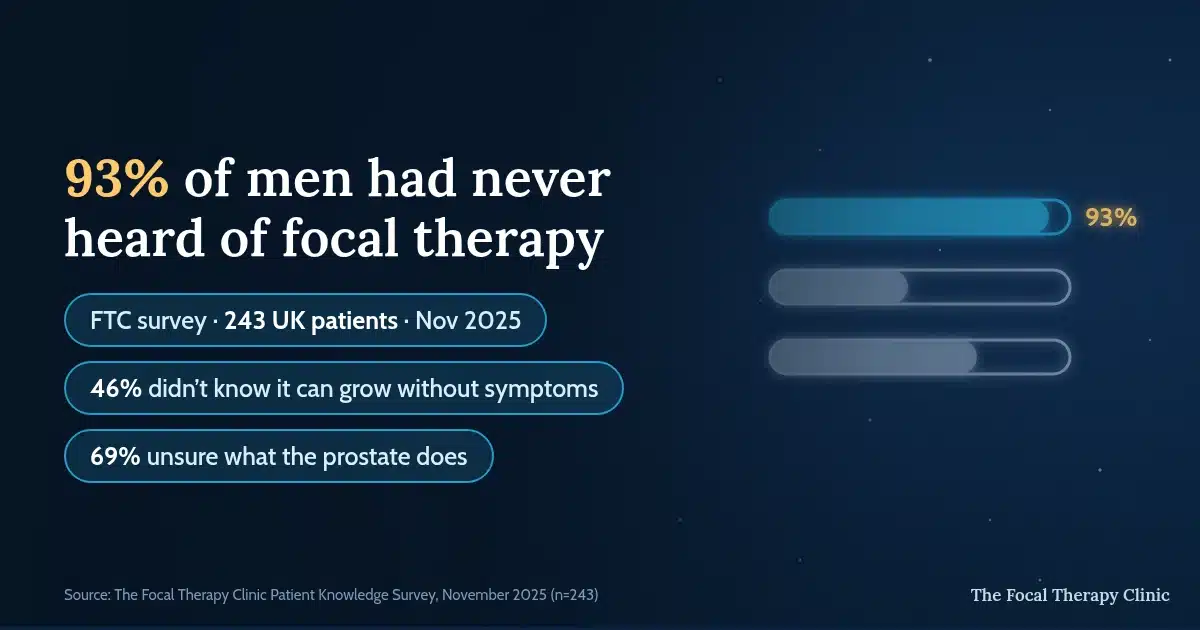
Prostate Cancer Survey: 93% of Men Had Never Heard of Focal Therapy
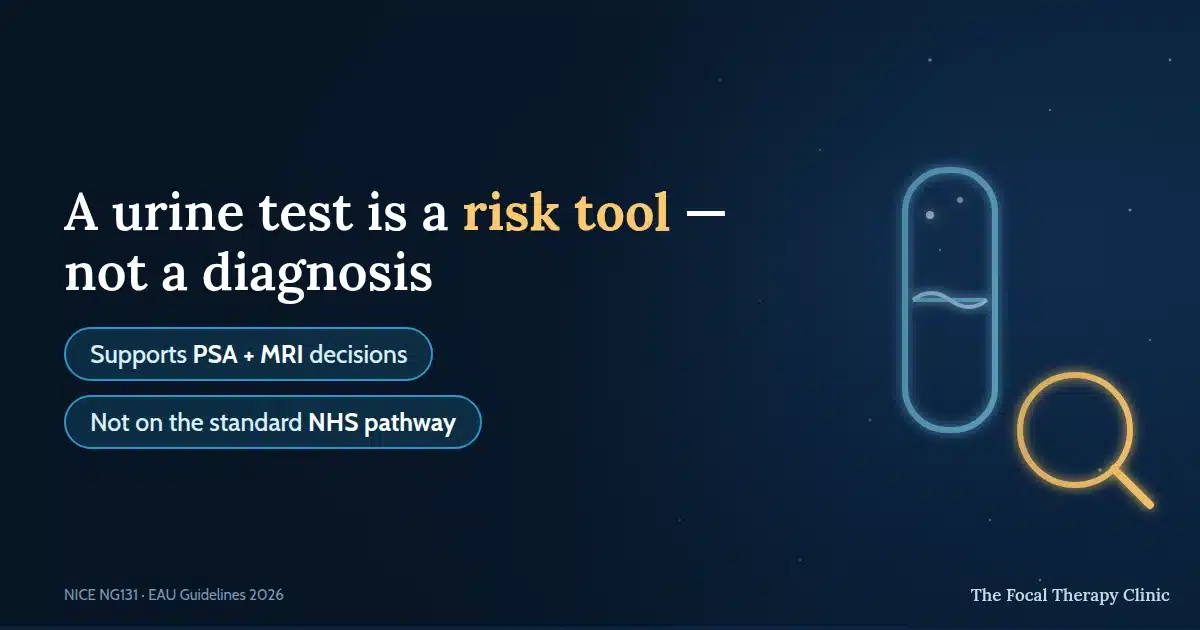
How Accurate Is a Urine Test for Prostate Cancer — and Can It Replace PSA or MRI?
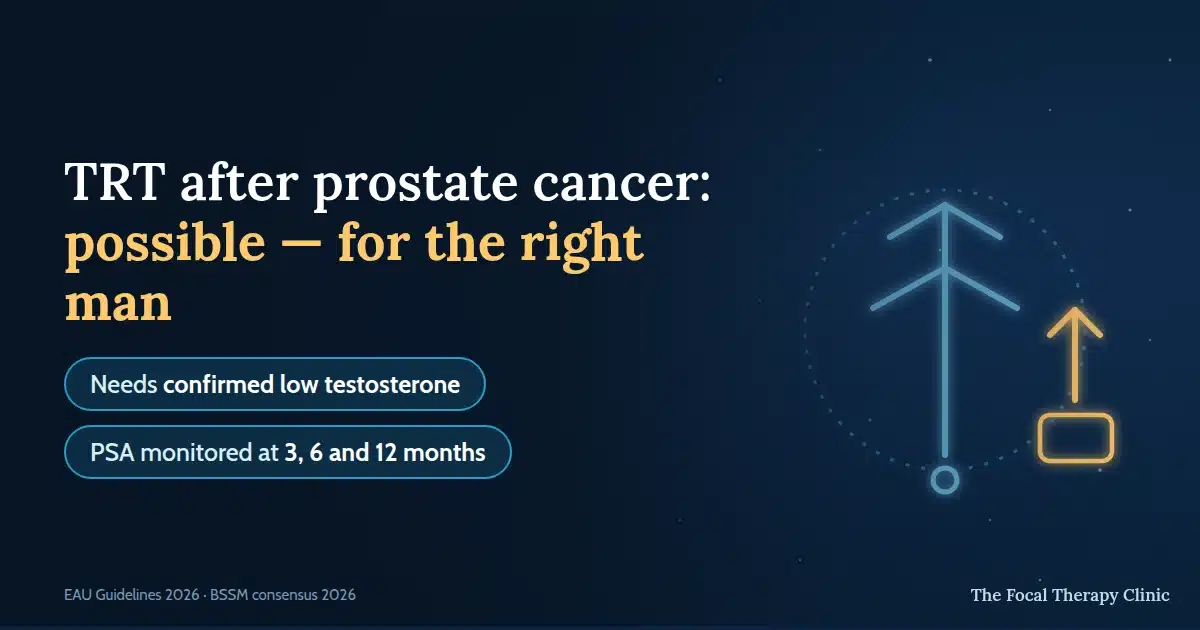
Is Testosterone Replacement Therapy Safe After Prostate Cancer Treatment?
Any questions?
If you’ve got any questions about your prostate cancer diagnosis or want to know more about HIFU or NanoKnife, don’t hesitate to get in touch with our friendly, knowledgeable team.
Contact the team
Reference List
- Kasivisvanathan V, et al. MRI-Targeted or Standard Biopsy for Prostate-Cancer Diagnosis (PRECISION). New England Journal of Medicine. 2018;378(19):1767-77.
- Kasivisvanathan V, Wai-Shun Chan V, Clement KD, Levis B, Ng A, Asif A, Haider MA, Emberton M, Pond GR, Agarwal R, Scandrett K, Takwoingi Y, Klotz L, Moore CM. VISION: An Individual Patient Data Meta-analysis of Randomised Trials Comparing MRI-Targeted Biopsy with Standard TRUS-Guided Biopsy in the Detection of Prostate Cancer. European Urology. 2024;87(5):512-523. DOI: 10.1016/j.eururo.2024.08.022. Dr Aqua Asif of The Focal Therapy Clinic is a named co-author.
- Giganti F, Ng A, Asif A et al. Global Variation in Magnetic Resonance Imaging Quality of the Prostate (PI-QUAL). Radiology. 2023;309(1):e231130. DOI: 10.1148/radiol.231130. Dr Aqua Asif of The Focal Therapy Clinic is a named co-author.
- Hopstaken JS et al. An Updated Systematic Review on Focal Therapy in Localized Prostate Cancer. European Urology. 2022;81(1):5-33. Source for the comparative functional-outcome ranges.
- NICE NG131: Prostate cancer — diagnosis and management. National Institute for Health and Care Excellence, 2019 (updated 2021). nice.org.uk/guidance/ng131
- NICE NG12: Suspected cancer — recognition and referral (two-week-wait referral criteria).
- NICE HTG667 (formerly IPG756) — HIFU for localised prostate cancer; NICE HTG688 — NanoKnife (irreversible electroporation). nice.org.uk/guidance/ipg756
- NHS / Cancer Research UK — waiting-times guidance.
- FTC one-year outcome audit (n=265): 97% urinary continence; 90%+ sexual-function preservation. Methodology summary available on request from The Focal Therapy Clinic clinical team.
Medically reviewed by Dr Aqua Asif (MRCS) and Mr Alan Doherty (Consultant Urological Surgeon, FRCS (Urol), GMC 3279241), The Focal Therapy Clinic. Published June 2026.
Subscribe to our newsletter
Get expert advice & the latest prostate cancer research - straight to your inbox.