
Prostate Cancer and Black men: What You Need to Know
Black men are at significantly higher risk of developing and dying from prostate cancer — but early detection and modern treatments can make a life-changing difference
- Higher risk and worse outcomes: Black men are at significantly greater risk of being diagnosed with and dying from prostate cancer.
- Black men are more likely to be diagnosed at a younger age
- Inequities in access to high-quality healthcare can lead to delays in diagnosis or less frequent screening
Source: Lloyd et al., BMC Medicine 2015 (Prostate Cancer UK / Public Health England analysis of cancer registry data for England, 2008–2010).
Why Prostate Cancer Affects Black men
Black men are disproportionately affected by prostate cancer due to a complex interplay of genetics, environment, and healthcare access. Black men of African ancestry carry a higher frequency of a specific genetic variant — rs72725854, on chromosome 8q24 — that increases prostate cancer risk by around 2-fold per risk allele. This variant activates an enhancer that responds to androgen stimulation, explaining the link between African ancestry and higher androgen-driven prostate cancer activity (Walavalkar et al., Nature Communications 2020). The same variant accounts for an estimated 12% of all prostate cancers in Ugandan men (Du et al., The Prostate 2018).
These genetic risks are often compounded by environmental stressors and socioeconomic disparities, which can lead to Vitamin D deficiency, higher levels of chronic inflammation, and limited access to early screening.
Crucially, once diagnosed, men of all ethnicities have similar treatment outcomes. The mortality gap in Black men is driven by lower screening rates and later-stage diagnosis — not by biology of treatment response. This is why earlier PSA testing matters.
For the fundamentals every man should know, start with our complete guide to prostate cancer.
Speak to a Specialist ConsultantFacts & Figures for Black men and Prostate Cancer
Sources: Lloyd et al., BMC Medicine 2015; Prostate Cancer UK PSA Consensus, 2024.
The importance of early screening
Why Early Screening Matters
PSA testing — a simple blood test that doesn't require a digital rectal exam — is the single most important step a Black man can take before symptoms appear.
- Curability:
If prostate cancer is detected early, it is more likely that treatment will be more straightforward, and recovery will be smoother. Routine PSA testing is often the only way to catch it while it is still localised and highly curable. - Higher Risk & Earlier Onset:
Black men often develop prostate cancer at a younger age and may face more aggressive forms of the disease. Because of this, medical guidelines often recommend starting the screening conversation at age 40 or 45, rather than 50. - Silent Early Stages:
Early-stage prostate cancer usually has no symptoms. By the time physical symptoms appear, the cancer may have already spread beyond the prostate, making it harder to treat.
Breaking Barriers to Better Outcomes
Lower screening rates in Black communities
Statistical disparities in screening are largely driven by a combination of limited access to specialised urological care and systemic inequities in how preventative tests are offered. Black men are frequently diagnosed with more aggressive forms of prostate cancer, yet they are often less likely to receive a physician's recommendation for routine PSA testing.
Cultural stigma and fear around prostate exams
For many men, the digital rectal exam (DRE) is associated with discomfort and a perceived threat to masculinity — a significant barrier to screening. This is reinforced by a cultural reluctance to discuss men's health openly, which allows fear and misinformation to circulate unchecked. PSA blood tests do not require a DRE.
Historical mistrust of healthcare systems
The relationship between Black communities and the healthcare system is profoundly shaped by a legacy of systemic injustice and unethical medical practices. For generations, Black individuals have navigated a medical landscape where their well-being was often compromised.
Importance of culturally sensitive, respectful care
Effective healthcare requires more than just clinical expertise; it requires an environment where patients feel seen, heard, and respected. Culturally sensitive care involves providers who acknowledge historical context and use community-based outreach — like programmes in barbershops or faith-based centres — to bridge the gap.
At The Focal Therapy Clinic, every consultation begins by listening — to your concerns, your community context, and your treatment preferences before any pathway is recommended.
Get Expert Advice & The Latest Research
Subscribe to our newsletter to receive the latest updates, expert insights, and breakthrough research on prostate cancer-delivered straight to your inbox.
Understanding your treatment options
Black men diagnosed with prostate cancer have the same treatment options as any other man — but the right option depends on stage at diagnosis, which is why early detection matters most.
Active Surveillance
Active surveillance involves regular scans and tests to monitor the progression of your cancer, if it's caught early or looks like it's growing so slowly you might not need treatment.
About active surveillanceProstatectomy
A prostatectomy involves removing your entire prostate gland, including the tumour. Around 16% of people diagnosed with prostate cancer have a prostatectomy but it can come with significant side effects.
About prostatectomyRadiotherapy
Radiotherapy is one of the most common treatments for localised prostate cancer – around 80% of patients that have treatment for their prostate cancer will have radiotherapy. It destroys cancer cells using radiation and its effectiveness is improved by use of hormone therapy.
About radiotherapyFocal therapy
Focal therapy focuses on treating only the specific areas of the prostate affected by cancer. In the UK HEAT registry of 1,379 men, 5-year failure-free survival after focal HIFU was approximately 85% (Reddy et al., European Urology 2022).
Explore focal therapyA Less Invasive Option with Fewer Side Effects
What is Focal Therapy for Prostate cancer?
Both NanoKnife IRE and HIFU are focal therapy options that treat localised prostate cancer while preserving quality of life. The choice between them depends on tumour location, treatment goals, and patient preferences.
- Focal therapy targets only the cancer-affected areas of the prostate.
- It preserves more healthy tissue compared to traditional treatments.
- Focal therapy minimises side effects like impotence and incontinence.
Questions to ask your doctor or nurse

Bring these to your GP appointment, or speak to our team first.
Frequently asked questions
Black men in the UK are around twice as likely to develop and to die from prostate cancer compared with white men (Lloyd et al., BMC Medicine 2015 — Prostate Cancer UK / Public Health England). The reasons are a combination of genetic factors (including the rs72725854 variant on chromosome 8q24, which activates androgen-driven prostate cancer pathways; Walavalkar et al., Nature Communications 2020), environmental factors (vitamin D levels, chronic inflammation, diet), and unequal access to early screening. The biological risk is real — but the outcome gap is largely addressable through earlier detection.
Prostate Cancer UK and most UK specialist centres recommend that Black men speak to their GP about a PSA blood test from age 45 — and from age 40 if there is a family history of prostate cancer. The general-population recommendation is age 50. Earlier testing matters because Black men more often develop aggressive prostate cancer at a younger age (Prostate Cancer UK PSA Consensus, 2024).
Early-stage prostate cancer usually has no symptoms — which is why PSA testing matters. When symptoms do appear, they may include needing to urinate more often (especially at night), a weak or interrupted urine flow, difficulty starting urination, blood in urine or semen, and unexplained pelvic or lower back pain. By the time symptoms are present, the cancer may already have spread, so screening through a PSA blood test before symptoms develop is strongly recommended.
The treatment options are the same as for any other man — active surveillance, surgery, radiotherapy, hormone therapy, and focal therapy (HIFU, NanoKnife or cryotherapy). What differs is the importance of early detection. When Black men are diagnosed early with localised cancer, they have access to the full range of options, including focal therapy. When detection is late, choices narrow. This is why screening matters more, not why treatment differs.
Focal therapy treats only the cancer-affected area of the prostate rather than removing or irradiating the whole gland. This preserves the surrounding nerves, sphincter and healthy tissue — meaning published series report urinary continence preserved in 96–100% of men and erectile function preserved in 74–95% of men after focal therapy (Hopstaken et al., European Urology 2022). For Black men diagnosed in their 50s and 60s, who often have many active years ahead, this matters more than the marginal differences in cancer cure rates.
PSA testing is the most useful screening tool currently available, but it is not perfect. A high PSA does not always mean cancer, and a low PSA does not always rule it out. For Black men, PSA testing is particularly valuable because of the higher baseline risk — most specialist centres recommend treating any unexplained rise seriously and following up with MRI imaging rather than dismissing it.
PSA testing is available free from your GP — you can request it directly from age 45 (or earlier if you have a family history). It is also available through community programmes including the Errol McKellar Foundation's barbershop initiative and various faith-based outreach programmes. Private screening with same-week results is available at The Focal Therapy Clinic across our London, Birmingham, Bristol, Oxford and Windsor locations.

Learn more about Focal Therapy and Prostate Cancer
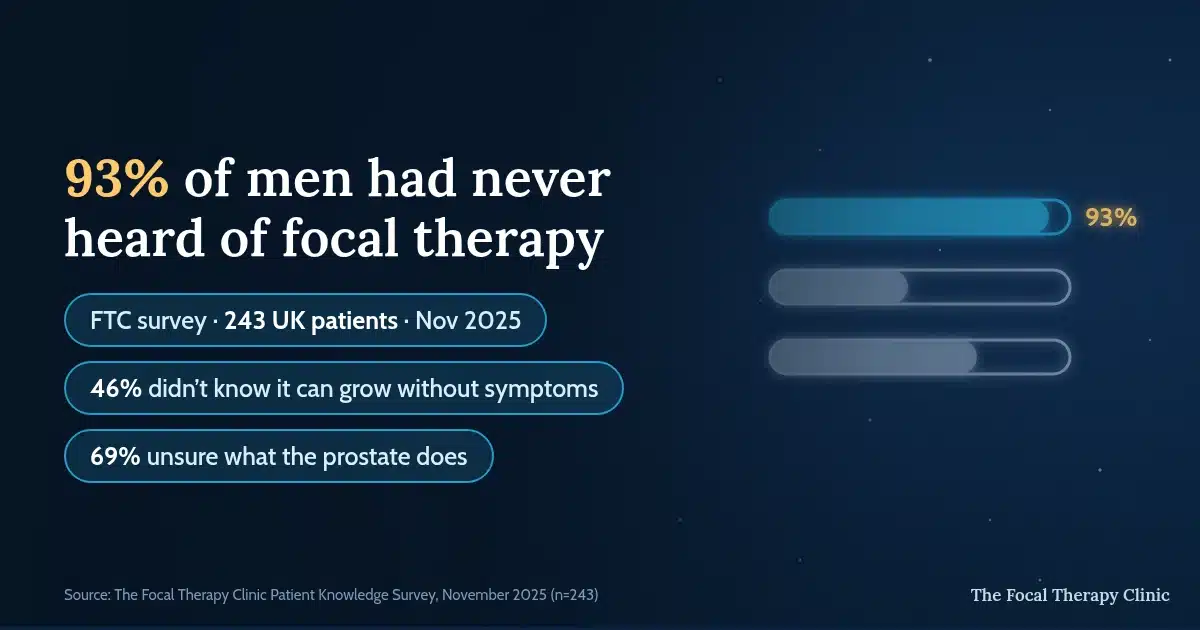
Prostate Cancer Survey: 93% of Men Had Never Heard of Focal Therapy
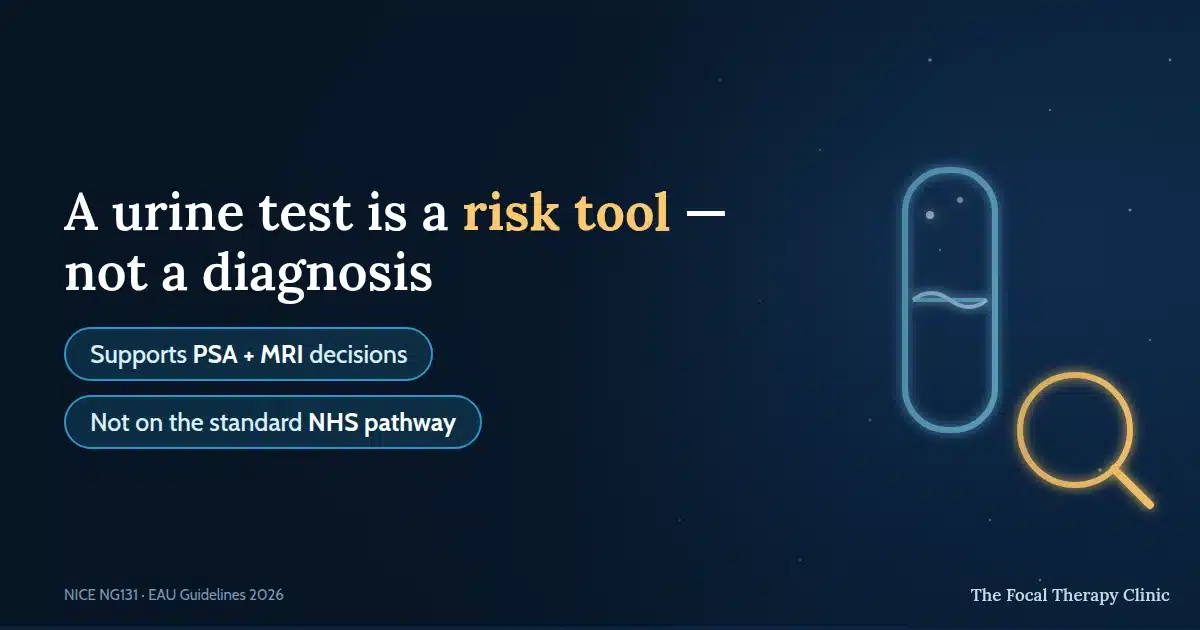
How Accurate Is a Urine Test for Prostate Cancer — and Can It Replace PSA or MRI?
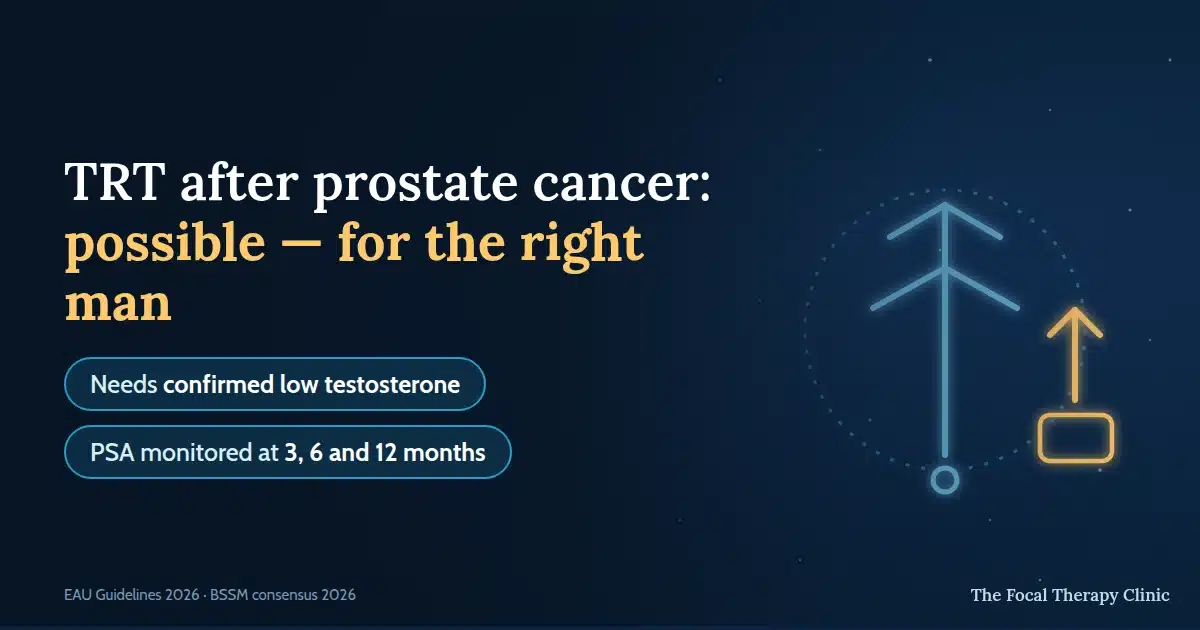
Is Testosterone Replacement Therapy Safe After Prostate Cancer Treatment?
Any questions?
If you've got any questions about your prostate cancer diagnosis or want to know more about HIFU or NanoKnife, don't hesitate to get in touch with our friendly, knowledgeable team.
Contact the team
Methodology and sources
This page references the following published evidence:
1. Lloyd T, Hounsome L, Mehay A, Mee S, Verne J, Cooper A. Lifetime risk of being diagnosed with, or dying from, prostate cancer by major ethnic group in England 2008–2010. BMC Medicine, 2015;13:171. DOI: 10.1186/s12916-015-0405-5. Co-authored by Prostate Cancer UK and Public Health England. The 1-in-4 / 1-in-8 lifetime risk and the 2x mortality figures are drawn from this paper.
2. Walavalkar K et al. A rare variant of African ancestry activates 8q24 lncRNA hub by modulating cancer associated enhancer. Nature Communications, 2020;11:3598. DOI: 10.1038/s41467-020-17325-y
3. Du Z et al. Genetic risk of prostate cancer in Ugandan men. The Prostate, 2018;78(5):370–376. DOI: 10.1002/pros.23481
4. Reddy D et al. Cancer Control Outcomes Following Focal Therapy Using High-intensity Focused Ultrasound in 1379 Men with Nonmetastatic Prostate Cancer. European Urology, 2022;81(4):407–413. DOI: 10.1016/j.eururo.2022.01.005
5. Hopstaken JS et al. An Updated Systematic Review on Focal Therapy in Localized Prostate Cancer. European Urology, 2022;81(1):5–33.
6. Prostate Cancer UK PSA Consensus, 2024. prostatecanceruk.org/for-health-professionals/guidelines/psa-consensus-2024
7. NICE NG131: Prostate cancer — diagnosis and management. National Institute for Health and Care Excellence, 2019 (updated 2021). nice.org.uk/guidance/ng131
8. Errol McKellar Foundation. Quote and photograph used with permission. errolmckellarfoundation.com
9. Hamdy FC et al. ProtecT trial 10-year outcomes. NEJM, 2016 (and follow-up: NEJM 2023).
This page was last reviewed by The Focal Therapy Clinic clinical team.
Subscribe to our newsletter
Get expert advice & the latest prostate cancer research - straight to your inbox.