
Men Over 70: Alternatives to Hormone Therapy
Men in their mid-70s are often steered toward hormone therapy without being told that focal therapy can effectively delay systemic treatment and preserve their quality of life.
- Beyond Hormones: Your treatment decision should be based on all the options available to you, not just the most common one.
- Delay systemic treatment: Focal therapy can defer the need for radiotherapy or hormone therapy for 5+ years.
- Protect your most active years: For many, this means spending the period when most men want to remain active and independent free from the side effects of hormone suppression.
Five-year failure-free survival of 82% in men aged 70 and over (Habashy/Reddy et al., J Urol 2023).

When surgery is no longer offered, what options do men have?
When surgery is off the table, men are often told hormone therapy is their only path—but for many, Focal Therapy offers a powerful middle ground.
Men in mid-70s often not offered surgery
In NHS pathways, hormone therapy is the standard recommendation when surgery is not offered (NICE NG131, 2021).
Many men feel they have "no other choice"
Quality of life not always fully discussed
View Treatment OptionsFacts & Figures
Awareness is only half the battle. These figures underscore a sobering reality: many men are entering the healthcare system only when it becomes an emergency, often without a clear roadmap of the options available to them. The Focal Therapy Clinic bridges this gap by providing expert guidance, ensuring every man understands his options long before a crisis occurs.
Speak to a Specialist ConsultantWhy hormone therapy can affect quality of life
| Key Factor | Impact on Treatment Options | Why it Matters for Older Men |
|---|---|---|
| Detection Stage | Screening catches cancer while it's still confined to the prostate. | Localised cancer is a candidate for Focal Therapy, whereas spread usually requires Hormone Therapy (ADT). |
| Tumour Mapping | Early scans can pinpoint the exact "index" tumour. | This allows for precise ablation (HIFU/Cryo), sparing the rest of the prostate and protecting urinary/sexual function. |
| Hormone Delay | Catching it early allows for local treatment first. | This can delay or entirely avoid the need for ADT, preventing bone loss (bone mineral density declines approximately 2-5% per year on long-term ADT; fracture risk increased 1.5-2x — Shahinian et al., NEJM 2005), fatigue, and muscle loss (men starting hormone therapy lose around 3-5% of lean muscle mass within the first 6 months — Smith, JCEM 2002) in your active years. |
| Treatment Range | Early diagnosis keeps Surgery and Focal Therapy on the table. | Once cancer advances, surgery is often denied to older men, leaving them with fewer, more aggressive systemic choices. |
| Survival Rate | Localised prostate cancer treatment has an incredibly high success rate. | For older men, this high success rate means the focus can shift from "survival" to "quality of life." |
Get Expert Advice & The Latest Research
Subscribe to our newsletter to receive the latest updates, expert insights, and breakthrough research on prostate cancer-delivered straight to your inbox.
Why quality of life matters more than ever in your 70s
In your 70s, "successful" treatment isn't just about controlling cancer—it's about protecting the life you've built. Your treatment should be a tool that helps you stay active, not a burden that slows you down.
Staying active, independent, and mentally sharp: Many systemic treatments like hormone therapy can lead to muscle loss, fatigue, and cognitive changes (cognitive decline measurable in 25-50% of men within 12 months of starting ADT — Nelson 2008; Gonzalez 2015). Choosing targeted options helps preserve your physical strength and cognitive clarity.
Enjoying family, hobbies, and daily routines: Whether it's travelling, playing golf, or spending time with grandkids, your daily joy depends on maintaining your energy and physical function.
Life enjoyment over just cancer control: Treatment decisions should be a balance. It's not just about adding years to your life, but ensuring those years are high-quality and free from unnecessary side effects.
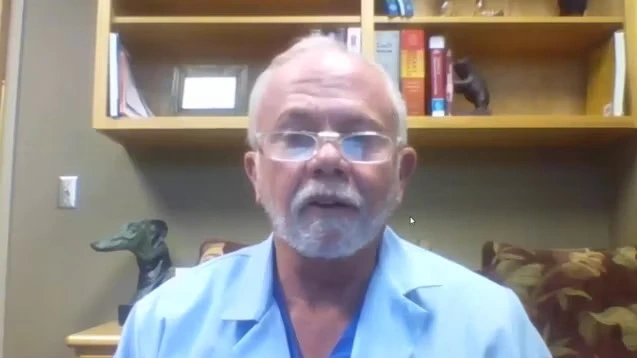
Learn more about quality of life"…there are a lot of men that have been put on extended hormonal therapy due to treatment backlogs. This is a problem because hormone therapy does not come without side effects."
Raj Nigam
The Focal Therapy Clinic Consultant
What is focal therapy?
Focal therapy is a targeted prostate cancer treatment that destroys only the tumour and a small surrounding margin, leaving the rest of the prostate, nerves and sphincter untouched. At The Focal Therapy Clinic, focal therapy is delivered using HIFU (high-intensity focused ultrasound), NanoKnife (irreversible electroporation) or cryotherapy, depending on tumour location and patient factors.
Focal therapy targets only the cancer-affected areas of the prostate.
It preserves more healthy tissue compared to traditional treatments.
Focal therapy minimises side effects like impotence and incontinence.
For a full guide to how focal therapy works, see our focal therapy overview.
HIFU
Day-case treatment under general anaesthetic. Most men return home the same day. Urinary continence preserved in 96-100% of men; erectile function preserved in 74-95% of men depending on baseline function (Hopstaken et al., European Urology 2022).NanoKnife
NanoKnife (irreversible electroporation) uses precise electrical pulses to destroy cancer cells without thermal damage to nearby nerves — particularly useful when the tumour is close to the urethra or neurovascular bundle.How focal therapy can delay or avoid hormone therapy
Focal therapy is a standalone treatment
Unlike radiotherapy, focal therapy doesn't need hormone therapy to work alongside it. The cancer is treated directly by destroying only the affected tissue, so there's no need to suppress testosterone across the whole body.
In the largest UK study of men aged 70 and over, only 6.8% required systemic hormone treatment after focal therapy in median 24-month follow-up (Habashy/Reddy et al., J Urol 2023).
Focal therapy attacks the "source"
Focal therapy uses precise energy (like HIFU or Cryotherapy) to destroy the dominant lesion. By removing the engine of the cancer, you can stop the immediate threat, often keeping the remaining low-grade cells in check for years without needing to shut down your body's hormones.
Protecting your most active years
For a man in his mid-70s, a 5-year delay of hormone therapy isn't just a "pause"—it often covers the entirety of his remaining active lifestyle. By choosing a targeted approach now, you ensure that your energy, strength, and independence remain intact during the period when most men want to remain active and independent.

Who may be suitable for focal therapy?
Even if it's not, they can talk you through your other treatment options so that you can make an informed decision about the next steps in your care.
Ideal patients for focal therapy
- Low-risk and intermediate-risk prostate cancer
Patients with a Gleason score of 6 or 7, with grade group 1 to 3 cancers (which indicates less aggressive cancer) are the best candidates. - Tumours confined to the prostate
The effectiveness of focal therapy depends on whether the cancer is restricted to one or a few distinct areas within the prostate. - PSA 20 ng/mL or lower
Candidates typically have a prostate-specific antigen (PSA) level of 20 ng/mL or lower. - No evidence of metastasis
Focal therapy is only suitable for patients whose cancer is localised and has not spread to lymph nodes, bones, or other distant areas. - Patients seeking a less invasive treatment
Men who prefer to avoid the potential side effects of surgery or whole-gland prostate radiation may find focal therapy a more attractive option. - Localised recurrence confined to the prostate
Identified within 2 years of completing radiotherapy and confirmed on MRI and targeted biopsy.
Patients who may not be eligible
- High-risk or aggressive tumours
Patients with Gleason scores of 8–10, with grade group 4 or 5 cancers, typically have more aggressive cancers that are more likely to recur. - Widespread cancer in multiple extensive areas of the prostate
If cancer is spread outside the capsule of the prostate, focal therapy may leave untreated areas, leading to recurrence. - Very high PSA levels
Patients with PSA levels significantly above 20 ng/mL are more likely to have extensive disease that cannot be effectively treated with focal therapy alone. - Men who want a single definitive treatment
Some patients prefer a one-time treatment option that eliminates cancer with minimal risk of recurrence, and also accept the potential side effects of traditional treatment. - Recurrence outside the prostate
(lymph nodes, bones or distant sites) confirmed on PSMA PET imaging.
If you fall into this group, our team can still help you navigate whole-gland treatment or radiotherapy options at our partner centres.

What happens if cancer progresses later?
Choosing Focal Therapy is a strategic move that addresses the immediate threat while keeping all your future safety nets intact.
Focal therapy does not remove future options: It only treats a specific area, it does not prevent you from having surgery, radiotherapy, or hormone therapy later if the cancer returns.
Hormones and radiation remain available: If the cancer becomes more aggressive in the future, traditional treatments like hormone therapy remain just as effective.
Postponing the use of invasive treatments: By using focal therapy first, many men successfully push back the need for harsher systemic drugs by 5 years or more, ensuring they only use them if and when they absolutely have to.
Why choose The Focal Therapy Clinic?
Only clinic using advanced MRI US fusion technologies for precision treatment
Learn MoreWe have helped thousands of people with prostates understand their diagnosis and choose the right treatment for them and their prostate cancer.
Learn MoreWe've assembled a team of urology, radiology, oncology and patient care experts with over 75 years of experience.
Learn MorePublished series of focal HIFU and NanoKnife report elimination of clinically significant cancer in 76-95% of treated zones on post-treatment biopsy at 12 months (Hopstaken et al., European Urology 2022).
Learn MoreQuestions to ask your doctor or nurse

Bring these to your GP appointment, or speak to our team first.
Frequently asked questions
No. For men over 75 with localised prostate cancer, focal therapy is often a clinically appropriate alternative to hormone therapy. Hormone therapy is the standard NHS pathway when surgery is no longer offered, but it is not the only option (NICE NG131, 2021). Focal therapy treats only the cancerous tissue using HIFU, NanoKnife or cryotherapy, avoiding the systemic side effects of long-term androgen deprivation. Eligibility depends on imaging, biopsy findings and PSA level — not age alone.
Focal therapy aims to eliminate clinically significant cancer in the treated area. In the largest UK study of men aged 70 and over, five-year failure-free survival was 82% (Habashy/Reddy et al., J Urol 2023). Mr Tim Dudderidge and Mr Raj Nigam of The Focal Therapy Clinic are co-authors of this study. For many men in their 70s and 80s, this often represents treatment that lasts their entire active lifetime. Where cancer is multifocal or aggressive, whole-gland treatment may still be needed, but focal therapy can buy years of hormone-free life first.
Yes, age is not an exclusion criterion for focal therapy. Suitability depends on the location and grade of the cancer, PSA level (typically 20 ng/mL or lower), and absence of metastasis. Many men in their 70s and 80s are excellent candidates because focal therapy is performed as a day-case procedure under sedation or general anaesthetic — shorter recovery and lower anaesthetic risk than radical surgery. The Focal Therapy Clinic regularly treats men into their 80s.
Most men do not. Focal therapy is a standalone treatment — unlike radiotherapy, it does not require hormone therapy as a "primer" to work. In the Habashy/Reddy 2023 study of 649 men aged 70 and over, only 6.8% required systemic hormone treatment in median 24-month follow-up. For many men over 75, focal therapy delays or entirely avoids the need for long-term hormone therapy.
Focal therapy preserves urinary continence in 96-100% of men and erectile function in 74-95% of men, because it spares the surrounding healthy tissue, nerves and sphincter (Hopstaken et al., European Urology 2022). Hormone therapy, by contrast, causes fatigue, muscle and bone loss, hot flushes, mood changes and erectile dysfunction in a high proportion of patients (Smith JCEM 2002; Shahinian NEJM 2005). Focal therapy side effects are local and short-lived; hormone therapy side effects are systemic and continue for as long as treatment continues.
Focal therapy using HIFU is covered by current NICE guidance (HTG667). It is available on the NHS at a small number of specialist centres, but capacity is limited and most men are referred privately to access treatment within weeks rather than months. The Focal Therapy Clinic accepts both private and insured patients across our London, Birmingham, Bristol, Oxford and Windsor sites. We can also advise on NHS pathways during your consultation.
Most candidates have low- or intermediate-risk localised prostate cancer (Gleason 6 or 7, grade group 1-3), a PSA of 20 ng/mL or lower, and no evidence of cancer spread outside the prostate. The best way to know is a specialist consultation with imaging review — our team reviews your MRI, biopsy results and PSA history to give a clear eligibility opinion within one consultation.

Learn more about focal therapy and prostate cancer
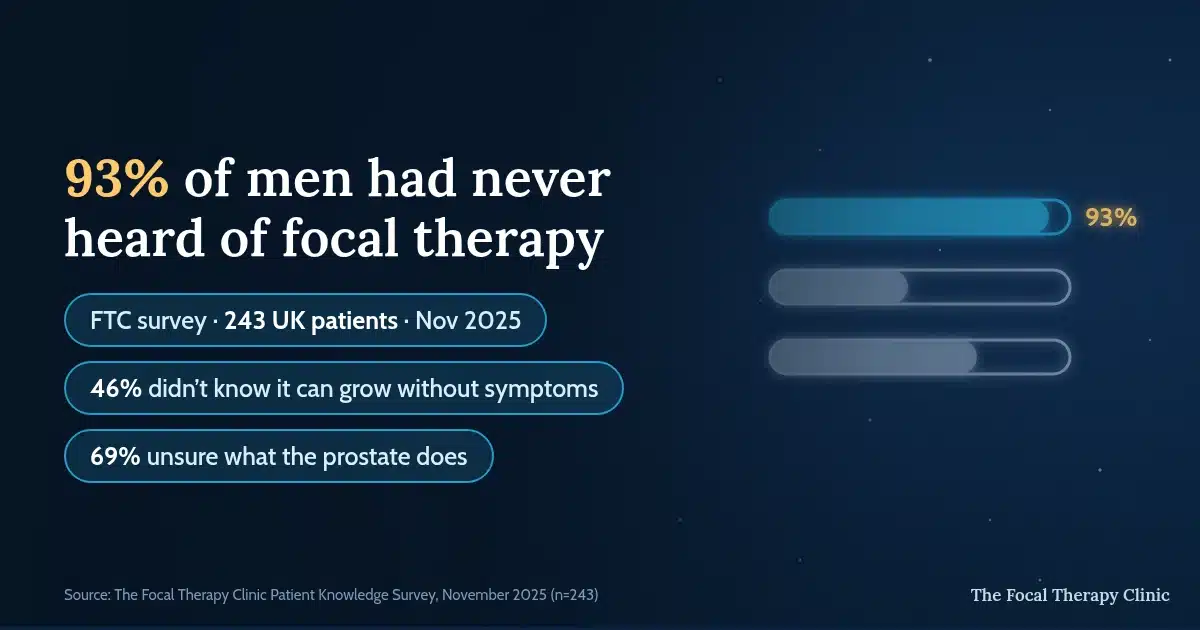
Prostate Cancer Survey: 93% of Men Had Never Heard of Focal Therapy
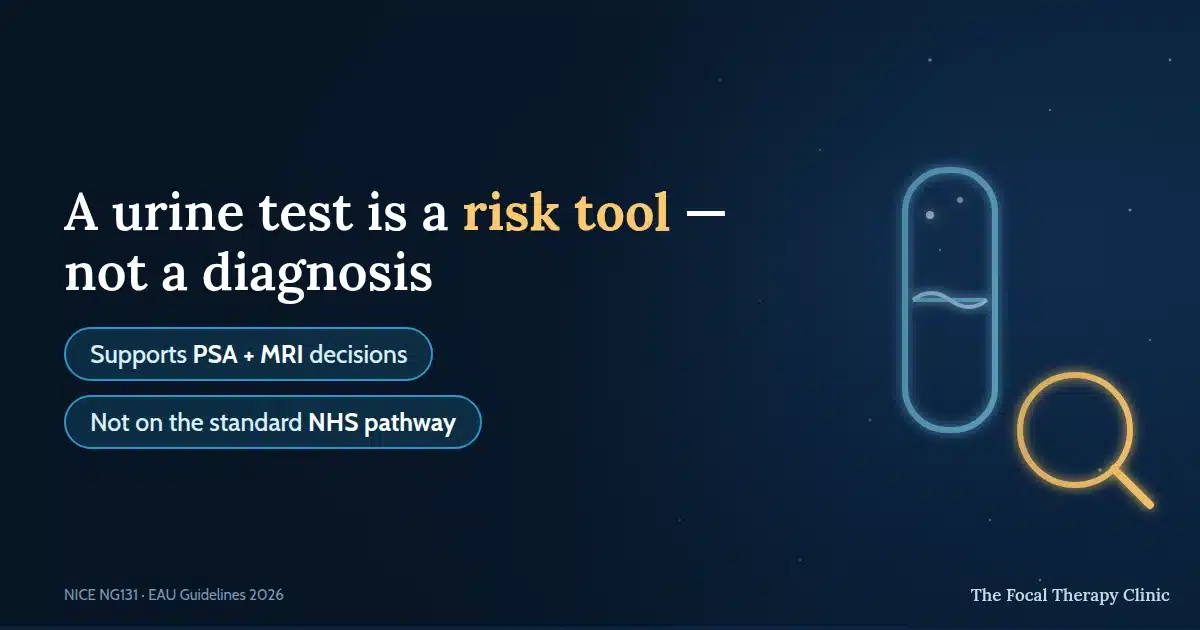
How Accurate Is a Urine Test for Prostate Cancer — and Can It Replace PSA or MRI?
Is Testosterone Replacement Therapy Safe After Prostate Cancer Treatment?
Any questions?
If you've got any questions about your prostate cancer diagnosis or want to know more about HIFU or NanoKnife, don't hesitate to get in touch with our friendly, knowledgeable team.
Contact the team
Methodology and sources
This page references the following published evidence:
1. Habashy D, Reddy D, Peters M, Shah TT, van Son M, van Rossum PSN, Tanaka MB, Cullen E, Engle R, McCracken S, Greene D, Hindley RG, Emara A, Nigam R, Orczyk C, Shergill I, Persad R, Virdi J, Moore CM, Arya M, Winkler M, Emberton M, Ahmed HU, Dudderidge T. Evaluation of Outcomes Following Focal Ablative Therapy for Treatment of Localized Clinically Significant Prostate Cancer in Patients >70 Years: A Multi-institute, Multi-energy 15-Year Experience. The Journal of Urology. 2023;210(1):108-116. PMID: 37014172. DOI: 10.1097/JU.0000000000003443. The 5-year failure-free survival figure cited on this page is drawn from this study of 649 men aged ≥70. Mr Tim Dudderidge and Mr Raj Nigam of The Focal Therapy Clinic are named co-authors.
2. Reddy D et al. Cancer Control Outcomes Following Focal Therapy Using High-intensity Focused Ultrasound in 1379 Men with Nonmetastatic Prostate Cancer: A Multi-institute 15-year Experience. European Urology. 2022;81(4):407-413. PMID: 35123819. DOI: 10.1016/j.eururo.2022.01.005
3. Hopstaken JS et al. An Updated Systematic Review on Focal Therapy in Localized Prostate Cancer: What Has Changed over the Past 5 Years? European Urology. 2022;81(1):5-33.
4. NICE HTG667: Focal therapy using high-intensity focused ultrasound for localised prostate cancer. National Institute for Health and Care Excellence, HealthTech guidance. nice.org.uk/guidance/htg667
5. NICE NG131: Prostate cancer — diagnosis and management. National Institute for Health and Care Excellence (2019, updated 2021). nice.org.uk/guidance/ng131
6. Smith MR. Changes in fat and lean body mass during androgen-deprivation therapy for prostate cancer. J Clin Endocrinol Metab, 2002;87(2):599-603. DOI: 10.1210/jcem.87.2.8210
7. Shahinian VB et al. Risk of fracture after androgen deprivation for prostate cancer. NEJM. 2005;352(2):154-164.
8. FTC patient survey 2025 (n=243). Methodology document available on request.
9. FTC outcomes register (internal). Confirm with FTC clinical team before publication.
Subscribe to our newsletter
Get expert advice & the latest prostate cancer research - straight to your inbox.