
At a Glance
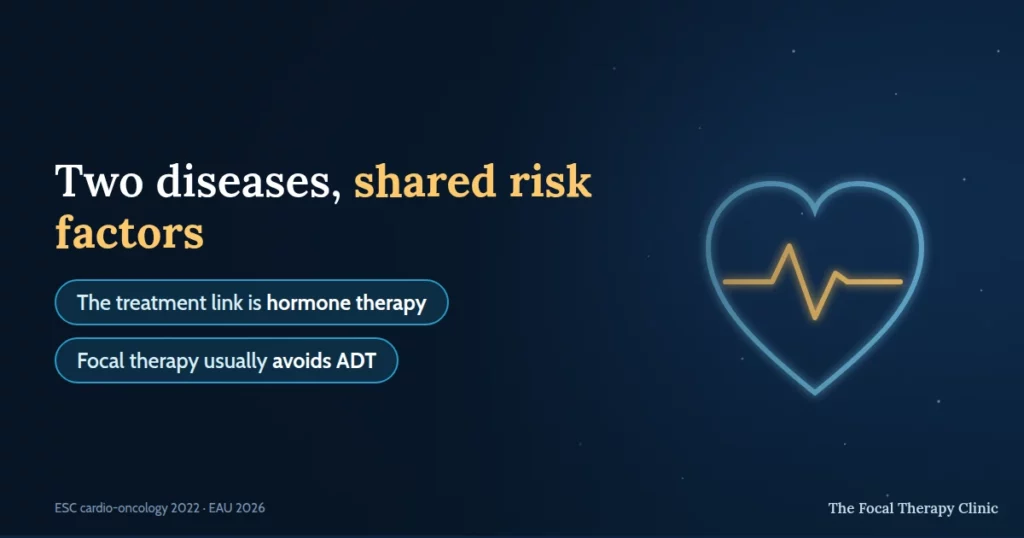
Prostate cancer and heart disease share common risk factors — including age, smoking, high blood pressure, diabetes and raised cholesterol — but prostate cancer does not typically cause a heart attack directly. The clearest treatment-related link involves androgen deprivation therapy (ADT), which can alter cholesterol, blood sugar and body composition in some men and may increase cardiovascular risk over time.¹ ² At The Focal Therapy Clinic, our consultants review each patient’s full health profile — including heart health — before recommending any treatment pathway.
Key takeaways:
- Shared risk factors — age, smoking, diabetes, obesity and high blood pressure raise risk for both conditions; a diagnosis of one warrants attention to the other.
- ADT and the heart — androgen deprivation therapy can affect cholesterol, blood sugar and body composition; men with existing heart disease need careful monitoring before and during ADT.²
- Radiation is generally low-risk for the heart — in prostate treatment the heart is rarely in the field; direct cardiac exposure is far lower than in chest radiotherapy.
- Lifestyle changes matter — stopping smoking, regular exercise, weight management and a healthy diet reduce avoidable cardiovascular risk during and after treatment.
- For localised disease — selected men may be suitable for focal therapy, which avoids ADT in most cases; suitability depends on individual cancer characteristics.
Do prostate cancer and heart disease share risk factors?
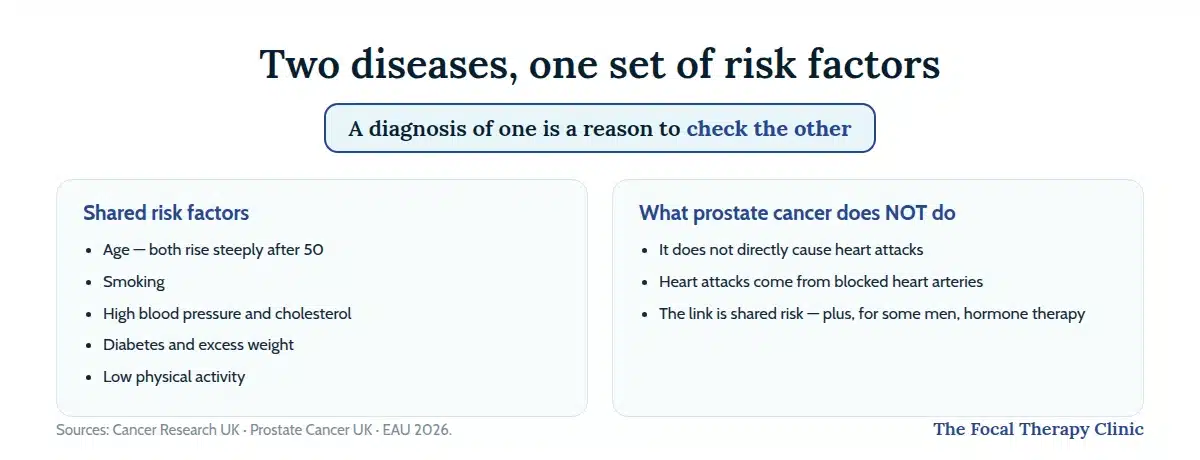
Heart disease is more common as men get older — and so is prostate cancer. That overlap is one reason the two are often seen together.
Factors that increase heart and blood-vessel risk include smoking, high blood pressure, raised cholesterol, diabetes, excess weight, low physical activity and family history. They don’t mean you will develop heart disease — they are warning signs that give you and your doctor the chance to lower risk early.
A cancer diagnosis can also disrupt sleep, mood, activity and eating — making heart health easier to neglect just when it needs more attention. For most men, prostate cancer itself is not the direct cause of a heart attack; the more important link is shared risk that may have been present before the diagnosis — and, for some men, treatment effects on how the body handles fat and sugar.
⚠ If you have chest pain or tightness, pain spreading to the arm, neck or jaw, severe breathlessness, collapse, or symptoms that feel like a heart attack — seek urgent medical care. Do not wait for a routine appointment.
Does ADT affect the heart?
Dr Christos Mikropoulos explains the side effects of hormone therapy — what lowering testosterone can mean for the heart, bones and daily life.
ADT lowers testosterone, which prostate cancer cells can use to grow. It is often used for advanced disease, and commonly alongside radiotherapy for intermediate-risk, high-risk or locally advanced cancer — it is not usually the main treatment for low-risk localised disease.
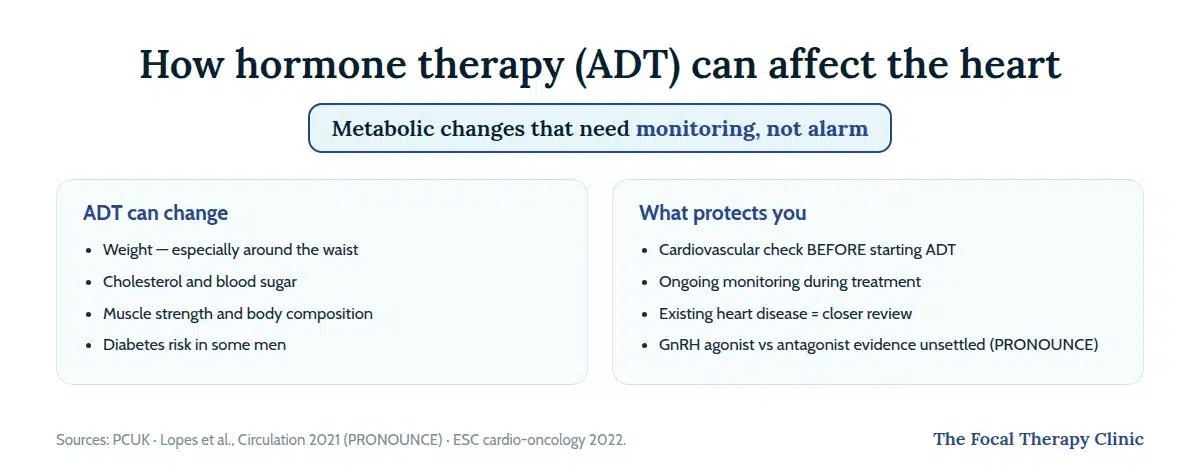
Lower testosterone can bring weight gain (especially around the waist), loss of muscle strength, tiredness, cholesterol changes, blood-sugar changes, a higher diabetes risk in some cases — and possible worsening of existing heart risk.¹ ² This does not mean every man on ADT will develop heart problems; many complete treatment without a cardiac event. Risk depends on starting health, age, treatment length and other medicines.
Evidence on ADT and heart risk
Research links ADT with changes in metabolic health — weight, cholesterol, blood sugar, body composition — which can affect cardiovascular risk over time.² Guidelines now emphasise checking cardiovascular risk before and during ADT, especially with existing heart disease, diabetes, high blood pressure or multiple risk factors.⁶
There is also interest in whether different ADT types differ in heart risk: older GnRH agonist injections have been linked with increased cardiovascular risk in some studies, while GnRH antagonists may carry lower risk in some research — but the PRONOUNCE randomised trial did not settle the question, and the evidence remains mixed.⁴ Your doctors weigh the whole picture: cancer control, heart history, convenience, side effects, bone health and other medicines.
Does prostate radiotherapy affect heart health?
In prostate cancer, the heart is not usually in the radiation field — unlike some chest cancers — so direct cardiac exposure is much lower, and prostate radiotherapy does not carry the cardiac risks seen with breast or lung radiotherapy. Older men having treatment may already carry cardiovascular risk, so general heart health still needs attention; where hormone therapy accompanies radiation, the ADT is usually more relevant to heart risk than the radiation itself. Modern planning keeps improving safety — discuss your individual risk with your team.
Lifestyle factors that matter most
Healthy habits reduce cardiovascular risk and support recovery — small, consistent changes beat extreme short-term efforts:
- Stopping smoking — the single biggest step
- Managing weight and staying active — regular walking or resistance exercise
- Good sleep, blood-pressure control, well-controlled diabetes
- Limiting alcohol and managing stress
- A heart-friendly diet — vegetables, fibre, oily fish, beans and whole grains support cholesterol and glucose control (see our diet and prostate cancer guide)
Exercise also improves fatigue and mood. NICE recommends supervised resistance and aerobic exercise for men starting or having ADT, where suitable⁶ — seek advice before intense new training programmes.
Get Expert Advice & The Latest Research
Subscribe to our newsletter to receive the latest updates, expert insights, and breakthrough research on prostate cancer-delivered straight to your inbox.
What heart health checks are useful during treatment?
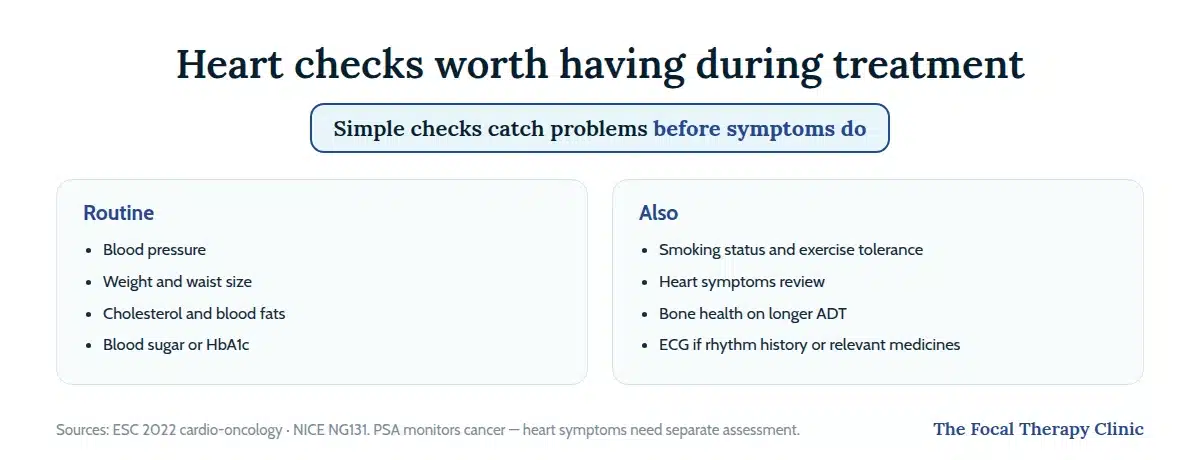
Routine checks catch problems before symptoms become serious and help your team adjust treatment safely: blood pressure, weight and waist size, cholesterol, blood sugar or HbA1c, smoking status, exercise tolerance, heart symptoms, and bone health with longer ADT. Some men need an ECG — more likely with a history of rhythm problems, heart disease, or rhythm-affecting medicines.
Cancer follow-up continues in parallel: PSA monitors prostate cancer activity, but it does not diagnose heart disease — heart symptoms need separate assessment.
When to seek specialist care
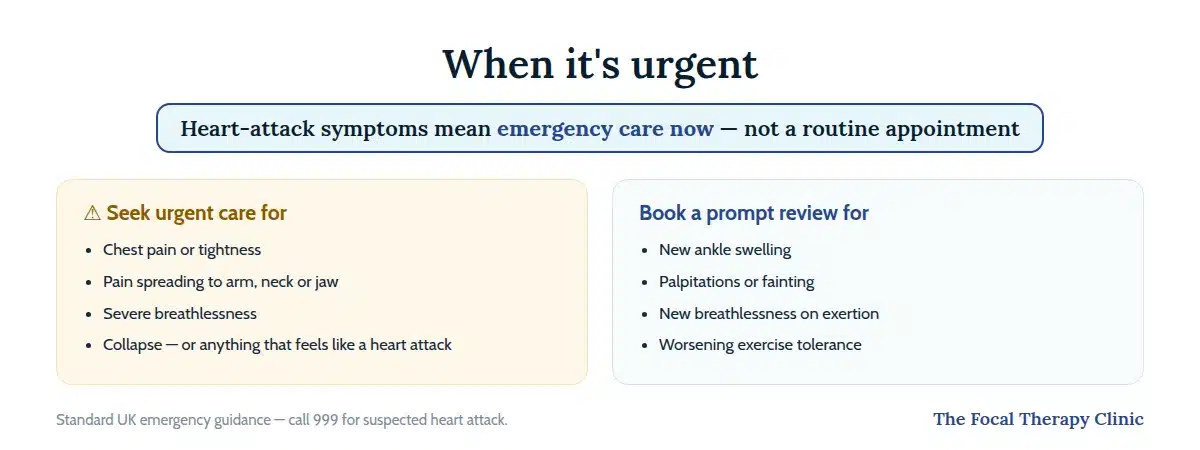
Extra cardiology input before treatment — especially before ADT — is valuable if you have: a previous heart attack, angina, heart failure, stroke, abnormal rhythm, diabetes, several risk factors, new chest pain or breathlessness, new ankle swelling, or palpitations/fainting.
Some centres run joint cardio-oncology services;⁶ where they don’t, your GP, cardiologist, oncologist and urologist can still coordinate. Treatment suitability depends on both cancer factors and general health — ask whether alternative options fit your medical profile better, and consider a second opinion.
The Focal Therapy Clinic approach
For localised prostate cancer, treatment choice needs careful thought: cancer control, urinary and sexual function, recovery time, general health and personal priorities. Whole-gland treatments remain important standard options — often the best choice for higher-risk or more widespread disease within the prostate.
For selected men, focal therapy treats the known cancer area rather than the whole prostate — typically without ADT — aiming to preserve continence and erectile function; in FTC’s audited series of 265 men, 97% maintained continence and 90%+ preserved sexual function. Cases are reviewed by an experienced multidisciplinary team (2,500+ procedures; 75+ years combined experience) offering HIFU (NICE HTG667) and NanoKnife (NICE HTG688), with balanced advice from assessment through follow-up.
For the treatment landscape this article touches on, see the prostate cancer guide — from diagnosis through to recovery.
Frequently Asked Questions
Does prostate cancer cause heart attacks?
Not directly. A heart attack usually results from blocked heart arteries. The link is shared risk factors — age, smoking, blood pressure, diabetes, cholesterol — plus, for some men, the metabolic effects of hormone therapy.¹
Is hormone therapy dangerous for my heart?
ADT can worsen cardiovascular risk factors (weight, cholesterol, blood sugar), and men with existing heart disease need assessment and monitoring before and during treatment.² Many men complete ADT without a cardiac event — the point is planned monitoring, not alarm.
Which is safer for the heart — GnRH agonists or antagonists?
Some studies suggested antagonists may carry lower cardiovascular risk, but the PRONOUNCE randomised trial did not confirm a clear difference, and the evidence is not settled.⁴ Your team weighs heart history alongside cancer control and practicality.
Will radiotherapy to my prostate damage my heart?
Direct cardiac exposure from prostate radiotherapy is very low — the heart is far from the treatment field. The hormone therapy sometimes given alongside is usually more relevant to heart risk than the radiation.
Can focal therapy help me avoid hormone therapy?
For suitable men with localised disease, yes — focal therapy is typically delivered without ADT. Suitability depends on your cancer’s position, grade and volume, decided through multidisciplinary review.
This content is not intended to be a substitute for professional medical advice, diagnosis, or treatment. Always seek the advice of your urologist, cardiologist or other qualified health provider with any questions you may have regarding a medical condition.
References
- Cancer Research UK. Sex hormones, heart disease and diabetes. https://www.cancerresearchuk.org/about-cancer/prostate-cancer/practical-emotional-support/hormone-symptoms/sex-hormones-heart-disease-diabetes
- Prostate Cancer UK. Hormone therapy; Side effects of hormone therapy. https://prostatecanceruk.org/prostate-information-and-support/treatments/hormone-therapy
- European Association of Urology. EAU Guidelines on Prostate Cancer. 2026. https://uroweb.org/guidelines/prostate-cancer
- Lopes RD, Higano CS, Slovin SF, et al. Cardiovascular Safety of Degarelix Versus Leuprolide in Patients With Prostate Cancer: The Primary Results of the PRONOUNCE Randomized Trial. Circulation. 2021;144(16):1295–1307.
- National Institute for Health and Care Excellence. Prostate cancer: diagnosis and management (NG131). 2019, updated 2021. https://www.nice.org.uk/guidance/ng131
- European Society of Cardiology. 2022 ESC Guidelines on cardio-oncology. https://www.escardio.org/guidelines