

Reading Time: 10 minutes
Medically Approved by Dr Aqua Asif (15/3/25) and Mr Raj Nigam Consultant Urologist GMC: 3265226. (24/3/2026)
At a Glance
Prostate cancer itself rarely stops ejaculation — it is the treatment that typically causes changes. Radical prostatectomy removes the prostate and seminal vesicles, leading to dry orgasms in virtually all cases, while focal therapies such as HIFU (NICE HTG667) and NanoKnife (NICE HTG688) aim to preserve ejaculatory function. In our clinic’s experience, 90%+ of men maintain sexual function after focal therapy (FTC audit, n=265).
Cancer vs Treatment – Prostate cancer itself does not stop ejaculation; surgery, radiation, and hormone therapy can all cause changes
Dry orgasms after surgery – Radical prostatectomy removes the structures that produce semen, but orgasmic sensation usually remains
Focal therapy preserves more – HIFU and NanoKnife treat only the affected area, with 90%+ sexual function preservation (FTC audit, n=265)
Fertility planning matters – Sperm banking before treatment is recommended for men who may want children
Support is available – Pelvic floor exercises, counselling, and specialist guidance can help manage any changes
Does Prostate Cancer Stop You From Ejaculating?
Prostate cancer itself rarely stops ejaculation. It is the treatment — not the cancer — that typically causes changes to ejaculatory function. The prostate gland contributes to semen production, so treatments that remove or damage it can reduce or eliminate ejaculatory fluid. However, most men continue to experience orgasmic sensation even after treatment.
The extent of change depends on the treatment chosen. Radical prostatectomy removes the prostate and seminal vesicles entirely, causing dry orgasms in virtually all cases. Radiotherapy can gradually reduce semen volume over months. Focal therapies such as HIFU (NICE HTG667) and NanoKnife (NICE HTG688) treat only the affected area, with 90%+ of men maintaining sexual function (FTC audit, n=265).
Can I have children after prostate cancer: Mr Raj Nigam
Does Surgery Effect Ejaculation?
What is a Dry Orgasm?
A dry orgasm means reaching climax without any semen being released. After Radical Prostatectomy, dry orgasms occur in virtually all men because the surgery removes the prostate gland and seminal vesicles — the structures that produce most of the fluid in semen.
Most men still feel the rhythmic contractions of orgasm — the sensation remains, but the ejaculatory fluid is absent. Over time, many men adjust and continue to enjoy intimacy. Discussing expectations with your consultant before surgery can help you prepare for this change.
Focal therapies such as HIFU and NanoKnife treat only the cancerous area, preserving the surrounding prostate tissue. In our clinic’s experience, 90%+ of men maintain sexual function after focal therapy (FTC audit, n=265), compared to significantly higher rates of sexual dysfunction after radical prostatectomy.
“If preserving ejaculatory function is a priority, focal therapy offers an alternative to radical surgery. In the unfortunate 5-10% of cases where cancer isn’t fully treated or returns in another prostate area, additional options remain available including another focal therapy session or traditional treatments.”
Mr Raj Nigam, Consultant Urological Surgeon (FRCS(Urol), GMC: 3265226)
Can Surgery Cause Nerve Damage
Surgery can damage the neurovascular bundles that run alongside the prostate. These nerves control erections and contribute to orgasmic sensation. Nerve-sparing techniques aim to preserve them, but partial damage remains a possibility even with experienced surgeons.
Recovery takes time — nerve function can improve gradually over 6 to 24 months following surgery. Some men regain full erectile function, while others may need medication or other support.
Focal therapy minimises nerve risk— because HIFU (NICE HTG667) and NanoKnife (NICE HTG688) target only the cancerous area, the neurovascular bundles are typically preserved. In our clinic’s experience, 90%+ of men maintain erections after focal therapy (FTC audit, n=265).
What is Climaturia (Urine Leakage During Orgasm)?
Climacturia — urine leakage during orgasm — can occur after radical prostatectomy because the surgery disrupts the muscles and valves that control urinary flow. For some men the leakage is minimal; for others it can be more noticeable
Practical steps to manage climacturia
Empty your bladder – before sexual activity to reduce the volume available to leak
Pelvic floor exercises – strengthening these muscles improves urinary control over time
Specialist guidance – a continence nurse or physiotherapist can provide a tailored programme
Focal therapy advantage – Because focal therapies preserve the surrounding prostate tissue and urinary structures, the risk of incontinence is significantly lower.
How does Treatment Affect Same-Sex Relationships
The physical changes after prostate cancer treatment — including dry orgasms, reduced ejaculate, and erectile changes — are the same regardless of sexual orientation. However, men in same-sex relationships may have additional considerations around sexual practices, roles, and how to adapt intimacy after treatment.
Key considerations for same-sex couples:
Open communication – discussing expectations and concerns with your partner is essential for adapting sexual expression after treatment<
Professional support – sex therapists, counsellors, and specialist nurses trained in sexual health after prostate cancer can offer practical guidance
Fertility planning – for couples considering surrogacy, sperm banking before treatment is recommended as surgery removes the structures needed for natural semen production
Treatment choice matters – focal therapies such as HIFU and NanoKnife preserve more sexual function than radical surgery, with 90%+ of men maintaining erections at The Focal Therapy Clinic (FTC audit, n=265)
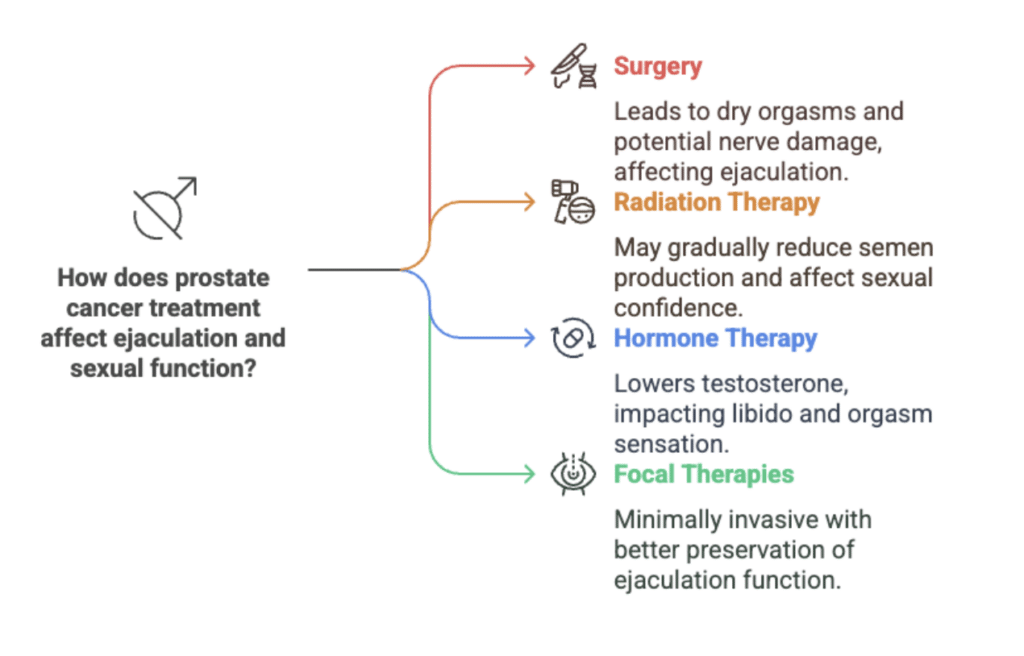
How do Different Treatments Affect Ejaculation?
Different treatments have different effects on ejaculation:
| Treatment Type | Impact on Ejaculation |
| Surgery (Radical Prostatectomy) | Can lead to dry orgasms because the prostate gland and seminal vesicles, which produce most of the fluid in semen, are removed. Orgasms usually continue, but without the usual release of fluid. |
| Radiation Therapy | Radiation can damage cells responsible for producing and transporting semen, leading to decreased volume over time. Some men notice gradual changes rather than an immediate stop. |
| Hormone Therapy | By lowering testosterone levels, hormone therapy can reduce libido and affect the quality of erections and orgasms. Men may notice less semen production and changes in orgasm sensation. |
| Focal Therapy (e.g. HIFU, NanoKnife) | These minimally invasive approaches often target specific areas of the prostate, aiming to preserve surrounding healthy tissue. Many men experience fewer side effects compared to radical surgery, though some changes in ejaculation can still occur. |
For men considering these treatments, understanding the benefits of focal therapy treatment can help in making informed decisions about preserving sexual function while effectively targeting cancer.
Does focal therapy affect ejaculation and sexual function?
Focal therapy treats only the cancerous area of the prostate, helping preserve the surrounding nerves and tissue. At The Focal Therapy Clinic, 90%+ of men maintain sexual function after focal therapy (FTC audit, n=265) — worth discussing if preserving ejaculatory function matters to you.
Get Expert Advice & The Latest Research
Subscribe to our newsletter to receive the latest updates, expert insights, and breakthrough research on prostate cancer-delivered straight to your inbox.
Frequently Asked Questions
Does prostate cancer stop you from ejaculating?
Prostate cancer itself does not usually stop ejaculation. However, certain treatments—especially radical prostatectomy—can lead to “dry orgasms” by removing or damaging the glands that produce most of the seminal fluid. Radiation therapy can also reduce or change semen production over time. In many cases, men still experience the sensation of orgasm, but the volume of fluid released may decrease significantly or disappear.
How does prostate cancer affect you physically?
Early-stage prostate cancer often has no symptoms. When treatment is needed, the most common physical effects depend on the treatment chosen: radical prostatectomy can cause erectile dysfunction and urinary incontinence; radiation may cause fatigue and gradual changes to urinary and sexual function; hormone therapy reduces libido and energy.. Side effects vary widely depending on the type of treatment, the stage of the cancer, and a man’s overall health.
Does ejaculation prevent prostate cancer?
Some studies have suggested that frequent ejaculation may be associated with a slightly reduced risk of prostate cancer, but the research in this area is not conclusive. Most healthcare professionals agree that while maintaining a healthy sex life has several benefits, there is no guaranteed way to prevent prostate cancer solely through ejaculation frequency.
References
- Cancer Research UK. (2023). Sex and Prostate Cancer. https://www.cancerresearchuk.org/about-cancer/prostate-cancer/practical-emotional-support/sex-relationships
- Prostate Cancer UK. (2023). Sexual Problems and Prostate Cancer. https://prostatecanceruk.org/prostate-information-and-support/living-with-prostate-cancer/sex-and-relationships
- Salonia A, Burnett AL, Graefen M, et al. Prevention and management of postprostatectomy sexual dysfunctions part 2: recovery and preservation of erectile function, sexual desire, and orgasmic function. Eur Urol. 2012;62(2):273-286. doi:10.1016/j.eururo.2012.04.047