Mr Raj Nigam

Headshot
Consultant Urologist
MBBS, FRCS, FRCS (Urol), FEBU, MD
GMC: 3265226
Qualifications
  • MBBS – University College London (1987)
  • FRCS – Royal College of Surgeons of England (1991)
  • FRCS (Urol) – Intercollegiate Board (1997)
  • FEBU – Fellow of the European Board of Urology (1998)
  • MD – University of London (1999)
Professional Memberships
  • British Association of Urological Surgeons
  • European Association of Urology
  • American Urological Association
  • Royal Society of Medicine
  • Royal College of Surgeons of England
Book an Appointment
Mr Raj Nigam Introduction​
Headshot of Mr Raj Nigam, Consultant Urological Surgeon

A UK leader in prostate cancer care

Mr Raj Nigam is a consultant urologist with over 25 years’ experience. He specialises in prostate cancer diagnostics, focal therapy, andrology, erectile dysfunction, and male infertility. He is one of the UK’s leading experts in focal therapy using High Intensity Focused Ultrasound (HIFU), focal cryotherapy and NanoKnife (IRE). He is also an accredited trainer in focal therapies.

He was appointed Consultant Urological Surgeon to the Royal Surrey County Hospital in 2000 and to the Institute of Urology at University College London Hospitals in 2009. His private practice is based in London and Guildford.

Book an Appointment

Hear what Mr Raj Nigam has to say about Focal Therapy

Mr. Raj Nigam: Does Focal Therapy work?
00:41
Playlist
Raj Nigam Consultant page
Book your consultation
SUMMARY
Mr. Raj Nigam (Consultant Urologist, The Focal Therapy Clinic): Focal therapy works, but not all men are suitable. Careful selection is crucial, with a detailed analysis ensuring that only the right candidates receive treatment for their specific cancer, maximizing effectiveness and safety. Mr. Raj Nigam - https://www.thefocaltherapyclinic.co.uk/about-us/our-consultants/mr-raj-nigam/ Focal Therapy - https://www.thefocaltherapyclinic.co.uk/focal-therapy/ suitability - https://www.thefocaltherapyclinic.co.uk/focal-therapy/medical-suitability/

TRANSCRIPT
Mr. Raj Nigam: ### **Does Focal Therapy Work?** Yes, **focal therapy is effective**—I wouldn’t have dedicated **18 years to this field if it didn’t work**. However, **not every man is suitable** for focal therapy. ### **How We Determine Suitability** - Many men **like the concept of focal therapy**, but careful **patient selection is critical**. - We spend significant time **analyzing existing medical data** or conducting **further assessments** to confirm whether a patient is a good candidate. - We ensure that the **treatment is tailored to the individual and their specific prostate cancer characteristics**. ### **A Highly Personalized Approach** Focal therapy is **not a one-size-fits-all treatment**—it is a **nuanced, carefully selected option** for the **right patients**. For those who qualify, **it offers excellent outcomes with minimal side effects**.

This content is not intended to be a substitute for professional medical advice, diagnosis, or treatment. Read more.
Mr Raj Nigam: Can I have children after having prostate cancer
00:58
Playlist
Raj Nigam Consultant page
Book your consultation
SUMMARY
Mr. Raj Nigam (Consultant Urologist, The Focal Therapy Clinic): Focal therapy preserves ejaculation and sperm production, unlike radical prostatectomy or radiotherapy. Some men treated with focal therapy have successfully fathered children, making it a viable option for those concerned about fertility. Raj Nigam - https://www.thefocaltherapyclinic.co.uk/about-us/our-consultants/mr-raj-nigam/ Ferility - https://www.thefocaltherapyclinic.co.uk/why-choose-focal-therapy/sex-and-relationships/ 00:00 Key Advantage of Focal Therapy: Protecting Surrounding Structures 00:14 Focal Therapy vs. Radical Treatments (Surgery & Radiotherapy) 00:38 Fertility & Focal Therapy 00:48 Preserving Natural Reproductive Function

TRANSCRIPT
Mr. Raj Nigam: One of the key **advantages of focal therapy** is that it **does not damage surrounding structures** or the **rest of the prostate**, which plays an important role in **semen production**. ### **Focal Therapy vs. Radical Treatments** - **Radical prostatectomy and radiotherapy** almost always result in **loss of ejaculation and sperm production**. - Men who want to have children after those treatments must **cryopreserve (freeze) sperm beforehand** and undergo **assisted conception** with their partner. ### **Fertility & Focal Therapy** - With **focal therapy**, men **retain the ability to ejaculate and produce sperm** naturally. - I have personally treated **at least three men who have successfully fathered children after focal therapy**. For men concerned about **fertility**, focal therapy offers a **significant advantage**, allowing them to **preserve natural reproductive function** while treating prostate cancer.

This content is not intended to be a substitute for professional medical advice, diagnosis, or treatment. Read more.
Mr Raj Nigam: Is NanoKnife better than HIFU?
01:00
Playlist
Raj Nigam Consultant page
Book your consultation
SUMMARY
Mr. Raj Nigam (Consultant Urologist, The Focal Therapy Clinic): HIFU and NanoKnife are chosen based on tumor location. HIFU treats the posterior prostate, while NanoKnife targets anterior tumors. Comparative data between them is still evolving, and the choice depends on tumor characteristics and patient preference. Raj Nigam - https://www.thefocaltherapyclinic.co.uk/about-us/our-consultants/mr-raj-nigam/ Nanoknife - https://www.thefocaltherapyclinic.co.uk/focal-therapy/nanoknife-ire-treatment/ HIFU - https://www.thefocaltherapyclinic.co.uk/focal-therapy/hifu-treatment-prostate-cancer/ 00:00 Using HIFU for Posterior Prostate Tumors 00:13 How NanoKnife Differs from HIFU 00:23 Why NanoKnife Is Used for Anterior Tumors 00:38 Is HIFU or NanoKnife Better? 01:00 Treatment Choice Based on Tumor Location 01:07 Future Research & Refining Treatment Selection

TRANSCRIPT
Mr. Raj Nigam: At present, we are using **HIFU** to treat tumors located in the **posterior part of the prostate**, which is **closest to the rectum**. This is because **HIFU energy is delivered through the rectum**. ### **How NanoKnife Differs** - **NanoKnife uses electrodes** placed through the **perineum** instead of the rectum. - This allows treatment in **any part of the prostate**, guided by **MRI-ultrasound fusion**. - Currently, we are using **NanoKnife for anterior (top) prostate tumors**, where it is **proven to be safe**. ### **Which Treatment is Better?** - We **do not yet have comparative data** showing whether **HIFU or NanoKnife** is superior. - **Treatment choice is based on tumor location**: - **HIFU for posterior tumors**. - **NanoKnife for anterior tumors**. As research continues, we aim to refine our approach and determine the **best treatment for different prostate cancer cases**.

This content is not intended to be a substitute for professional medical advice, diagnosis, or treatment. Read more.

Hospital Address

42-52 Nottingham Place
London W1U 5NY
United Kingdom

Getting Here

Hospital Address

20 Devonshire Place
London
W1G 6BW

Getting Here

Hospital Address

Harvey Road
Guildford
GU1 3LX

Getting Here

Professional Qualifications

  • MBBS, University of London - 1987
  • FRCS, Royal College of Surgeons of England - 1991
  • FRCS (Urol), Intercollegiate Board - 1997
  • FEBU, Fellow of the European Board of Urology - 1998
  • MD, University of London - 1999

Professional Affiliations

  • General Medical Council
  • British Association of Urological Surgeons
  • American Urological Association
  • Royal Society of Medicine
  • European Association of Urology

Current Appointment

  • University College Hospitals, London
  • Royal Surrey Foundation Trust, Surrey

Previous Appointments

  • St Bartholomew’s Hospital, London

Awards and Distinctions

  • Clinical Excellence Award
  • National Strategic Health Authority Award

Professional profiles

Learn more about Focal Therapy and Prostate Cancer


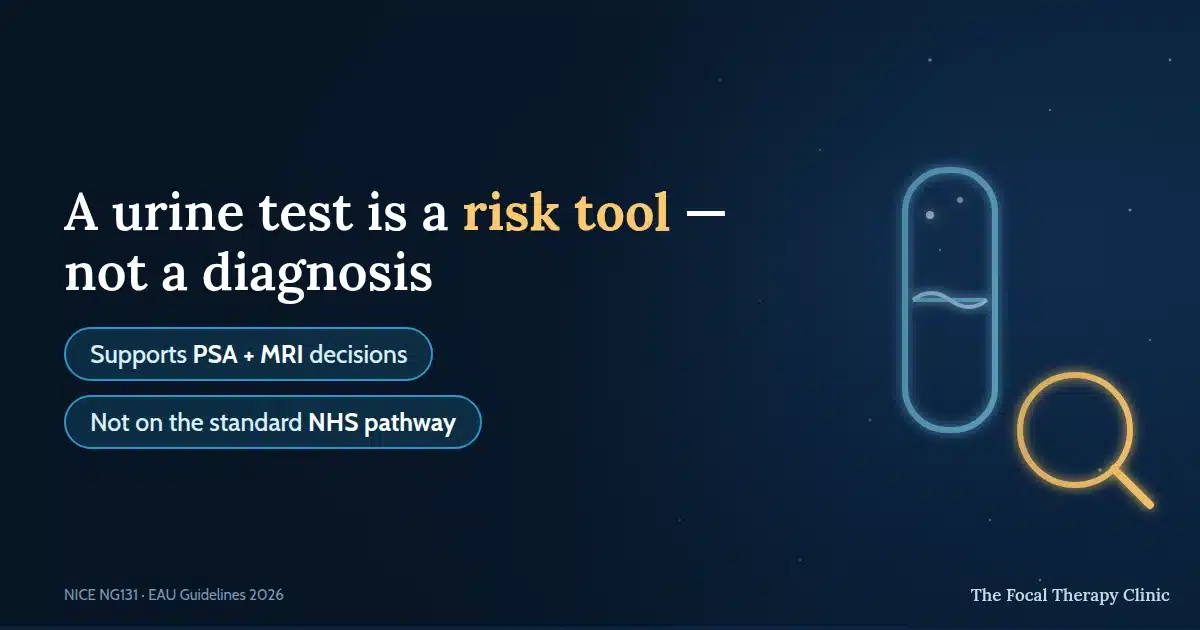
How Accurate is a Urine test for Prostate Cancer – and can it replace PSA or MRI?

Author: The Focal Therapy Clinic Length: 8 min read Published: 14 May 2025 Medically Reviewed:...

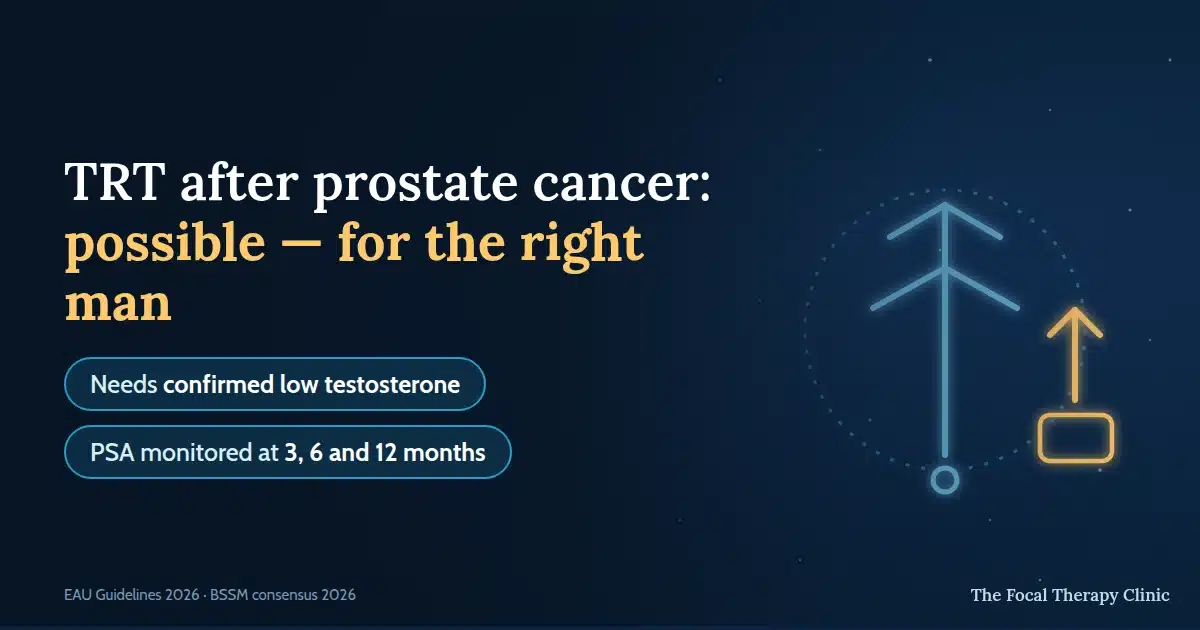
Is Testosterone Replacement Therapy Safe After Prostate Cancer Treatment?

Author: The Focal Therapy Clinic Length: 8 min read Published: 14 May 2025 Medically Reviewed:...

Is there a link between Prostate Cancer and Heart Disease – and Does ADT Increase Your Risk?

Author: The Focal Therapy Clinic Length: 8 min read Published: 14 May 2025 Medically Reviewed:...

Frequently asked questions

How long is the recovery time after focal therapy?
Most men recover quickly from focal therapy compared to radical treatments. You'll typically stay in hospital overnight with a catheter, which remains in place for 3–5 days. Most patients return to light activities within 1–2 weeks and resume normal activities including work within 2–3 weeks. According to Mr. Nigam, "The minimally invasive nature of focal therapy means most men experience significantly faster recovery than with surgery or radiotherapy, often returning to their normal routines within two weeks." Heavy lifting and strenuous exercise should be avoided for 4–6 weeks. Follow-up appointments include PSA testing at 3, 6, and 12 months, with an MRI scan typically at 6–12 months to assess treatment response.
What are the risks and side effects of focal therapy?
Focal therapy is designed to minimise side effects by treating only the cancerous area rather than the entire prostate. Common temporary side effects include urinary urgency and frequency for 2–4 weeks, mild discomfort during urination, and occasional blood in urine or semen. Serious complications are rare, occurring in less than 5% of cases, and may include urinary tract infection, urinary retention requiring temporary catheter, or erectile function changes (affecting 10–15% of men compared to 40–60% with surgery). Mr. Nigam emphasises, "Our careful patient selection and precise MRI-guided treatment mean that most men maintain their quality of life, with over 90% preserving urinary continence and 80–85% maintaining sexual function." Long-term incontinence and complete erectile dysfunction, common after radical treatments, are extremely rare with focal therapy.
Am I eligible for focal therapy with Mr. Nigam?
Ideal candidates for focal therapy typically have localised prostate cancer (confined to the prostate gland), Gleason score 6–7 (3+4 or 4+3), PSA typically under 20 ng/mL, cancer clearly visible on multiparametric MRI, and unilateral disease or well-defined focal lesions. You must be fit for general or spinal anaesthesia and have a life expectancy of at least 10 years. Mr. Nigam states, "Every patient undergoes comprehensive assessment including detailed MRI analysis and often targeted biopsy. We only proceed when we're confident focal therapy will provide effective cancer control while preserving quality of life." This careful selection process, refined over 18 years of experience, ensures optimal outcomes for suitable candidates.
Who should not have focal therapy?
Focal therapy may not be suitable if you have metastatic prostate cancer (spread beyond the prostate), high-grade Gleason 8–10 disease, extensive multifocal cancer throughout the prostate, cancer not visible on MRI scans, previous pelvic radiotherapy, severe urinary symptoms requiring treatment, or significant medical conditions making anaesthesia unsafe. Additionally, men with very low-risk cancer (Gleason 6, low PSA, minimal disease) may be better served by active surveillance. Mr. Nigam explains, "Honesty about suitability is crucial. If focal therapy isn't the right option, I'll recommend the most appropriate alternative, whether that's active surveillance, radical treatment, or another approach. The goal is always the best outcome for each individual patient."
What are the success rates for focal therapy?
Clinical studies show that focal therapy achieves excellent cancer control rates when patients are carefully selected. Research published in leading journals demonstrates 5-year cancer-specific survival rates of 95–98%, absence of clinically significant cancer in the treated area in 80–90% of patients at 12 months, and retreatment rates of 10–15% for residual or recurrent disease. Importantly, focal therapy preserves the option for radical treatment if needed later. Mr. Nigam notes, "With 18 years of experience and over 500 procedures, I've seen consistently excellent outcomes in appropriately selected patients. The key is thorough assessment, precise treatment, and regular monitoring. Studies, including research I've contributed to, demonstrate focal therapy is both effective and safe when performed by experienced practitioners following established guidelines."
How does focal therapy compare to surgery or radiotherapy?
Focal therapy offers a middle ground between active surveillance and radical treatment. Compared to radical prostatectomy (surgery), focal therapy has significantly lower rates of erectile dysfunction (10–15% vs 40–60%), incontinence (less than 2% vs 10–20%), and shorter recovery time (2–3 weeks vs 6–12 weeks). Compared to radiotherapy, focal therapy is a single treatment rather than 20–40 sessions, has fewer long-term bowel side effects, and preserves more treatment options if cancer recurs. However, focal therapy requires careful patient selection and regular monitoring. Mr. Nigam explains, "For the right patient with localised disease, focal therapy provides excellent cancer control with far fewer side effects. However, for aggressive or extensive cancer, radical treatment may be more appropriate. The choice depends on individual cancer characteristics, patient priorities, and long-term goals."
How much does focal therapy cost and is it covered by insurance?
Focal therapy is available through private healthcare in the UK. Treatment costs typically range from £15,000–£25,000 depending on the specific technique (HIFU or NanoKnife), hospital location, and individual treatment requirements. This includes pre-treatment assessments, the procedure itself, hospital stay, and initial follow-up care. Most private medical insurance policies cover focal therapy when it's deemed medically necessary, but coverage varies by insurer and policy. Mr. Nigam's practice works with all major UK insurers including Bupa, AXA PPP, Aviva, and VitalityHealth. The team can provide detailed cost estimates and assist with insurance pre-authorisation. Payment plans may be available for self-funding patients. It's important to discuss costs transparently during your initial consultation, and the team will provide a comprehensive breakdown of all anticipated expenses.
What happens during a consultation with Mr. Nigam?
Your initial consultation typically lasts 45–60 minutes and is comprehensive. Mr. Nigam will review your complete medical history including all previous tests (PSA results, MRI scans, biopsy reports), perform a focused physical examination if appropriate, discuss your diagnosis in detail including Gleason score and cancer extent, explain all treatment options available to you (not just focal therapy), and answer all your questions in depth. You'll receive a clear treatment recommendation based on your individual circumstances, with no pressure to make immediate decisions. Mr. Nigam states, "I believe in shared decision-making. You'll leave the consultation with a thorough understanding of your condition and options, allowing you to make an informed choice that's right for you. If additional tests are needed to determine suitability for focal therapy, we'll arrange these promptly."
Can focal therapy be repeated if cancer returns?
Yes, one of the significant advantages of focal therapy is that it can be repeated if necessary. Approximately 10–15% of patients may require retreatment, typically for residual cancer in the treated area or new cancer in a different part of the prostate. Repeat focal therapy is usually straightforward because the initial treatment preserves most of the prostate tissue and surrounding structures. Additionally, if focal therapy doesn't achieve the desired outcome, you still have the full range of other treatment options available, including radical prostatectomy or radiotherapy. Mr. Nigam emphasises, "This is a key advantage of focal therapy – you're not burning bridges. If retreatment is needed, we can address it promptly. Regular monitoring with PSA tests and MRI scans allows us to detect any issues early. The option for escalation to radical treatment remains if necessary, but for most men, the initial focal therapy provides long-term cancer control."
What follow-up care is required after focal therapy?
Comprehensive follow-up is essential after focal therapy to monitor treatment effectiveness and overall prostate health. The standard protocol includes PSA blood tests at 3, 6, and 12 months after treatment, then every 6 months for 5 years. An MRI scan is typically performed at 6–12 months to assess treatment response and check for residual cancer. Targeted biopsy may be recommended if PSA rises or MRI shows concerning changes. Annual reviews continue long-term to monitor for late recurrence. Mr. Nigam states, "I maintain close follow-up with all my patients. This isn't just about detecting problems – it's about reassurance and optimising long-term outcomes. Most men find the follow-up straightforward, and it provides peace of mind. If any issues arise, we can address them promptly, often with minimally invasive approaches." The clinic provides convenient appointment scheduling across multiple London locations and Guildford.
Does Mr. Nigam work with a multidisciplinary team?
Yes, all complex prostate cancer cases are discussed in multidisciplinary team (MDT) meetings, which is the gold standard for cancer care. Mr. Nigam works closely with specialist radiologists who interpret MRI scans, histopathologists who analyse biopsy samples, clinical oncologists who advise on radiotherapy options, and specialist nurses who provide patient support throughout treatment. This collaborative approach ensures that every patient receives comprehensive, evidence-based care tailored to their specific needs. The team meets regularly to review cases and discuss optimal treatment strategies. Mr. Nigam explains, "Cancer care is never a solo effort. Having input from multiple specialists ensures we're considering all aspects of your care and making the best recommendations. Patients benefit from collective expertise spanning decades of experience across all prostate cancer specialities." This team-based approach is particularly valuable for complex or borderline cases where treatment decisions require careful consideration.
How do I book a consultation with Mr. Nigam?
Booking a consultation is straightforward. You can contact The Focal Therapy Clinic directly by phone at +44 (0) 207 036 8870 or through the online booking system on the website. Mr. Nigam consults at multiple locations including The Princess Grace Hospital in central London, The London Clinic, The Harley Street Hospital, and Mount Alvernia Hospital in Guildford. Appointment availability is typically within 1–2 weeks, with urgent cases accommodated more quickly. You'll need a referral letter from your GP or another specialist, along with copies of any previous test results, MRI scans, and biopsy reports if available. These can be sent in advance to allow Mr. Nigam to review your case before the consultation. Many patients come from across the UK and internationally, and the team is experienced in coordinating care for patients travelling for treatment. Private medical insurance authorisation can be arranged prior to your appointment.
Book your consultation

Any questions?

If you’ve got any questions about your prostate cancer diagnosis or want to know more about HIFU or NanoKnife, don’t hesitate to get in touch with our friendly, knowledgeable team.

0207 036 8870

info@thefocaltherapyclinic.co.uk

Contact the team


    Subscribe to our newsletter

    Get expert advice & the latest prostate cancer research - straight to your inbox.

      We care about your data in our privacy policy.