
At a Glance
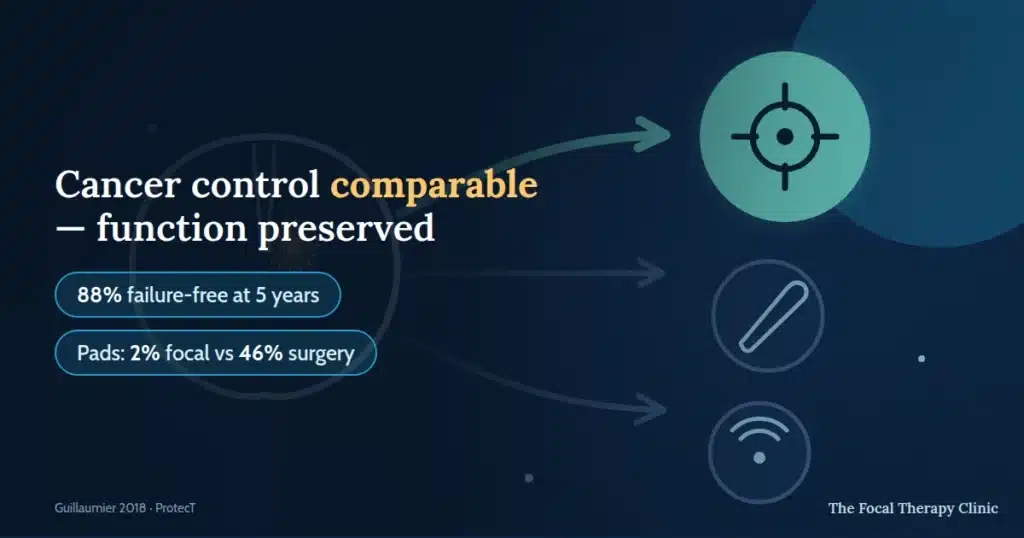
For well-selected men, focal therapy delivers cancer control broadly comparable to surgery and radiotherapy at five to ten years — 88% failure-free survival at five years in the 625-man UK HIFU series co-authored by our consultants — while preserving markedly better continence and sexual function. Evidence beyond ten years is still maturing.
Key takeaways:
- Cancer control is comparable — Shah et al. 2021 (co-authored by Mr Dudderidge and Mr Nigam) found failure-free survival of 83% vs 79% at eight years for focal therapy vs surgery — no significant difference.
- Function favours focal — 2% any-pad incontinence in the UK HIFU series (Guillaumier et al., 2018); radical treatment carries substantially higher functional burdens.
- Selection is everything — these outcomes apply to localised, MRI-visible disease judged suitable at multidisciplinary review.
- Future options stay open — repeat focal therapy, surgery or radiotherapy all remain possible if cancer returns.
- Honest limits — focal therapy’s strongest data covers five to seven years; surgery and radiotherapy have decades of follow-up.
Why Compare Focal Therapy With Surgery and Radiotherapy?
Mr Raj Nigam answers the direct question — does focal therapy work? — covering the evidence for cancer control and who it suits.
Men weighing treatment want to know whether a less invasive option sacrifices cancer control. Surgery and radiotherapy have decades of follow-up, while focal therapy is newer but now has substantial UK medium-term evidence. The best treatment for prostate cancer in early stages depends on the cancer’s grade, location, extent, and the patient’s priorities.
Comparisons need care because focal therapy is offered to selected men with localised, targetable disease. Surgery and radiotherapy treat the whole prostate and apply to a wider range of cases. The choice therefore involves both cancer control and quality of life.
Cancer Control at 5–10 Years
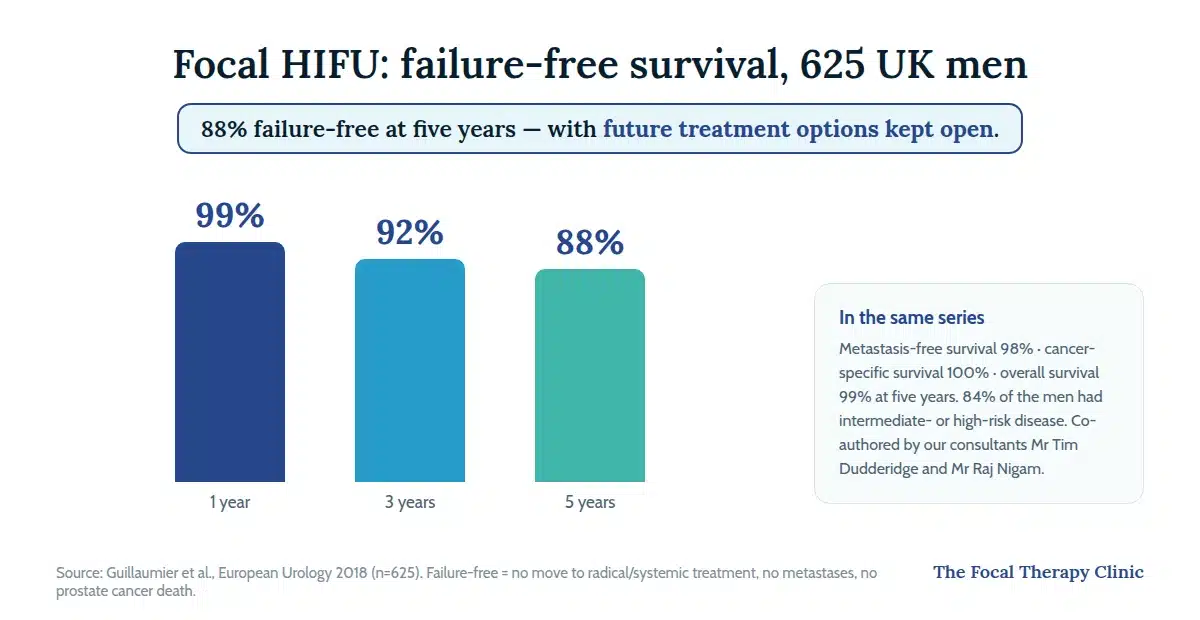
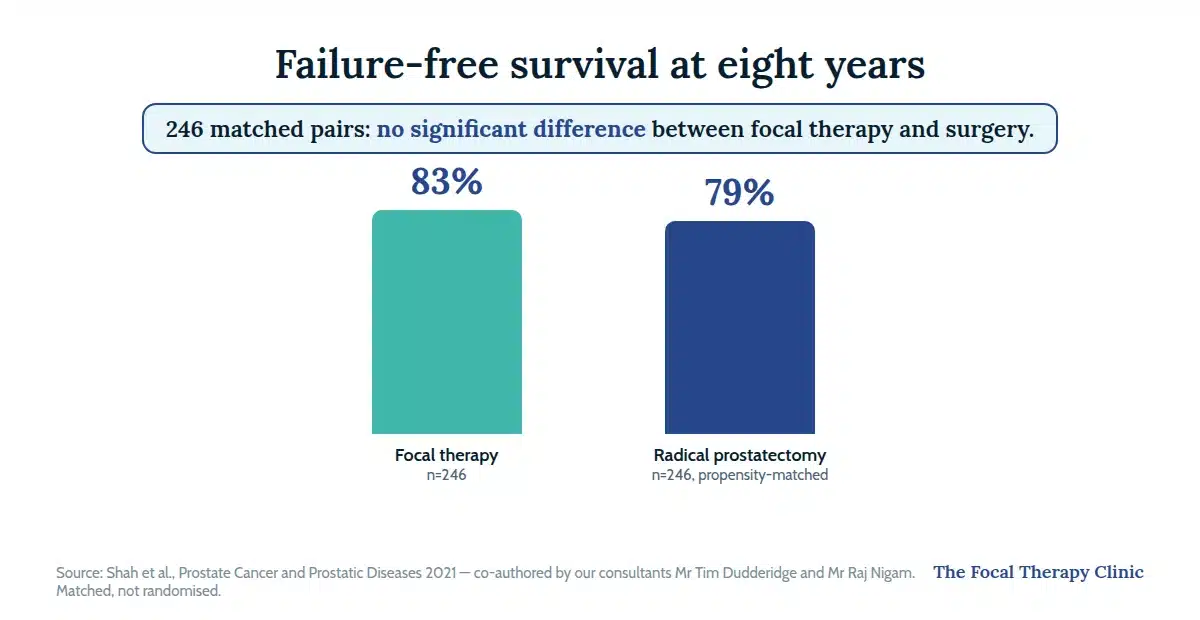
In the largest UK focal HIFU series (625 men, Guillaumier et al., European Urology 2018), failure-free survival was 99% at one year, 92% at three years and 88% at five years, with 98% metastasis-free survival. In a matched comparison of 246 focal therapy and 246 radical prostatectomy patients (Shah et al., 2021), failure-free survival at eight years was 83% for focal therapy versus 79% for surgery — no statistically significant difference (p=0.12).
For appropriately selected men, medium-term cancer control appears broadly comparable across focal therapy, surgery, and radiotherapy. The evidence does not come from a single randomised trial comparing all three treatments, so results must be interpreted in the context of patient selection. The answer to how effective is focal therapy for prostate cancer also depends on how success is defined, including avoidance of metastases, radical treatment, systemic treatment, or prostate-cancer death.
Focal therapy survival rates
A UK multicentre study of 625 men treated with focal HIFU — Guillaumier et al., European Urology 2018, co-authored by The Focal Therapy Clinic’s Mr Tim Dudderidge and Mr Raj Nigam — reported strong five-year outcomes. Failure-free survival meant avoiding radical or systemic treatment, metastases, and prostate-cancer death. Men asking how successful is focal therapy for prostate cancer should note that this measure still allowed repeat focal treatment when clinically appropriate.
The core results were:
- Failure-free survival: 99% at one year
- Failure-free survival: 92% at three years
- Failure-free survival: 88% at five years
- Metastasis-free survival: 98% at five years
- Cancer-specific survival: 100% at five years
- Overall survival: 99% at five years
These figures came from men with clinically significant, non-metastatic prostate cancer treated across several UK centres. The study also reported any-pad urinary incontinence in 2% of men, which links cancer control with a low functional burden. The clinic’s page on focal therapy success rates and clinical evidence explains how these outcomes inform patient discussions.
The larger HEAT registry — Reddy et al., European Urology 2022, also co-authored by Mr Dudderidge and Mr Nigam — included 1,379 men treated at 13 UK centres. Five or more years of follow-up was available for 325 men, or 24% of the cohort, and seven-year failure-free survival was 69%. Metastasis-free survival and prostate-cancer-specific survival were 100% at seven years, although the authors stressed that ten-year follow-up was not yet available.
The question of what is the success rate of HIFU for prostate cancer has no single answer. Results vary with risk group, follow-up, and whether repeat focal treatment counts as failure. The most useful figures match the patient’s cancer and chosen outcome.
Surgery and radiotherapy outcomes
Surgery and radiotherapy provide the established long-term benchmark. In the ProtecT trial, prostate-cancer mortality at a median of ten years was around 1% and did not differ significantly between active monitoring, surgery, and radiotherapy. Surgery and radiotherapy did, however, roughly halve progression and metastasis compared with monitoring.
Metastases developed in:
- 13 men assigned to surgery (2.4 per 1,000 person-years)
- 16 men assigned to radiotherapy (3.0 per 1,000 person-years)
- 33 men assigned to active monitoring (6.3 per 1,000 person-years)
The trial did not include focal therapy, so it cannot prove that focal treatment is equal to either radical option. It shows the long-term cancer-control standard against which newer treatments are judged. Men considering radical prostatectomy should also discuss urinary and sexual outcomes, not survival alone.
Questions about life expectancy after prostate removal need an individual answer. Age, health, cancer grade, stage, and treatment response all matter. Prostate removal does not create one fixed survival figure.
A patient describes overcoming his fear of cancer treatment after choosing focal therapy, and the reassurance the outcome gave him.
Functional Outcomes Compared
Functional outcomes are where focal therapy shows its clearest advantage. Treating only the known cancer aims to preserve the urinary sphincter, neurovascular structures, bowel, and healthy prostate tissue. Surgery and radiotherapy can provide effective cancer control, but their whole-gland approach creates different risks for continence, erections, and bowel function.
An Imperial College-led study found similar cancer control between focal therapy and radical prostatectomy for selected men for up to eight years. Professor Hashim Ahmed reported that focal therapy can also reduce urinary and sexual side effects by up to ten-fold compared with radical treatment.
Continence preservation rates
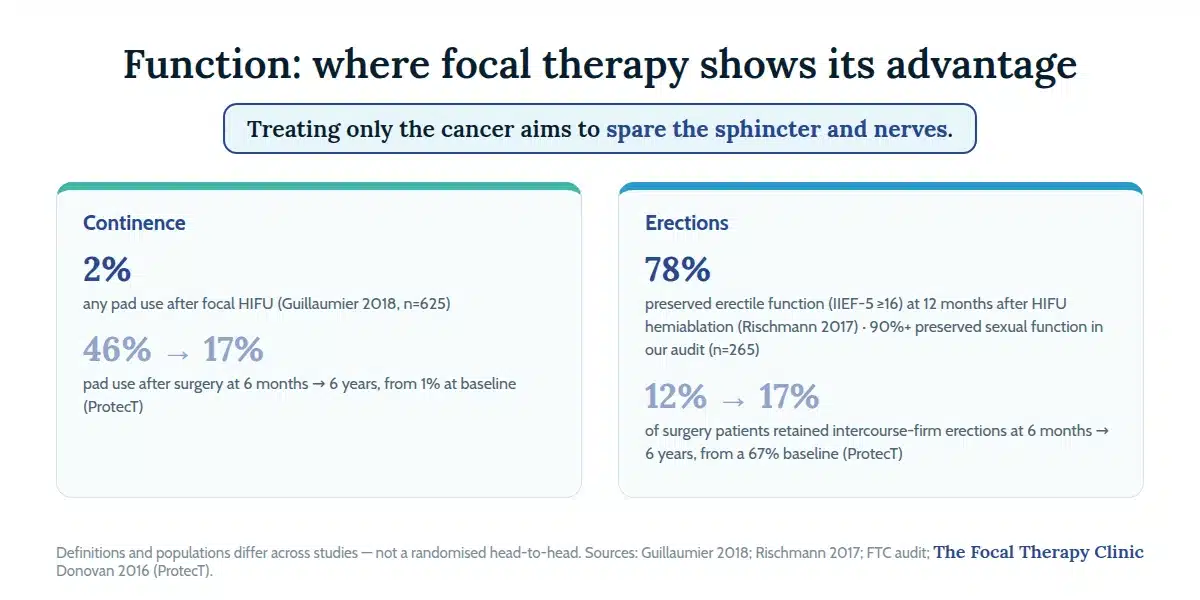
Continence is preserved in most men after focal HIFU. In the Guillaumier series, any-pad-use incontinence was reported in just 2% of men. These figures compare favourably with the functional results seen after surgery in ProtecT.
In ProtecT’s patient-reported outcomes, absorbent-pad use in the prostatectomy group rose from 1% at baseline to 46% at six months, settling at 17% at year six (against 4–8% on active monitoring and 4–5% after radiotherapy). Radiotherapy produced little change in urinary continence, although it can cause other bladder symptoms. Definitions and patient populations differ, so the figures should not be treated as a direct trial comparison with focal therapy.
Sexual function preservation
Focal therapy preserves erectile function in most suitably selected men by limiting damage to the neurovascular bundles. Rates vary with age, baseline function, tumour location, and treatment area — no single percentage applies to every patient. In the French AFU prospective multicentre study of HIFU hemiablation (Rischmann et al., 2017), 78% of men preserved erectile function (IIEF-5 score of 16 or above) at 12 months, with 97% continence. In The Focal Therapy Clinic’s own audit of 265 patients, 90%+ preserved sexual function.
For radical treatment, the honest comparison starts from the baseline: in ProtecT, 67% of men had erections firm enough for intercourse before treatment. At six months, 12% of surgery patients and 22% of radiotherapy patients retained them (the radiotherapy arm included three to six months of neoadjuvant hormone therapy), while 52% of men on active monitoring did. By six years, the surgery figure was 17%. These results show why sexual function often becomes a central part of shared decision-making.
Quality of life measures
Validated tools such as EPIC, IPSS, and IIEF track urinary, bowel, and sexual outcomes. They capture changes that may not appear on a scan or PSA test. Focal therapy’s lower side-effect burden can support daily life, work, and relationships, so success means more than survival alone.
Side Effects and Recovery
The three approaches differ greatly in how treatment is delivered. Surgery removes the prostate, radiotherapy treats the gland with radiation over one or more sessions, and focal therapy destroys only the mapped cancer area. These differences shape the risks, hospital stay, and recovery period.
Complications and risks
Each treatment has recognised risks:
- Surgery: urinary incontinence, erectile dysfunction, bleeding, infection, blood clots, and anaesthetic risks
- Radiotherapy: bladder irritation, bowel symptoms, fatigue, erectile dysfunction, and effects that may develop over time
- Focal therapy: temporary urinary symptoms, infection, urinary retention, urethral narrowing, and a small risk of rectal injury
Questions about hifu side effects should separate short-term symptoms from lasting functional harm. Temporary frequency, urgency, discomfort, or catheter use can occur even when long-term continence is preserved. The Guillaumier study reported any-pad incontinence in 2%, while the larger HEAT registry found serious adverse events above Clavien-Dindo grade 2 in 0.5% of men. HIFU treatment for prostate cancer is planned around the tumour’s position and nearby structures.
Invasiveness and recovery times
Focal therapy is normally completed as a day-case procedure, with most men returning home the same day. Many return to usual daily activity within about two weeks, although catheter use, work demands, and individual recovery differ. More information on recovery after focal therapy can help patients plan practical support.
Radical surgery usually involves a hospital stay and a period away from work that may last two to four weeks or longer. Radiotherapy avoids an operation but can require several outpatient sessions, depending on the schedule used. Fatigue and urinary or bowel irritation may continue after the final session.
Is Focal Therapy as Safe as Radical Treatment?
For suitably selected men, medium-term evidence indicates focal therapy is a safe treatment option with strong cancer control and fewer urinary and sexual side effects. The trade-off is that surgery and radiotherapy have more mature long-term datasets, while focal therapy needs continued MRI, PSA, and sometimes biopsy surveillance. Patients must decide how they value long-established evidence against the prospect of preserving more normal function.
A propensity-matched study — Shah et al., Prostate Cancer and Prostatic Diseases 2021, co-authored by The Focal Therapy Clinic’s Mr Tim Dudderidge and Mr Raj Nigam, with Professor Hashim Ahmed and Mr Mathias Winkler as joint senior authors — compared 246 focal therapy patients with 246 matched radical prostatectomy patients with non-metastatic low- or intermediate-risk prostate cancer. Failure-free survival at eight years was 83% after focal therapy and 79% after surgery, with no statistically significant difference between the groups. The study was not randomised, but it provides the strongest comparative evidence available in carefully matched patients.
Focal Therapy is not a reduced version of treatment for every prostate cancer. It is a targeted approach for cancers that can be accurately localised and covered with an adequate treatment margin. Men who value continence and sexual function may view that balance differently from men who prefer whole-gland treatment despite its side-effect profile.
Patient perspective matters because “safe” includes more than procedural risk. It also includes later treatment, relationships, and confidence in follow-up. A balanced discussion should cover cancer outcomes and daily consequences.
What Happens If Focal Therapy Doesn’t Work?
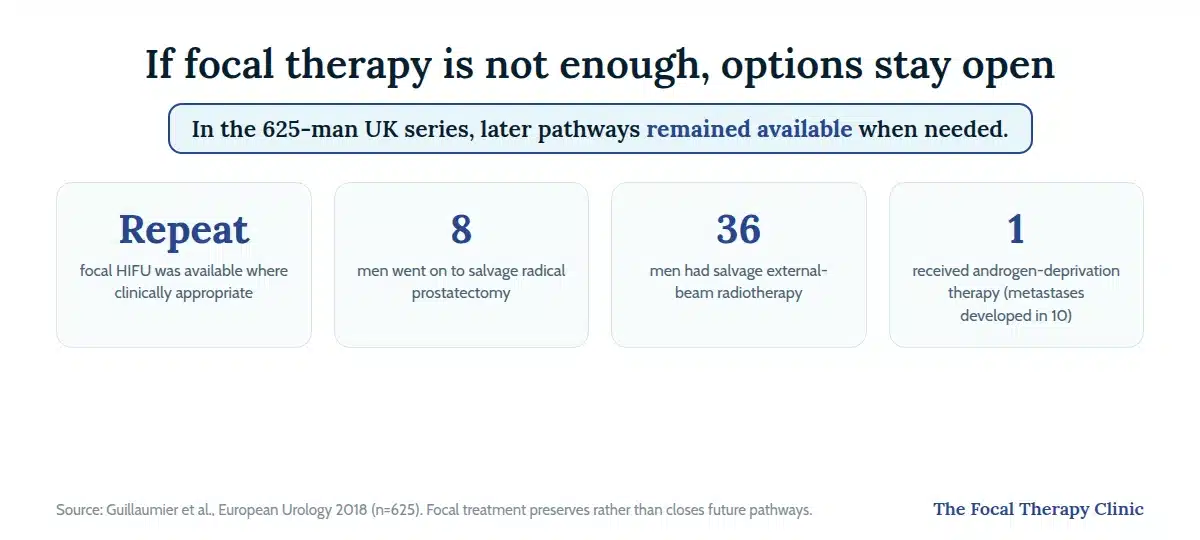
Focal therapy does not prevent further treatment if cancer remains or returns. Options can include repeat focal therapy, salvage prostatectomy, salvage radiotherapy, or systemic treatment when clinically required. The next step depends on whether recurrence is inside the treated area, elsewhere in the prostate, or beyond the gland.
In the Guillaumier study, repeat focal HIFU was available where clinically appropriate, and failure-free survival allowed for it. Eight men later had salvage prostatectomy, 36 had salvage external-beam radiotherapy, and one received androgen-deprivation therapy, while metastases developed in ten. These figures show that focal treatment can preserve several future pathways rather than closing them.
Follow-up remains essential because untreated prostate tissue stays in place. PSA tests, MRI, and targeted biopsy may identify residual or new disease. Repeat focal therapy may remain possible when cancer is still localised and targetable.
The initial assessment should establish whether you are suitable for focal therapy and whether all clinically significant disease can be treated. A man with cancer outside the prostate, poorly defined disease, or cancer that cannot be covered without unacceptable risk may need another approach. Preserving future options is valuable only when the first treatment is clinically appropriate.
Get Expert Advice & The Latest Research
Subscribe to our newsletter to receive the latest updates, expert insights, and breakthrough research on prostate cancer-delivered straight to your inbox.
Current Limits of the Long-Term Evidence
Focal therapy’s strongest evidence is medium-term, with the most established datasets covering about five to seven years. Ten-year and longer datasets are still maturing compared with the decades of follow-up available for surgery and radiotherapy. This limits certainty about very late recurrence and makes ongoing registry data important.
The HEAT registry included 1,379 men, but only 325, or 24%, had at least five years of follow-up. Its seven-year outcomes are encouraging, yet the study itself noted the absence of median ten-year follow-up. The answer to how effective is hifu for prostate cancer will become more precise as more men reach longer observation periods.
Most evidence comes from registries and observational cohorts rather than large randomised comparisons. Patient selection, treatment technique, follow-up, and failure definitions differ between studies. Honest counselling should explain both the strong medium-term results and the remaining long-term questions.
Is Focal Therapy an Approved Treatment in the UK?
Yes. HIFU and NanoKnife focal therapy are approved under NICE HealthTech guidance — HTG667 for high-intensity focused ultrasound and HTG688 for NanoKnife irreversible electroporation. Approval is not the same as universal availability: focal therapy is not yet offered in every NHS region, which is why many men access it privately.
The evidence behind that approval includes UK multicentre series — 625 men treated with focal HIFU (Guillaumier et al., European Urology 2018) and the 1,379-patient HEAT registry — and an eight-year matched comparison with surgery (Shah et al. 2021) that found similar cancer control between focal therapy and radical prostatectomy for selected men.
The honest caveats sit alongside: ten-year-plus focal-therapy data are still maturing compared with surgery and radiotherapy, and UK long-term NanoKnife data remain limited — the longest NanoKnife series come from Australia. Both points are covered in the section above.
Frequently Asked Questions
How does focal therapy compare to surgery in cancer control?
For carefully selected men, focal therapy offers medium-term cancer control comparable to surgery. The 625-man UK HIFU study co-authored by our consultants reported 88% failure-free survival and 100% cancer-specific survival at five years. Shah et al. 2021 — also FTC-co-authored — found no significant difference in failure-free survival between focal therapy and surgery at eight years (83% vs 79%).
What are the 5–10 year outcomes for focal therapy?
In the UK Guillaumier study of 625 men, five-year failure-free survival was 88%, metastasis-free survival 98%, and cancer-specific survival 100%. Seven-year HEAT registry data also showed strong metastasis-free and cancer-specific survival. Follow-up beyond ten years is still being gathered because focal therapy is newer than surgery and radiotherapy.
Are side effects lower with focal therapy than radiotherapy?
Focal therapy generally has a lower burden of bowel, bladder, and sexual side effects than whole-gland radiotherapy in selected men. Radiotherapy can cause bowel and bladder irritation, fatigue, and erectile dysfunction that may develop or persist over time. Focal HIFU reported any-pad incontinence of about 2%, although individual risks still vary.
How do continence and sexual function compare across treatments?
Focal therapy generally preserves urinary and sexual function more often than radical treatment. Only 2% of men needed pads in the UK focal HIFU series, while pad use reached 46% at six months after surgery in ProtecT’s patient-reported outcomes (17% at year six). In ProtecT, of the 67% of men with firm-enough erections at baseline, 12% retained them six months after surgery and 22% after radiotherapy — while 90%+ preserved sexual function in our focal therapy audit of 265 patients.
Is focal therapy as safe as established prostate cancer treatments?
For appropriately selected men, medium-term studies support focal therapy as a safe option with strong cancer control and fewer functional side effects. Suitability depends on the cancer’s grade, position, extent, and visibility on imaging. A specialist assessment confirms whether a patient is suitable for focal therapy before treatment is recommended.
What happens if focal therapy fails?
Focal therapy keeps several later treatment options open. If cancer remains or returns, a man may have repeat focal therapy, salvage surgery, or salvage radiotherapy, depending on the location and extent of disease. UK HIFU data show that men have successfully moved to each of these pathways when further treatment was required.
How should I decide between focal therapy and other options?
The right choice depends on the cancer’s risk category, the patient’s priorities, and whether the disease can be accurately targeted. A specialist should review mpMRI, biopsy, PSA, age, health, and baseline urinary and sexual function. This allows cancer control to be weighed against the different effects of surgery, radiotherapy, and focal therapy.
How does HIFU compare with radiotherapy for prostate cancer?
HIFU is a single day-case procedure that treats only the cancerous part of the prostate, avoiding radiation exposure and preserving surrounding tissue, and it can be repeated if needed. Radiotherapy treats the whole gland over multiple sessions and typically costs £15,000–£30,000 privately. HIFU is approved under NICE HealthTech guidance HTG667.
Can focal therapy cure prostate cancer?
Focal therapy aims to eradicate clinically significant localised prostate cancer while preserving the gland. In the UK’s largest focal HIFU series (625 men), cancer-specific survival was 100% and failure-free survival 88% at five years. Around 10–20% of patients may require a second treatment within five years.
Is focal therapy still considered experimental?
No — HIFU and NanoKnife are approved under NICE HealthTech guidance (HTG667 and HTG688) and are supported by UK multicentre evidence, including 625-patient and 1,379-patient HIFU series co-authored by our consultants. Ten-year-plus follow-up data are still accumulating, and your consultant will discuss what the evidence does and doesn’t yet show for your situation.
Is NanoKnife more experimental than HIFU?
Both are approved under NICE HealthTech guidance — HTG667 for HIFU, HTG688 for NanoKnife. HIFU carries the larger UK evidence base, including a 625-patient multicentre series and the 1,379-patient HEAT registry. NanoKnife’s longest-term results come from Australian cohorts — 91% failure-free survival at three years and 84% at five years in a 229-patient series — and UK long-term NanoKnife data remain more limited.
Find Out If Focal Therapy Suits You
Focal therapy outcomes are strongest for well-selected men, so suitability is the place to start. The Focal Therapy Clinic reviews mpMRI, biopsy, PSA, cancer grade, and tumour location through a comprehensive multidisciplinary process. Our consultants — including co-authors of the key UK focal therapy studies — bring more than 75 years of combined focal therapy experience and have carried out more than 2,500 focal therapy procedures.
Appointments are available in person, by phone, or by video. Patients should bring mpMRI images and reports, biopsy results, recent PSA tests, and details of previous treatment. Our focal therapy consultants can explain the evidence and which options deserve consideration.
References
References verified via PubMed, 26 August 2026.
- Hamdy FC, Donovan JL, Lane JA, et al. 10-year outcomes after monitoring, surgery, or radiotherapy for localized prostate cancer (ProtecT). N Engl J Med 2016;375(15):1415–1424. PMID 27626136.
- Donovan JL, Hamdy FC, Lane JA, et al. Patient-reported outcomes after monitoring, surgery, or radiotherapy for prostate cancer (ProtecT). N Engl J Med 2016;375(15):1425–1437. PMID 27626365.
- Guillaumier S, Peters M, Arya M, et al. A multicentre study of 5-year outcomes following focal therapy in treating clinically significant nonmetastatic prostate cancer. Eur Urol 2018;74(4):422–429. PMID 29960750. (FTC co-authors: Mr Tim Dudderidge, Mr Raj Nigam)
- Reddy D, Peters M, Shah TT, et al. Cancer control outcomes following focal therapy using high-intensity focused ultrasound in 1,379 men with nonmetastatic prostate cancer (HEAT registry). Eur Urol 2022;81(4):407–413. PMID 35123819. (FTC co-authors: Mr Tim Dudderidge, Mr Raj Nigam)
- Shah TT, Reddy D, Peters M, et al. Focal therapy compared to radical prostatectomy for non-metastatic prostate cancer: a propensity score-matched study. Prostate Cancer Prostatic Dis 2021;24(2):567–574. PMID 33504940. (FTC co-authors: Mr Tim Dudderidge, Mr Raj Nigam)
- Rischmann P, Gelet A, Riche B, et al. Focal high intensity focused ultrasound of unilateral localized prostate cancer: a prospective multicentric hemiablation study of 111 patients. Eur Urol 2017;71(2):267–273. PMID 27720531.
- Donovan JL, Hamdy FC, Lane JA, et al. Patient-reported outcomes 12 years after localized prostate cancer treatment (ProtecT). NEJM Evid 2023;2(4). PMID 38320051.
This information is for educational purposes and does not replace professional medical advice. All treatment decisions should be made in consultation with a qualified healthcare professional.