
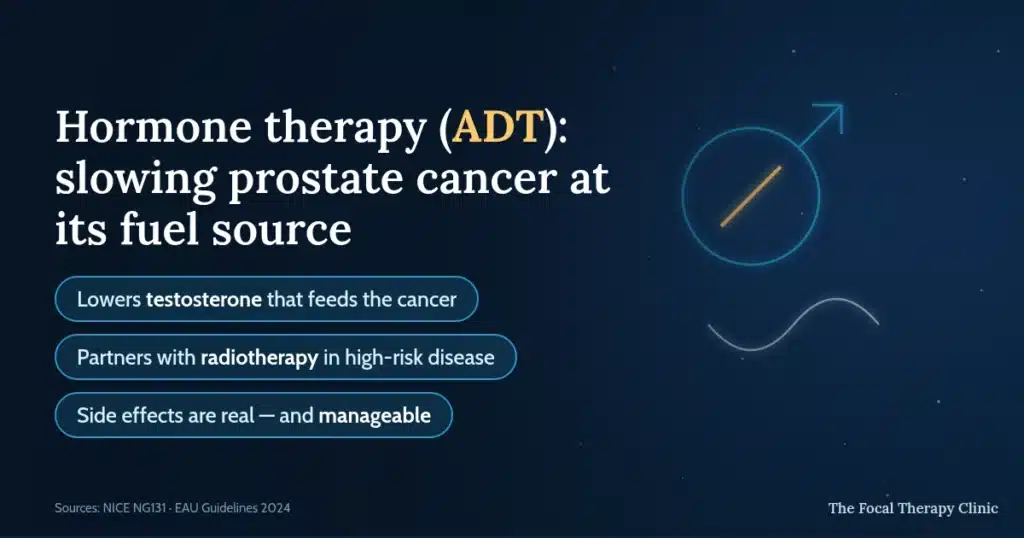
At a Glance
If you’ve been recommended hormone therapy for prostate cancer, also known as androgen deprivation therapy (ADT), it’s natural to have questions about what this involves and how it might affect you. ADT is one of the most effective treatments for managing prostate cancer. It is regularly used on a short-term basis in combination with radiotherapy to improve cure rates, and is particularly important for the treatment of cases where the cancer has spread or is considered high-risk.
ADT works by lowering levels of male hormones that fuel the growth of prostate cancer cells. By depriving cancer cells of their hormonal fuel, ADT can slow the cancer’s growth, shrink tumours, and help manage the disease — often for many years. It is a vital part of modern prostate cancer care, and many of its side effects can be proactively managed.
Key takeaways:
- Hormone therapy (ADT) lowers testosterone to slow the growth of prostate cancer.
- ADT is often recommended for advanced, recurrent, or metastatic cancer, and plays a key supportive role alongside radiotherapy for high-risk localised prostate cancer.
- It works by reducing or blocking testosterone production through injections, tablets, or surgery.
- Common side effects — hot flushes, fatigue, and lowered sex drive — result from low testosterone but can be proactively managed.
- Treatment duration varies. Intermittent therapy (taking planned breaks) is an option for some men to improve quality of life, particularly in non-metastatic disease.
- Newer ADT drugs and approaches are emerging, aiming to improve outcomes while reducing side effects and preserving quality of life.
What is hormone therapy or androgen deprivation therapy?
Dr Christos Mikropoulos explains what hormone therapy is and how lowering testosterone is used to control prostate cancer.
Androgen deprivation therapy is a type of hormone therapy used to lower or block androgens in the body. Because testosterone helps most prostate cancer cells grow, reducing it can slow the cancer down. There are a few main ways ADT is delivered:
- Injections or implants that stop testosterone production (LHRH agonists or antagonists)
- Daily oral tablets (anti-androgens) that block hormones or hormone receptors
- Surgical removal of the testicles (orchiectomy), which is permanent but highly effective
When is ADT recommended?
Doctors may recommend androgen deprivation therapy for prostate cancer that is aggressive, recurrent, or advanced. It is often used in combination with radiotherapy to increase the effectiveness of treatment. ADT can also be given before radiation to shrink the tumour, or after if the cancer comes back.
ADT may be suitable if:
- The cancer has spread outside the prostate and can’t be treated with surgery
- You’re not fit for surgery or radiotherapy due to other health conditions
- The cancer returns after initial treatment
Sometimes ADT is used as a short-term aid, such as alongside radiotherapy. Other times, it may be long-term or lifelong, particularly when the cancer is more aggressive. Your medical team will help decide based on your specific diagnosis and goals.
How ADT works
Testosterone is mostly produced in the testicles, with smaller amounts made by the adrenal glands and even some cancer cells. ADT works by either stopping the production of testosterone or preventing it from reaching cancer cells.
This therapy disrupts the link between hormones and cancer growth. Once the hormone levels drop, cancer cells shrink or stop multiplying. Many men notice a reduction in symptoms and PSA levels after starting ADT.
Examples of how ADT works include:
- LHRH agonists: temporarily boost testosterone before lowering it (may need extra drugs to prevent flare-ups)
- LHRH antagonists: block testosterone without causing a flare
- Anti-androgens: stop hormones from attaching to cancer cells
Side effects of androgen deprivation therapy
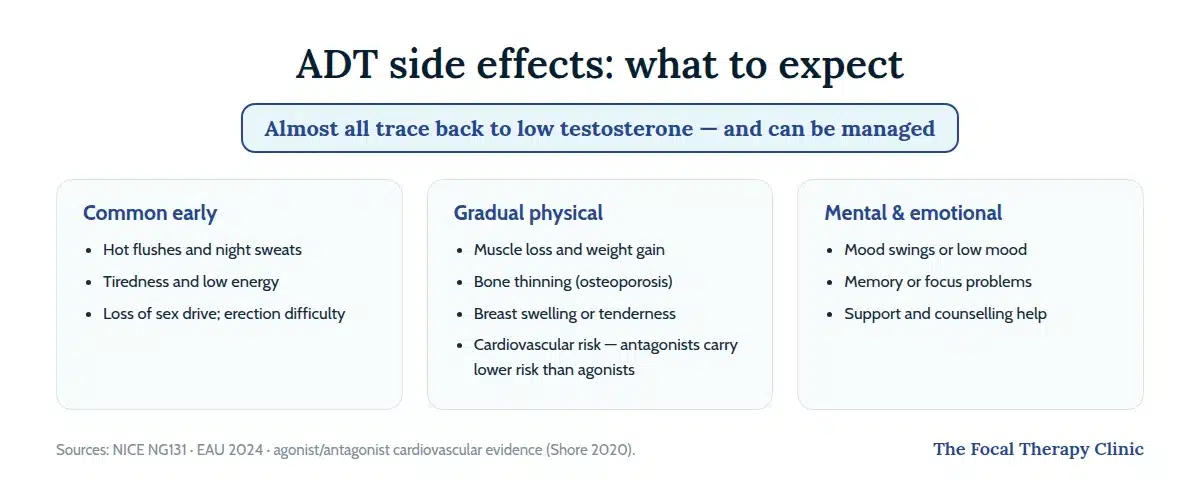
While ADT can be effective, lowering testosterone affects the whole body. It is important to know what to expect so that side effects can be managed proactively.
Common side effects include:
- Hot flushes and night sweats
- Tiredness and low energy
- Loss of sex drive and difficulty getting an erection
Other physical effects may appear gradually:
- Muscle loss and weight gain
- Bone thinning (osteoporosis), which increases risk of fractures
- Breast swelling or tenderness
- An associated increased risk of cardiovascular events, such as heart attacks or strokes. Studies have shown that LHRH antagonists are associated with a significantly lower risk of major cardiovascular events compared to LHRH agonists, especially in men with pre-existing heart conditions.
Mental and emotional effects are also possible:
- Mood swings or low mood
- Problems with memory or focus
Most side effects are related to low testosterone. Being aware and proactive can make a big difference in managing them.
Managing ADT side effects
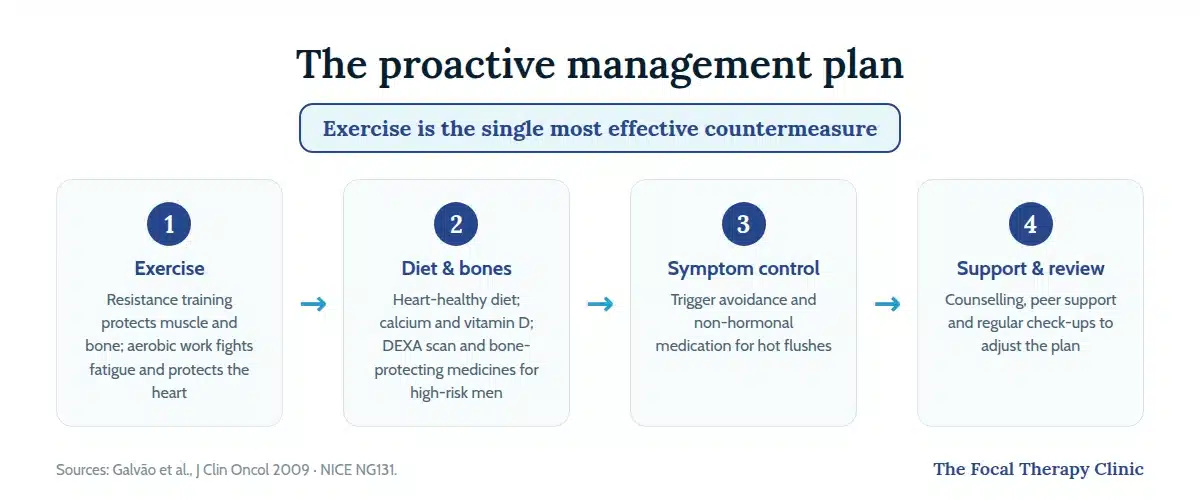
There are many ways to reduce the impact of ADT on your body and mind. A proactive plan is essential.
Helpful strategies include:
- Exercise: a combination of resistance (strength) training to protect muscle and bone, and aerobic exercise (brisk walking, cycling) to fight fatigue and protect your heart, is highly recommended.
- Balanced diet: a heart-healthy diet can help manage weight, protect bones, and reduce cardiovascular risk.
- Calcium and vitamin D: ensure adequate calcium and vitamin D intake. Your doctor may recommend a baseline bone density (DEXA) scan and, if you are at high risk, prescribe bone-protecting medicines, which are proven to reduce fracture risk.
- Hot flushes: avoiding triggers (like spicy food or alcohol) can help. For bothersome flushes, non-hormonal medications can be effective.
Your doctor might recommend:
- Medications for hot flushes or bone loss
- Counselling or support groups for emotional health
- Regular check-ups to monitor your progress
You don’t have to face side effects alone. Many men benefit from professional advice, peer support, and personalised treatment plans. Seeking prostate cancer support early can make the journey much smoother.
ADT vs other prostate cancer treatments
ADT is different from treatments like surgery or radiotherapy, which aim to remove or destroy the cancer directly. Instead, ADT manages the disease by slowing it down.
Here’s how it compares:
- Surgery & radiotherapy: curative-intent treatments for localised prostate cancer. They treat the entire prostate gland.
- Focal therapy: a specialised, minimally invasive treatment that targets only the cancerous area of the prostate. It aims to destroy the cancer while preserving healthy tissue, with the goal of minimising side effects like incontinence and erectile dysfunction.
ADT is a systemic (whole-body) therapy, not a localised one. It is often used when cancer has spread or as a key partner to make radiotherapy more effective.
Duration and monitoring
The length of androgen deprivation therapy depends on the type and stage of the cancer. Some men have short courses lasting a few months, while others continue treatment for years. Monitoring is key to understanding how well it’s working.
Regular follow-ups will include:
- Blood tests, including PSA, to check response to treatment
- Bone health scans if you’re on long-term therapy
- Reviewing side effects and adjusting medications as needed
In some cases, your doctor may suggest intermittent ADT — starting and stopping therapy in cycles. This approach may reduce side effects and improve quality of life. Your team will guide you based on how your cancer responds over time.
Get Expert Advice & The Latest Research
Subscribe to our newsletter to receive the latest updates, expert insights, and breakthrough research on prostate cancer-delivered straight to your inbox.
Future and emerging ADT approaches
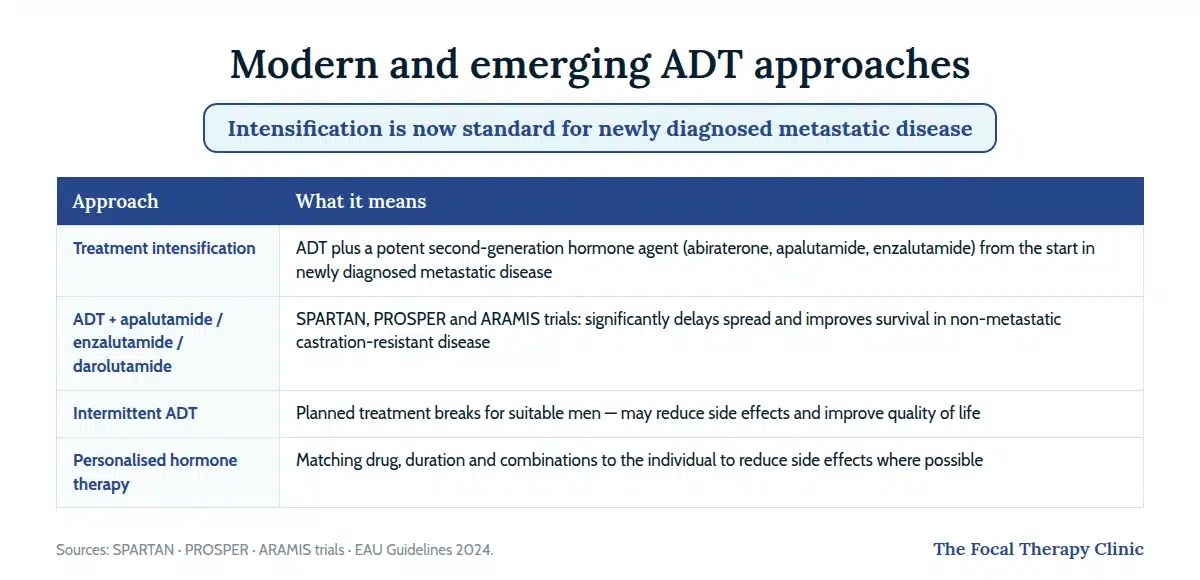
New developments in hormone therapy are now a standard part of treatment for many men, not just a “future” option.
Some advances include:
- For men with newly diagnosed metastatic disease, the standard is “treatment intensification” — starting ADT plus a potent, second-generation hormone agent (like abiraterone, apalutamide, or enzalutamide) at the same time.
- Landmark trials (SPARTAN, PROSPER, and ARAMIS) have shown that adding apalutamide, enzalutamide, or darolutamide to ADT can significantly delay spread and improve survival in men with non-metastatic castration-resistant prostate cancer — a state where a man is on ADT and his PSA is rising, but conventional scans show no spread.
The goal is to personalise hormone therapy and reduce side effects where possible. These developments offer hope for more tailored prostate cancer treatment options in the future.
Making the decision about ADT
Choosing to start ADT is a personal decision that depends on many factors. It is important to talk through the risks and benefits with your care team in a process of shared decision-making.
Things to consider:
- What is the goal of the therapy? Is it to support a curative treatment (like radiotherapy) or to control advanced disease?
- Which type of ADT is most appropriate?
- What is the planned duration? Is intermittent therapy an option for you?
- Are you a candidate for combination therapy with newer agents?
- How might side effects affect your daily routine, work, or relationships?
Ask questions and explore all your options. Getting a second opinion can offer clarity and confidence in your treatment plan.
How The Focal Therapy Clinic supports patients
At The Focal Therapy Clinic, patients receive care that balances effectiveness with preserving quality of life. Our expert team considers androgen deprivation therapy as part of a wider, personalised plan. Every patient’s case is discussed in detail by a multidisciplinary team.
The clinic offers:
- Ongoing monitoring of PSA and other key markers
- Support for managing side effects through nutrition, lifestyle, and medication
- Integration of ADT with other cutting-edge treatments like focal therapy
With over 75 years of combined experience in focal therapy and more than 2,500 procedures delivered, the clinic’s team is expert in all prostate cancer pathways. We guide patients on guideline-approved ADT use, such as its vital role with radiotherapy, and bring a patient-centric focus to managing all aspects of your prostate cancer care.
Frequently Asked Questions
What is androgen deprivation therapy (ADT)?
Androgen deprivation therapy is a treatment that reduces the level of male hormones (androgens), such as testosterone, to slow the growth of prostate cancer. It aims to lower testosterone to castrate levels. It is a way to manage the disease, not cure it. It can be given as a reversible medical treatment (injection or tablet) or as a permanent minor surgery.
When is ADT used in prostate cancer treatment?
ADT is used when the cancer is high risk, has returned or has spread. It may also support other treatments such as radiotherapy. Your doctor will recommend it based on how aggressive the disease is.
What are the common side effects of ADT?
Many men experience hot flushes, fatigue and reduced sex drive. Longer-term use is linked with loss of muscle, weight gain, bone thinning and an increased risk of cardiovascular events.
Can side effects of ADT be managed?
Yes. Many side effects can be reduced with proactive management. Exercise — both strength and aerobic — is the most effective way to address fatigue, muscle loss and metabolic changes. A healthy diet, bone-protective medication for high-risk men and non-hormonal drugs for hot flushes may also help. Early discussion with your doctor is encouraged.
Is ADT permanent?
Not always. Surgical castration (orchiectomy) is permanent. Medical ADT (injections or tablets) is reversible. When treatment stops, testosterone levels usually recover. This reversibility allows intermittent therapy for some men.
What is the difference between LHRH agonists and antagonists?
These are two types of medical ADT that work in different ways. Agonists (for example goserelin) first increase testosterone, causing a flare before levels fall — a temporary anti-androgen tablet is used to manage this. Antagonists (for example degarelix) block the signal directly, work faster and do not cause a flare. They have also been shown to carry a lower risk of cardiovascular side effects, particularly in men with existing heart disease.
This content is not intended to be a substitute for professional medical advice, diagnosis, or treatment. Always seek the advice of your oncologist, urologist or other qualified health provider with any questions you may have regarding a medical condition.
References
- National Institute for Health and Care Excellence. Prostate cancer: diagnosis and management (NG131). 2019, updated 2021. https://www.nice.org.uk/guidance/ng131
- Cornford P, van den Bergh RCN, Briers E, et al. EAU-EANM-ESTRO-ESUR-ISUP-SIOG Guidelines on Prostate Cancer. 2024. https://uroweb.org/guidelines/prostate-cancer
- Shore ND, Saad F, Cookson MS, et al. Oral Relugolix for Androgen-Deprivation Therapy in Advanced Prostate Cancer. N Engl J Med. 2020;382(23):2187–2196.
- Sharifi N, Gulley JL, Dahut WL. Androgen deprivation therapy for prostate cancer. JAMA. 2005;294(2):238–244.
- Galvão DA, Taaffe DR, Spry N, et al. Combined resistance and aerobic exercise program reverses muscle loss in men receiving androgen suppression therapy for prostate cancer without bone metastases: a randomized controlled trial. J Clin Oncol. 2009;27(3):346–352.