
At a Glance
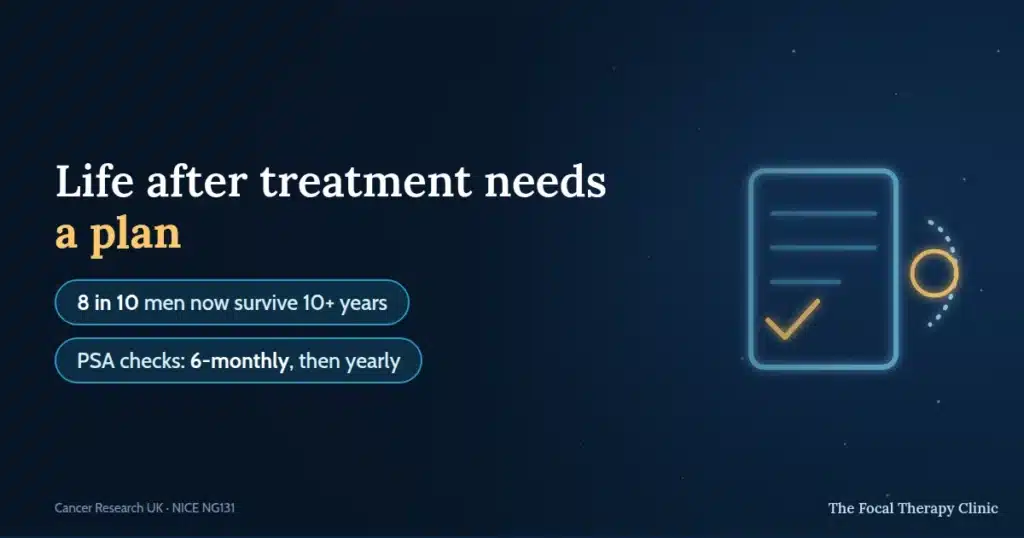
Prostate cancer survivorship is the phase after initial treatment — and with around 8 in 10 UK men now surviving their disease ten years or more, it matters more than ever.¹ A Survivorship Care Plan (SCP) is a personalised document that bridges hospital care and life at home: your treatment summary, follow-up schedule (typically PSA at least six-monthly for the first two years, then at least annually — NICE NG131),² side-effect management plan, support resources and lifestyle goals — so nothing falls through the cracks and you are never left to manage recovery alone.
Key takeaways:
- Survivorship goes beyond “cancer-free” — it means managing long-term side effects, health risks and emotional wellbeing through structured care.
- An SCP is a personalised document — treatment summary, follow-up schedule and lifestyle goals, shared with you and your GP.
- Monitoring is central — PSA testing, review and imaging where needed, most intensively in the first years after treatment.²
- Function problems are treated, not endured — urinary leakage and intimacy problems are common and a plan ensures they are addressed proactively.
- A multidisciplinary team supports you — urologists, nurses and psychologists working together, with digital tools helping you track your own progress.
Prostate cancer survivorship is a distinct and critical phase in a man’s healthcare journey. As medical advances improve survival, the focus shifts from simply treating the cancer to living well afterwards — navigating the physical and emotional adjustments that follow, managing ongoing health, and preserving quality of life. This guide explains how Survivorship Care Plans act as a roadmap, providing structured monitoring and support through a dedicated pathway.
Understanding prostate cancer survivorship
Survivorship refers to the period following initial treatment, focused on recovery, monitoring and adapting to any long-term effects. More UK men than ever are living with and beyond prostate cancer: ten-year survival has risen from about 1 in 5 in the 1970s to around 8 in 10 today.¹ Many experience long-term effects — urinary issues, sexual dysfunction, fatigue or emotional distress — that significantly affect quality of life, which is exactly what structured survivorship care exists to manage.
Key components of a survivorship care plan
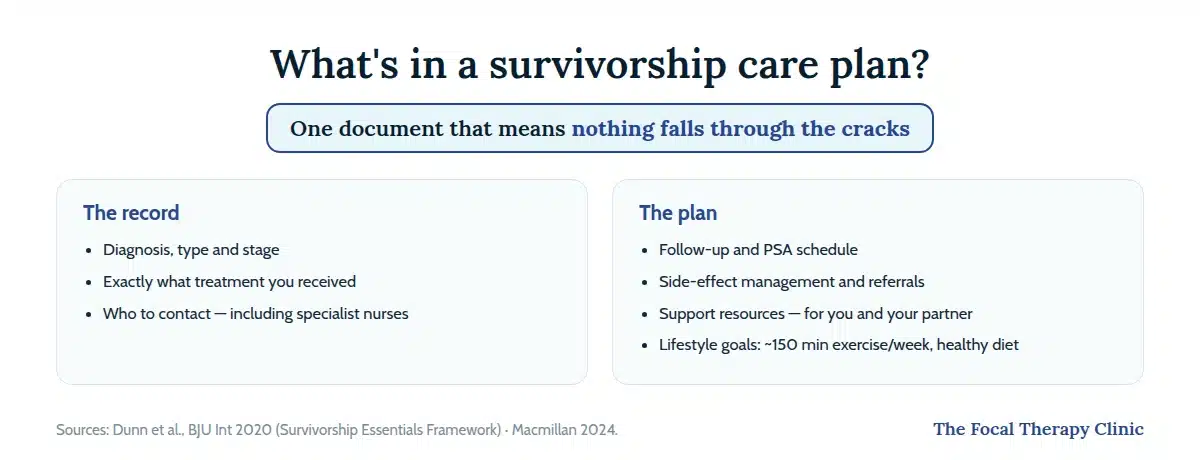
An SCP is developed by your medical team and shared with you and your GP — a bridge between hospital care and home. It clarifies what has happened, what happens next, and who to contact.
Diagnosis and treatment summary
A clear record of when you were diagnosed, the type and stage of your cancer, and exactly what treatment you received — focal therapy, surgery or radiotherapy. If you ever see a new doctor or need emergency care, this record keeps future care safe and appropriate.
Follow-up care schedule
Monitoring is essential for early detection of recurrence. Plans typically include scheduled PSA tests, physical assessment and imaging if needed. Frequency depends on your treatment and recurrence risk — NICE guidance is PSA at least every six months for the first two years, then at least once a year.²
Management of side effects
Common effects include urinary incontinence, erectile dysfunction, bowel irregularity, fatigue and anxiety or depression (our side-effects guide compares them by treatment). The plan guides symptom tracking and referrals — urologists, pelvic-floor physiotherapists, mental-health professionals — because proactive management beats years of unaddressed symptom burden.
Support resources
Counselling, nutritional guidance, peer support groups, financial advice and carer resources — tailored and accessible, in print, digital or in person. Partners matter too: prostate cancer affects relationships, and informed loved ones strengthen the whole family unit.
Healthy lifestyle recommendations
Evidence-based goals: around 150 minutes of moderate exercise a week, and a heart-healthy diet — managing fatigue, mood and cardiovascular risk, which deserves particular attention in prostate cancer survivors.
Communication with your team
The plan gives you a contact list for your multidisciplinary team — including specialist nurses who can often answer questions quickly — so you always know whether an issue is for your GP or your urologist.
Monitoring and managing long-term health
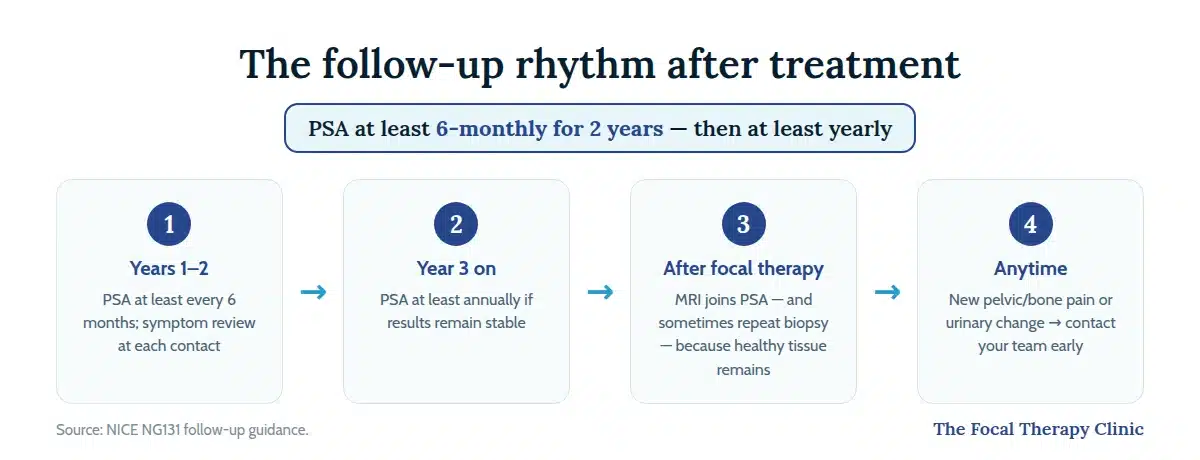
- Surveillance for recurrence — PSA testing remains the central tool, with your plan setting out when tests happen and which symptoms (new pelvic pain, urinary changes) warrant prompt attention. Recurrence is most commonly detected through rising PSA.²
- Urinary and sexual function — pelvic-floor exercises, medication (such as PDE5 inhibitors) and urological review; combining sexual counselling with medical treatment gives the best outcomes.
- Psychological wellbeing — depression and anxiety can surface long after treatment. Good plans build in regular mental-health check-ins and clear referral routes; emotional recovery matters as much as physical.
Tools and resources for survivorship care
UK survivors have strong, free resources: Macmillan’s “After treatment” programme and benefits support, Prostate Cancer UK’s specialist nurses and follow-up information, and the NHS App for records and appointments.⁴ Symptom trackers and health apps help you monitor progress between reviews — our guide to the best prostate cancer apps reviews the options — and telehealth increasingly supports remote follow-up.
Get Expert Advice & The Latest Research
Subscribe to our newsletter to receive the latest updates, expert insights, and breakthrough research on prostate cancer-delivered straight to your inbox.
The role of multidisciplinary care
Survivorship works best when urologists, oncologists, GPs, nurses and psychologists collaborate on coordinated, patient-centred planning.³ At The Focal Therapy Clinic, our multidisciplinary team spans the key specialties — 75+ years of combined focal therapy experience across 2,500+ procedures — personalising care for each patient. Team-based care improves symptom management and patient satisfaction, and reduces the risk of complications being overlooked.³
Enhancing quality of life after treatment
Steve, a HIFU Focal Therapy Clinic patient, tells his treatment and recovery story in his own words.
The goal of an SCP is a full, active life — shifting focus from illness to wellness. Healthy behaviours, a safety net of monitoring and rapid access to support restore a sense of control and the structure to move forward with confidence. If you are weighing treatments now, choosing one that preserves function — where suitable — shapes survivorship too: in FTC’s audited series of 265 men treated with focal therapy, 97% maintained urinary continence and 90%+ preserved sexual function.
Frequently Asked Questions
Who writes my survivorship care plan?
Your hospital team — typically your consultant and specialist nurse — with a copy shared with you and your GP. If you haven’t been given one, ask: it is a reasonable and standard request.
How often will my PSA be checked after treatment?
NICE guidance is at least every six months for the first two years, then at least annually — more often if your risk or treatment type warrants it.²
What symptoms should prompt me to call between check-ups?
New or worsening urinary symptoms, new pelvic or bone pain, blood in urine or semen, or anything that worries you. Your plan lists exactly who to contact — usually a specialist nurse first.
Is emotional support really part of a care plan?
Yes — anxiety and low mood are common and treatable parts of survivorship, and good plans schedule mental-health check-ins with referral routes to psychological support.³
Does focal therapy change survivorship follow-up?
Follow-up after focal therapy keeps PSA monitoring and adds MRI (and sometimes repeat biopsy), because healthy prostate tissue remains. Your plan will reflect the protocol — one reason to have treatment where structured focal follow-up is routine.
This content is not intended to be a substitute for professional medical advice, diagnosis, or treatment. Always seek the advice of your urologist or other qualified health provider with any questions you may have regarding a medical condition.
References
- Cancer Research UK. Prostate cancer survival statistics. Accessed August 2026. https://www.cancerresearchuk.org/health-professional/cancer-statistics/statistics-by-cancer-type/prostate-cancer
- National Institute for Health and Care Excellence. Prostate cancer: diagnosis and management (NG131). 2019, updated 2021. https://www.nice.org.uk/guidance/ng131
- Dunn J, et al. Prostate Cancer Survivorship Essentials Framework: guidelines for practitioners. BJU Int. 2020;126(S1):4–10.
- Macmillan Cancer Support. Beginning to recover. 2024. https://www.macmillan.org.uk/cancer-information-and-support/after-treatment/beginning-to-recover
- European Association of Urology. EAU Guidelines (survivorship and quality of life). 2026. https://uroweb.org/guidelines