
At a Glance
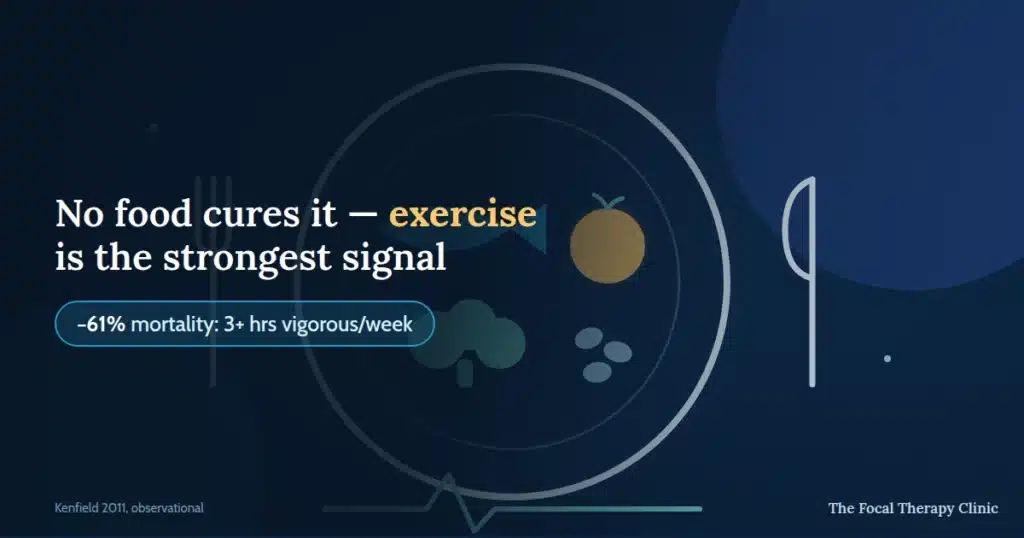
No diet treats or reverses prostate cancer. The eating pattern with the best evidence is broadly Mediterranean — vegetables, fruit, wholegrains, pulses, oily fish and olive oil — supporting weight, recovery and heart health. Body weight has stronger evidence than any single food, and exercise stronger still.
Key takeaways:
- No food kills cancer — tomato, broccoli and pomegranate claims come from laboratory studies; the randomised MEAL trial found no effect on progression.
- Supplements can harm — the SELECT trial (35,533 men) found a 17% higher prostate cancer risk with high-dose vitamin E.
- Weight matters most — greater body fatness is strongly linked with advanced prostate cancer (World Cancer Research Fund).
- Exercise is powerful — three-plus hours of vigorous activity a week was associated with 61% lower prostate cancer mortality (observational data).
- Eating changes with treatment — radiotherapy, hormone therapy and focal therapy each need different, mostly temporary, adjustments.
A prostate cancer diet should be mostly plant-based, built around vegetables, fruit, wholegrains, pulses, oily fish, nuts and olive oil, while limiting processed meat, alcohol and saturated fat. No food treats or reverses prostate cancer. Diet’s proven role is supporting weight management, controlling treatment side effects and helping recovery.
Is There a Prostate Cancer Diet?
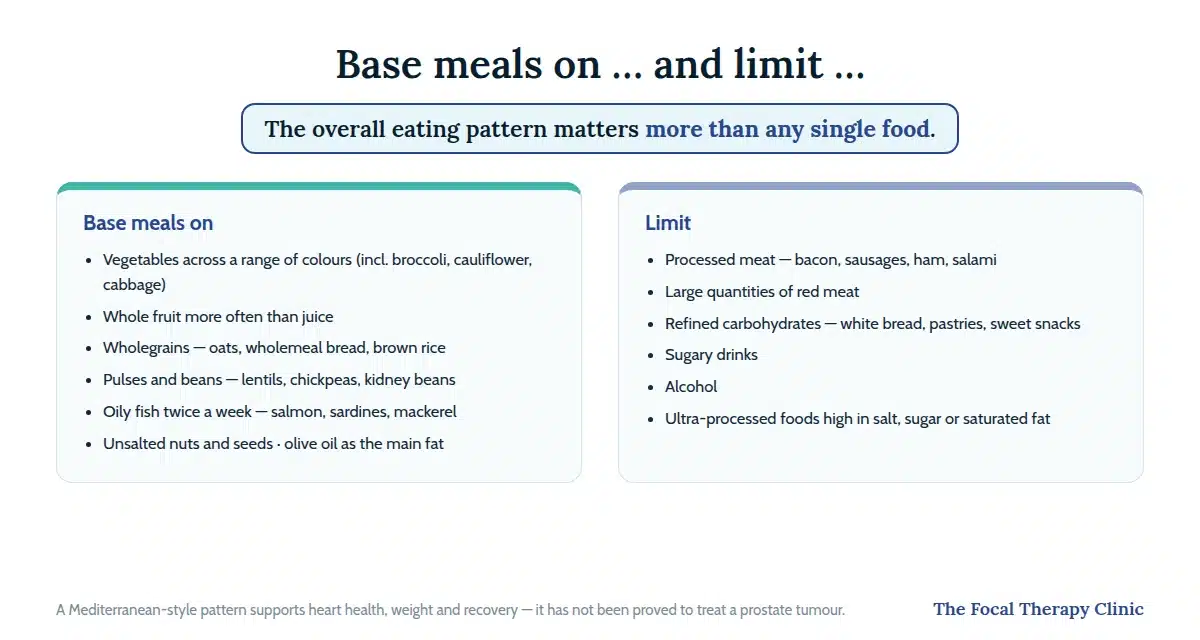
There is no single prostate cancer diet, but the eating pattern with the best evidence behind it is broadly Mediterranean. Practical advice about diet and prostate cancer should focus on repeatable meals rather than one “superfood”. Men looking for prostate cancer foods to eat can use the following foundation:
- Vegetables across a range of colours, including broccoli, cauliflower, cabbage and other cruciferous vegetables
- Fruit, choosing whole fruit more often than juice
- Wholegrains such as oats, wholemeal bread, brown rice and barley
- Pulses and beans, including lentils, chickpeas and kidney beans
- Oily fish such as salmon, sardines or mackerel twice a week
- Unsalted nuts and seeds
- Olive oil as the main added fat
Common foods to avoid with prostate cancer are better described as foods to limit:
- Processed meat, including bacon, sausages, ham and salami
- Large quantities of red meat
- Refined carbohydrates, including white bread, pastries and many sweet snacks
- Sugary drinks
- Alcohol
- Ultra-processed foods that are high in salt, sugar or saturated fat
This eating pattern can support heart health, weight control and recovery, but it has not been proved to treat a prostate tumour. Regular exercise, maintaining a healthy weight, sleeping well and avoiding smoking are other important lifestyle changes for prostate health that support general wellbeing. The overall pattern matters more than any individual food.
Can Diet Cure or Reverse Prostate Cancer?
No. Diet has never been shown to shrink a prostate tumour or reverse a diagnosis in a controlled trial. The Men’s Eating and Living (MEAL) trial, published in JAMA in 2020, randomised 478 men on active surveillance to intensive telephone counselling or a control group. The intervention aimed for at least seven daily servings of vegetables and fruit, including at least two servings each of cruciferous vegetables and tomatoes, yet cancer progression did not differ significantly after two years, with a hazard ratio of 0.96.
Men asking can prostate cancer be reversed by diet need a clear answer because false hope can delay effective care. Diet can help maintain a healthy weight, reduce some treatment side effects and support strength during recovery. It also supports cardiovascular health, which matters because men with local or regional disease are more likely to die from other causes than from prostate cancer itself. Diet supports treatment and does not replace it, so no treatment decision should be delayed in the hope that dietary change will reverse cancer.
Do Any Foods Kill Prostate Cancer Cells?
No food kills prostate cancer cells inside the human body, and clinical evidence does not support claims that tomatoes, broccoli, pomegranate or another product can destroy a tumour. Lycopene, sulforaphane from cruciferous vegetables and pomegranate compounds have shown effects in laboratory dishes or animal models, but those findings have not translated into proven treatment benefit in men. A pooled analysis of 15 prospective cohort studies (Petimar et al., 2017) found no association between advanced prostate cancer risk and total fruit, total vegetables, cruciferous vegetables or tomato intake.
Supplements can be harmful as well as ineffective. The Selenium and Vitamin E Cancer Prevention Trial (SELECT) enrolled 35,533 men and found that 400 IU of vitamin E each day increased prostate cancer risk by 17% compared with placebo (Klein et al., JAMA 2011) — an absolute increase of 1.6 prostate cancers per 1,000 person-years — while selenium showed no benefit. The trial stopped its supplements early in 2008, and later follow-up confirmed the vitamin E risk. A supplement is not automatically harmless because it is a vitamin, so every product should be discussed with the oncology team before use.
| Claim | What the evidence shows | What to do |
|---|---|---|
| Lycopene and tomatoes | Laboratory findings are promising, but human evidence has not shown that tomatoes treat prostate cancer. | Eat tomatoes as part of a varied diet, not as a cancer treatment. |
| Cruciferous vegetables | Sulforaphane affects cancer cells in laboratory studies, but clinical benefit in men is unproved. | Include broccoli, cabbage and cauliflower for general nutrition. |
| Pomegranate | Small studies and laboratory work have not established that pomegranate controls cancer. | Treat it as food, not medicine, and watch the sugar in juice. |
| Vitamin E | SELECT found a 17% higher prostate cancer risk with 400 IU daily. | Avoid high-dose supplements unless a clinician advises them. |
| Selenium | SELECT found no prevention benefit. | Do not take it specifically to prevent or treat prostate cancer. |
| Multivitamins | No strong evidence shows that they treat prostate cancer, and high doses may cause harm. | Use only for an identified need discussed with the clinical team. |
Why Weight Matters More Than Superfoods
Of every dietary issue covered in this article, body weight has the strongest evidence behind it. The World Cancer Research Fund reports strong evidence linking greater body fatness with advanced prostate cancer, including aggressive disease that can prove fatal. This reframes diet and prostate cancer away from adding one special ingredient and towards the effect of the whole eating pattern on energy balance. Lists of prostate cancer foods to eat are less useful when overall portions and activity still drive steady weight gain.
Excess body fat can affect insulin sensitivity, chronic inflammation and hormone levels. Men receiving androgen deprivation therapy may gain fat around the middle and lose muscle as a direct treatment effect, not because they have failed to exercise enough or eat perfectly. Weight advice should remain practical and free from blame, particularly during treatment. A GP or registered dietitian can give individual advice when weight is rising, falling or becoming difficult to manage.
How Much Exercise Should You Do?
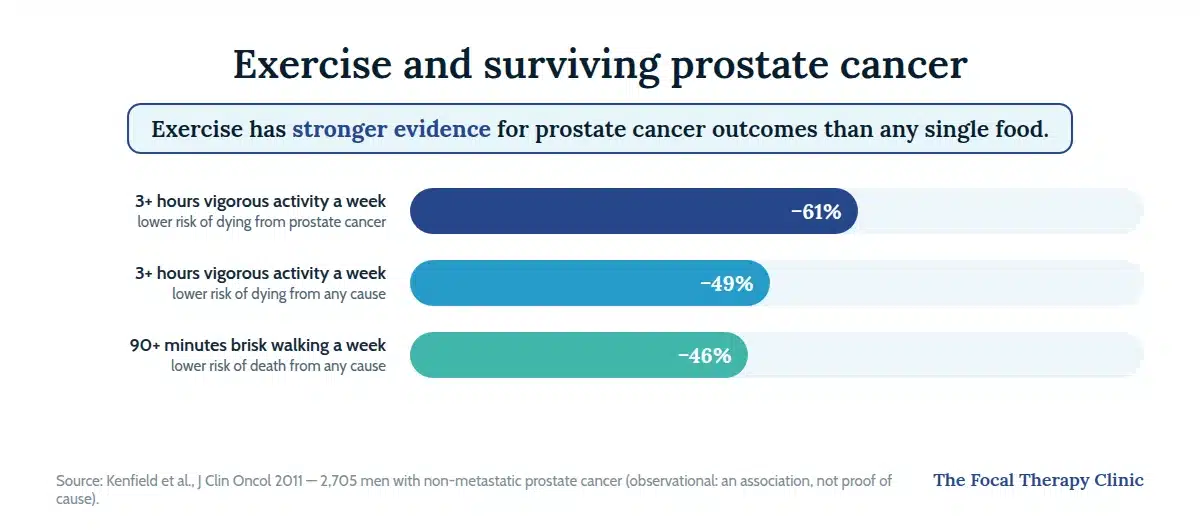
Exercise has stronger evidence for improving prostate cancer outcomes than any specific food. Kenfield and colleagues followed 2,705 men with non-metastatic prostate cancer in the Health Professionals Follow-Up Study. Men completing at least three hours of vigorous activity each week had a 61% lower risk of dying from prostate cancer and a 49% lower risk of dying from any cause. Men walking for at least 90 minutes a week at a normal to very brisk pace had a 46% lower risk of all-cause death than men who walked less or walked more slowly.
Vigorous activity can include jogging, fast cycling, lap swimming or tennis. Brisk walking still counts, which matters for men who cannot safely manage vigorous sessions. These findings are observational, so they show an association and do not prove that exercise alone caused the lower death rates. Men should build activity gradually and ask their clinical team before starting a new programme during radiotherapy or soon after surgery. Individual prehab and rehab support can help adapt exercise around treatment, symptoms and recovery.
How Can Treatment Affect What You Eat?
The practical dietary question is rarely “what prevents cancer” and is more often “what can be eaten now that treatment has changed how the body works”. The answer depends on the treatment, because advice that helps bowel symptoms during radiotherapy may be unsuitable during recovery from surgery or while weight is falling. A flexible diet for prostate cancer should change with symptoms, appetite and clinical instructions.
Eating during radiotherapy
Pelvic radiotherapy can irritate the bowel and cause loose stools, urgency and wind, with rectal inflammation known as radiation proctitis. Some radiotherapy teams advise a temporary reduction in fibre when diarrhoea develops, which is the opposite of usual healthy eating advice. Foods restricted may include high-fibre cereals, pulses, raw vegetables, fruit skins and pips. Other NHS centres advise keeping a normal diet unless symptoms appear, so the treatment team’s own plan must take priority. Any fibre reduction should be temporary, guided by a radiographer or oncology dietitian, and reversed gradually when treatment ends and symptoms settle.
Eating on hormone therapy
Androgen deprivation therapy lowers testosterone and can cause bone-density loss, abdominal weight gain, muscle loss and reduced insulin sensitivity. Men having hormone therapy need enough calcium and vitamin D for bone health, plus protein spread across the day to help limit muscle loss. Resistance exercise should sit alongside diet because food alone cannot preserve muscle strength. Weight gain on treatment is a biological effect and not a failure of willpower. Calcium or vitamin D supplements should be discussed with the oncology team because need, dose and safety vary.
Managing nausea and fatigue
Nausea, appetite loss and fatigue can occur during or shortly after treatment, and the immediate priority is eating enough rather than eating perfectly. Small changes can reduce the effort and discomfort involved in meals.
- Eat small, frequent meals instead of three large meals.
- Choose cold or room-temperature food when cooking smells trigger nausea.
- Use nutrient-dense drinks or smoothies when solid food feels unappealing.
- Keep fluids up with regular small drinks.
- Eat the largest meal at the time of day when appetite is best.
The usual prostate cancer diet rules can be relaxed during the hardest weeks, especially when the alternative is eating very little. Unplanned weight loss, dehydration or an inability to keep food down should be reported to the clinical team because dietitian support or symptom treatment may be needed.
Get Expert Advice & The Latest Research
Subscribe to our newsletter to receive the latest updates, expert insights, and breakthrough research on prostate cancer-delivered straight to your inbox.
Diet Before and After Focal Therapy
Focal therapy is a day-case procedure performed under general anaesthetic, so patients receive specific eating and drinking instructions beforehand. Recovery usually includes a short period with a catheter, which makes bladder irritation and constipation more relevant afterwards. General advice should never replace the hospital’s procedure-specific instructions.
Eating before your procedure
Focal therapy requires fasting because it is performed under general anaesthetic. The hospital will give exact cut-off times for solid food and clear fluids, and those timings must be followed precisely. Medication may sometimes be taken with a small sip of water, but only when the pre-operative team has confirmed this. A light, easily digested meal the evening before may feel more comfortable than a heavy meal, without changing the formal fasting rules. Failure to follow the instructions can result in treatment being cancelled on the day.
Eating after your procedure
Most men move from clear fluids to soft food and then back to a normal diet within about a week. Bladder irritants such as caffeine, alcohol, fizzy drinks, citrus juice and spicy food may be worth limiting while a catheter is in place or urinary symptoms continue. Constipation prevention also matters because straining can be uncomfortable during recovery. Adequate fluid, a gradual return to fibre and gentle movement can help bowel function. Opioid painkillers commonly cause constipation, so men who receive them should follow the discharge plan and report persistent problems. More practical detail is available in the clinic’s guide to recovery after focal therapy.
Do Alcohol and Smoking Affect Recovery?
Yes, alcohol and smoking can both affect recovery. Alcohol is classified as a Group 1 carcinogen, and UK guidance advises no more than 14 units a week spread over at least three days; it can also irritate the bladder after a prostate procedure. Smoking is associated with higher prostate cancer mortality and with slower wound healing, chest complications and infection after surgery. Stopping before a procedure reduces anaesthetic, respiratory and wound-related risks, even when the change begins only weeks beforehand. NHS stop-smoking services can provide behavioural support and medicines without blame or judgement.
Frequently Asked Questions
What is a good diet for prostate cancer?
A good prostate cancer diet follows a broadly Mediterranean pattern with vegetables, fruit, wholegrains, pulses, oily fish twice a week, nuts and olive oil. Processed meat, alcohol and refined carbohydrates should be limited. No single food matters more than the overall pattern, whose main benefit is supporting a healthy weight and general health.
Can diet prevent prostate cancer?
No diet prevents prostate cancer. Maintaining a healthy weight is linked to a lower risk of advanced and fatal disease, but no specific food or eating pattern has been shown to stop prostate cancer developing. Age, Black ethnicity and family history remain the main established risk factors.
Should men with prostate cancer take supplements?
Not without discussing them with the oncology team first. In SELECT, 35,533 men were studied and those taking 400 IU of vitamin E each day had a 17% higher prostate cancer risk than men taking placebo, while selenium showed no benefit. Vitamins and supplements are not automatically safe.
Is dairy bad for prostate cancer?
The evidence is limited and inconsistent. Some observational research suggests a possible link between high dairy or calcium intake and prostate cancer risk, but the World Cancer Research Fund does not grade the evidence as convincing. Men do not need to remove dairy, especially during hormone therapy when calcium helps support bone health.
Does sugar feed prostate cancer?
Not in the way the phrase suggests. All cells use glucose, and removing sugar from the diet does not starve a prostate tumour. Sugary food and drinks are worth limiting because they can promote weight gain, and greater body fatness is strongly linked with advanced prostate cancer.
What diet should you be on during and after focal therapy treatment?
Patients should follow the hospital’s fasting instructions exactly before focal therapy because the procedure uses general anaesthetic. Food is then reintroduced gradually after treatment, while caffeine, alcohol, citrus, fizzy drinks and spicy food may be limited if urinary irritation continues. Fluids, gentle movement and a gradual return to fibre can help prevent constipation.
Should I see a dietitian?
A dietitian referral is appropriate when a man is losing weight without trying, struggling with nausea or low appetite, managing bowel symptoms during radiotherapy, or gaining weight during hormone therapy. A registered oncology dietitian can tailor food advice to treatment, symptoms and other health conditions. NHS referral can usually be requested through the clinical nurse specialist.
Eat Well, Treat Early: Talk to Our Team
Eating well can support recovery, but the treatment decision is what changes cancer outcomes. The Focal Therapy Clinic offers consultations covering all treatment options, with every case reviewed by a multidisciplinary team. For suitable men with localised disease, HIFU and NanoKnife focal therapy are day-case, tissue-preserving options, and our consultants have carried out more than 2,500 focal therapy procedures. Book a consultation to discuss the diagnosis and available treatment choices.
To understand those treatment decisions from the start, read our guide to the whole prostate cancer journey.
References
References verified via PubMed / official sources, 26 August 2026.
- Parsons JK, Zahrieh D, Mohler JL, et al. Effect of a behavioral intervention to increase vegetable consumption on cancer progression among men with early-stage prostate cancer: the MEAL randomized clinical trial. JAMA 2020;323(2):140–148. PMID 31935026.
- Klein EA, Thompson IM Jr, Tangen CM, et al. Vitamin E and the risk of prostate cancer: the Selenium and Vitamin E Cancer Prevention Trial (SELECT). JAMA 2011;306(14):1549–56. PMID 21990298.
- Petimar J, Wilson KM, Wu K, et al. A pooled analysis of 15 prospective cohort studies on the association between fruit, vegetable, and mature bean consumption and risk of prostate cancer. Cancer Epidemiol Biomarkers Prev 2017;26(8):1276–1287. PMID 28446545.
- Kenfield SA, Stampfer MJ, Giovannucci E, Chan JM. Physical activity and survival after prostate cancer diagnosis in the Health Professionals Follow-up Study. J Clin Oncol 2011;29(6):726–32. PMID 21205749.
- World Cancer Research Fund / American Institute for Cancer Research. Continuous Update Project: diet, nutrition, physical activity and prostate cancer. https://www.wcrf.org/diet-activity-and-cancer/
- UK Chief Medical Officers. Low risk drinking guidelines. 2016. https://www.gov.uk/government/publications/alcohol-consumption-advice-on-low-risk-drinking
This information is for educational purposes and does not replace professional medical or dietetic advice.