
At a Glance
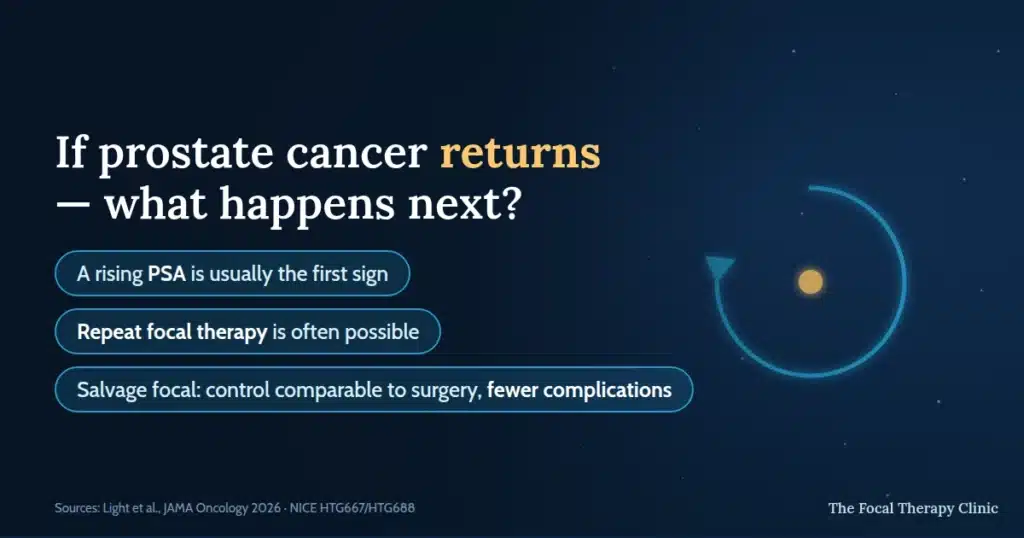
Prostate cancer can return after treatment, but early detection through regular PSA monitoring means recurrence is often caught before symptoms develop. At The Focal Therapy Clinic, men with localised recurrence may be eligible for repeat focal therapy — a minimally invasive approach that preserves urinary and sexual function while effectively targeting the returning cancer.
- PSA monitoring is key — a rising PSA level is usually the first sign of recurrence, often detected before any physical symptoms appear
- Retreatment is possible — focal therapy using HIFU (NICE-approved, HTG667) or NanoKnife IRE (NICE-approved, HTG688) can treat localised recurrence with minimal side effects
- Outcomes remain strong — in a 2026 study co-authored by our consultants, salvage focal therapy offered comparable long-term cancer control to salvage surgery with substantially fewer complications (Light et al., JAMA Oncology 2026)
- Expert MDT review — every case of recurrence is assessed by a multidisciplinary team to determine the safest and most effective treatment path
Prostate cancer can return after treatment, even when the initial therapy appeared to have been successful. Facing the possibility of recurrence can feel overwhelming, but understanding what lies ahead can help reduce uncertainty. Knowing the signs, monitoring processes, and treatment options empowers men to take confident steps forward.
Many men feel lost when they hear the word “recurrence,” but support and solutions are available. With advanced treatments like focal therapy and personalised care, there are practical ways to manage what comes next. Whether you’re navigating your own diagnosis or helping someone close to you, our expert clinicians can provide more clarity.
What Is Prostate Cancer Recurrence?
Prostate cancer recurrence means the cancer has returned after initial treatment — either in the prostate gland area (local recurrence), in nearby lymph nodes (regional), or in distant sites such as the bones (metastatic). Local recurrence is the most common type and often responds well to further treatment, including repeat focal therapy at The Focal Therapy Clinic.
Recurrence is typically detected through regular PSA monitoring before any physical symptoms develop. Doctors then use advanced imaging — including multiparametric MRI and PSMA PET scans — alongside targeted biopsy to confirm the location and extent of recurrence. This information guides the next steps in your treatment plan.
The risk of recurrence varies depending on the initial cancer grade, treatment type, and individual patient factors. Men with higher-grade cancers or positive surgical margins may face an increased risk, which is why ongoing follow-up with an experienced clinical team is essential. At The Focal Therapy Clinic, follow-up protocols include PSA testing and MRI scans to ensure any recurrence is caught early.
Why Does Prostate Cancer Come Back After Treatment?
Sometimes, a small number of cancer cells survive the initial treatment and slowly grow over time. In other cases, the cancer may have already started spreading before it was detected, even if scans appeared clear. Recurrence doesn’t mean the treatment failed; rather, it reflects how complex and unpredictable cancer can be.
No scan or test can detect every single cancer cell during initial diagnosis. This can even be true in early or localised prostate cancer, where the disease may appear fully contained. This is why regular monitoring and long-term follow-up are so important after treatment. Modern understanding recognises that prostate cancer management is often a long-term journey rather than a single treatment event. The goal shifts from expecting a cure to achieving excellent long-term control whilst maintaining quality of life.
How Common Is Recurrence After Focal Therapy?
Focal therapy aims to reduce recurrence risk by targeting only the cancerous areas of the prostate whilst preserving healthy tissue. It offers a precise approach with fewer side effects compared to whole-gland treatments. Current evidence demonstrates very positive outcomes, though recurrence can still occur for some men.
When recurrence does occur after focal therapy, it is often detected early and frequently remains confined to the prostate. This makes it possible to have further focal treatment using the same minimally invasive approach. Because focal therapy aims to preserve surrounding tissue, it helps protect urinary and sexual function during retreatment.
Signs and Symptoms of Recurrence
Most prostate cancer recurrences are detected through a gradual rise in PSA levels rather than any obvious early symptoms. Many men feel completely well at the time of detection, which is why regular blood tests and follow-ups matter so much. PSA monitoring often catches changes before anything feels different.
If symptoms do appear, they may include:
- Difficulty urinating or a weak flow
- Bone pain in the hips, back or ribs
- Fatigue or unexplained weight loss
- Pelvic or perineal discomfort
These symptoms are more common in advanced or metastatic recurrence and should be discussed with your doctor as soon as possible. Early action can help keep things manageable. Even small changes are worth mentioning during check-ups, as they may provide important clues about disease progression.
How Is Recurrence Detected After Focal Therapy?
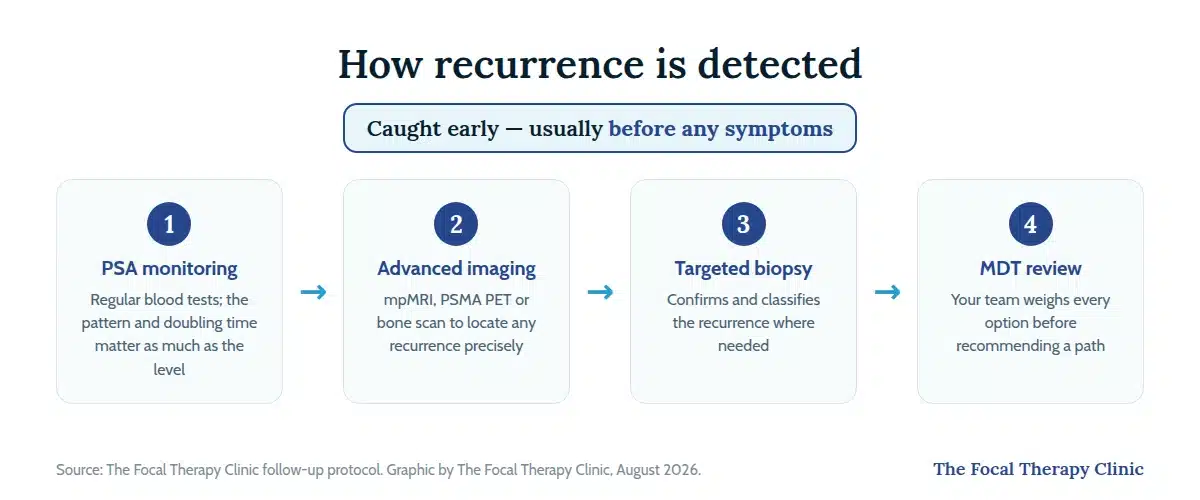
After focal therapy, men attend regular follow-up appointments to check for any signs of recurrence. These appointments usually include PSA blood tests, advanced imaging, and occasionally targeted biopsy. Early detection means more treatment options and often leads to better outcomes.
Doctors rely on three main methods to detect recurrence:
- PSA blood tests to identify rising levels and/or patterns
- Advanced imaging scans including MRI scans and PSMA PET to locate recurrence more accurately
- Targeted biopsies to confirm and classify potential cancer
Each tool offers a different piece of the puzzle. Used together, they give your care team a comprehensive picture of your condition. This ensures the right decisions are made at the optimal time.
PSA testing and monitoring
PSA (prostate-specific antigen) is one of the earliest indicators that cancer may have returned. A steady or sudden rise in PSA levels can point to recurrence, even before symptoms develop. The PSA test is simple, quick, and essential for ongoing monitoring.
Doctors also look at how quickly the PSA is rising over time. This is known as PSA doubling time and helps predict how the cancer might behave. Faster rises can suggest more active disease and may lead to further testing or earlier treatment intervention.
Imaging and diagnostic scans
When PSA levels increase, imaging is often used to locate where the cancer might be. Modern scans include multiparametric MRI scans, PSMA PET, or bone scans, depending on your individual situation. These help determine if the cancer is local, regional, or has spread further.
Advanced imaging technology, including MRI-US fusion, is used at The Focal Therapy Clinic for added precision. It improves accuracy and helps to reduce unnecessary procedures. Imaging results help guide whether a biopsy or additional steps are needed for optimal treatment planning.
Biopsy and confirmatory tests
A biopsy may be recommended to confirm if prostate cancer has returned. It involves taking small tissue samples from the prostate to examine under a microscope. This helps determine the presence, location, and aggressiveness of any cancer cells.
Some men may also have follow-up scans or MRI-guided biopsies. These are useful to determine if treatment is needed or if active monitoring can continue safely. The clinic’s expert clinicians use biopsy results to tailor each treatment plan carefully to individual circumstances.
Modern biopsy techniques using cognitive fusion or software-guided targeting achieve greater accuracy than traditional approaches. This precision helps avoid unnecessary treatments whilst ensuring that significant cancer recurrence is not missed.
Get Expert Advice & The Latest Research
Subscribe to our newsletter to receive the latest updates, expert insights, and breakthrough research on prostate cancer-delivered straight to your inbox.
Treatment Options for Recurrent Prostate Cancer
Mr Raj Nigam answers whether a prostatectomy is still possible if cancer recurs after focal therapy — and why focal treatment keeps later options open.
Once recurrence is confirmed, your treatment plan will depend on several important factors. These include the location of the cancer, the treatments you’ve already had, and how quickly the disease appears to be progressing. Your care team will offer options that aim to either cure the cancer or control its growth effectively.
Some of the treatment options may include:
- A second round of focal therapy
- Local treatments like radiotherapy or surgery
- Systemic options like hormone therapy or newer targeted treatments
Your medical team will help you choose the path that fits your health, goals, and lifestyle. Every decision is made with full understanding of your personal medical history, including any relevant family history of prostate cancer. This ensures the treatment is as effective and well-tolerated as possible.
Focal therapy for recurrence
Focal therapy can often be used again if the cancer returns in a localised area in carefully selected patients. Techniques like HIFU or NanoKnife target the new cancer precisely, aiming to spare healthy tissue. Often, men who have repeat focal therapy experience minimal side effects and quick recovery.
For men whose cancer returns after radiotherapy, the evidence for a focal approach is strengthening: in a 2026 matched study of 923 men co-authored by our consultants Mr Tim Dudderidge, Mr Raj Nigam and Mr Marc Laniado, salvage focal therapy offered comparable long-term cancer control to salvage surgery with substantially fewer complications (Light et al., JAMA Oncology 2026).
At The Focal Therapy Clinic, expert clinicians assess every case through a comprehensive multidisciplinary team review. This approach ensures every aspect of your health is considered before retreatment begins. The goal is always to preserve continence, sexual function, and overall quality of life.
Other local treatments
If focal therapy isn’t suitable, there are other local treatment options that may be considered. These methods are designed to target cancer that remains in or near the prostate. Your clinical team will recommend the most appropriate option based on your individual case.
These treatments may include:
- External beam radiotherapy — using high-energy beams to destroy cancer cells
- Brachytherapy — placing radioactive sources directly into or near the prostate
- Salvage prostatectomy — surgical removal of the prostate in selected cases
Each approach has its own risks and potential benefits depending on your health and treatment history. A comprehensive second opinion service is available to help you make informed decisions about these approaches.
Systemic treatments and clinical trials
If the cancer has spread beyond the prostate, systemic treatments may be recommended. These include hormone therapy, chemotherapy, and newer targeted therapies. For men with only a few areas of spread (oligometastatic disease), focused treatments to specific sites may still be possible.
Clinical trials may also be an option, offering access to newer drugs or treatment combinations. These trials are carefully monitored and follow strict safety guidelines. Your doctor will help you explore whether a trial suits your type of cancer and medical history.
Living Well After Recurrence
Being told that prostate cancer has returned is never easy, and it’s completely normal to feel unsettled. Many men continue to live full and active lives with the right care and support. Looking after your physical, emotional, and mental health is just as important as any medical treatment.
Emotional and practical support
It’s natural to feel shocked, upset, or anxious when facing recurrence. Talking things through with a partner, friend, or professional counsellor can help ease some of the pressure. Mental health care should be part of your overall treatment and recovery.
Helpful resources include:
- Counselling services through your clinic or GP
- Peer support groups
- Online communities for men with recurrent cancer
You don’t have to go through this alone, and sharing your feelings often brings real relief. Many men find strength and reassurance from simply being heard. Support can make a big difference, especially in moments of doubt or fear.
Accessing support and resources
Knowing where to find support can make the journey feel less overwhelming. The Focal Therapy Clinic provides access to expert clinicians, nurses, and ongoing care teams who are there to help. National charities and organisations also offer support for families and carers.
You may also find help with:
- Financial concerns during treatment
- Returning to work or making adjustments
- Family and relationship support services
It’s okay to ask for help when you need it. The right resources can ease the burden for you and those around you. Support is available at every stage of your recovery.
Frequently Asked Questions
What is the survival rate of recurrent prostate cancer?
Many men live for years after recurrence, particularly when it’s detected early through regular monitoring. Local recurrences often respond well to targeted treatments like focal therapy or radiotherapy. Even advanced cases can be managed effectively with systemic therapies to maintain quality of life for extended periods.
What are the first signs of prostate cancer recurrence?
A rising PSA (prostate-specific antigen) level is usually the first sign of prostate cancer recurrence. Most men feel completely well in the early stages, which is why regular PSA monitoring is essential. At The Focal Therapy Clinic, follow-up protocols include scheduled PSA blood tests at regular intervals after treatment. Physical symptoms such as fatigue, bone pain, or urinary changes tend to appear only in more advanced recurrence.
How long can you live with recurrent prostate cancer?
Many men live a full life with recurrent prostate cancer, particularly when it remains local or slow-growing. Treatment options today are effective at controlling the disease over extended periods. Ongoing follow-up care helps track changes and adjust treatment when needed to maintain optimal outcomes.
How is prostate cancer recurrence detected after focal therapy?
At The Focal Therapy Clinic, recurrence is detected through a structured monitoring protocol including regular PSA blood tests, multiparametric MRI scans (with a follow-up MRI at three months post-procedure), and targeted biopsy where needed. A rising PSA level is often the first indicator that cancer may have returned, and advanced imaging helps pinpoint the exact location of any recurrence.
What are the treatment options if my prostate cancer comes back after focal therapy?
Several treatments may be considered, including another round of focal therapy, salvage radiotherapy, hormone therapy, or newer targeted treatments. The choice depends on the location and extent of recurrence, your overall health, and previous treatments. Recent advances include enzalutamide for high-risk biochemical recurrence and PARP inhibitors for men with specific genetic mutations. Your medical team will guide you toward the safest and most effective choice for your situation.
Can I have focal therapy again if my cancer returns?
Repeat focal therapy may be possible when recurrence is local and well-defined. Treatments like HIFU or NanoKnife target new cancer areas with the aim of minimal disruption to surrounding healthy tissue. Your doctor will assess your case in detail to determine if this approach is right for you.
What are the risks or side effects of treating recurrent prostate cancer?
Side effects vary depending on the treatment used and whether you’ve had it before. Fatigue, urinary irritation, or reduced sexual function are possible but often mild with focal approaches. Access to the right support services can help you manage any side effects effectively.
Does recurrence mean my prostate cancer is more aggressive?
Recurrence does not always mean the cancer is more aggressive. It may simply mean that some cancer cells survived initial treatment or were too small to detect. At The Focal Therapy Clinic, your consultant reviews PSA patterns, imaging results, and biopsy findings through a multidisciplinary team to understand your specific situation. Modern risk stratification tools help determine the appropriate treatment intensity based on individual disease characteristics, ensuring you receive the right level of care.
References
- Light A, et al. Salvage focal therapy versus salvage radical prostatectomy for radiorecurrent prostate cancer. JAMA Oncology 2026;12(4):364–373.
- American Urological Association. Salvage Therapy for Prostate Cancer: AUA/ASTRO/SUO Guideline, 2024.
- Cornford P, et al. EAU-EANM-ESTRO-ESUR-SIOG Guidelines on Prostate Cancer. Part II — Treatment of Relapsing and Metastatic Prostate Cancer. European Urology 2021;79(2):263–282.
- de Bono J, et al. Olaparib for metastatic castration-resistant prostate cancer. New England Journal of Medicine 2020;382(22):2091–2102.
- Crook JM, et al. Intermittent androgen suppression for rising PSA level after radiotherapy. New England Journal of Medicine 2012;367(10):895–903.
- NICE HealthTech guidance HTG667 (HIFU); HTG688 (NanoKnife IRE).
This content is not intended to replace professional medical advice. Always consult your clinical team about your individual circumstances.