
At a Glance
The best prostate cancer apps help you track symptoms, log PSA results, manage medication reminders and prepare for consultations. OWise is built specifically for prostate cancer; Squeezy supports pelvic floor recovery after treatment. Apps support — never replace — specialist care, so check GDPR compliance and clinical input before trusting one with your health data.
Key takeaways:
- OWise — prostate-specific tracking with PSA graphs and shareable consultation reports, CE-marked and GDPR-compliant.
- Squeezy — pelvic floor training designed by NHS physiotherapists (use the men’s version, Squeezy Men), valuable after prostate cancer treatment.
- MyTherapy and Medisafe — reliable medication and appointment reminders.
- NHS App — secure access to your records, results and hospital letters.
- Safety first — choose GDPR-compliant apps with named clinical input and updates within the last 12–18 months.
A diagnosis of localised prostate cancer brings medical appointments, test results, and important treatment decisions. A well-designed prostate cancer app can provide structured support between consultations — tracking symptoms, PSA results, medicines and mood in one place — and improve day-to-day management. Digital apps are not a replacement for specialist care: they complement guidance from experienced consultants, and when chosen carefully they improve clarity, confidence, and engagement in treatment planning.
Why Use a Prostate Cancer App?
Mr Raj Nigam explains how to think about whether your prostate cancer actually needs treatment now — the question behind every monitoring decision.
Managing prostate cancer often involves blood tests, MRI scans, biopsy findings, and ongoing follow-up, and keeping track of this information manually can become overwhelming. Digital tools provide a central place to record and review key health data between reviews.
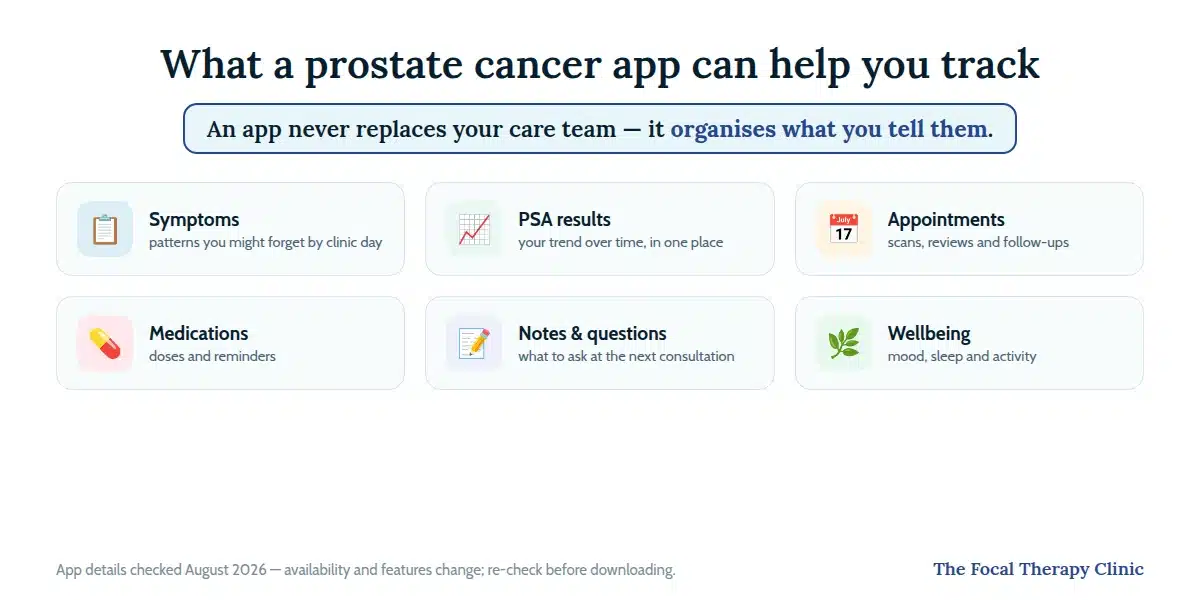
- Track symptoms and side effects — urinary symptoms, fatigue, bowel changes or erectile dysfunction logged consistently over time make patterns visible and follow-up discussions concrete; accurate tracking supports timely intervention and strengthens monitoring safety after treatment.
- Monitor PSA trends — logging each PSA result builds a clear graph over months or years; stable readings reassure, rises prompt timely review, and tracking PSA alongside biopsy information such as Gleason grading gives consultants useful context.
- Keep reminders — repeated PSA tests, imaging and consultations are easy to miss; structured alerts matter especially when coordinating private and NHS care, or when a treatment slot must be confirmed within a limited window.
- Communicate better — secure note-taking lets you record questions before consultations and summarise advice afterwards; organised information leads to more productive discussions about options such as focal therapy.
- Support wellbeing — mood, sleep, exercise and diet tracking help men recognise stress patterns early; improving daily lifestyle habits supports resilience during treatment.
How We Chose These Apps
Not all health apps meet appropriate clinical or privacy standards, so each app here was assessed against structured benchmarks with UK relevance in mind:
- Strong and consistent user ratings
- Transparent GDPR-compliant privacy policies
- Features relevant to prostate cancer patients
- Alignment with BAUS and EAU guidance
- Evidence of clinician input or advisory involvement
The Best Prostate Cancer Apps Reviewed
OWise Prostate Cancer — best all-round prostate-specific app
OWise Prostate Cancer is designed specifically for men diagnosed with prostate cancer. It tracks urinary symptoms, fatigue, mood, erectile function and PSA levels in one platform, and generates visual reports that can be shared with clinicians. Its education library covers surgery, radiotherapy, hormone therapy and minimally invasive treatments in clear language, and interactive features let patients prepare appointment questions and record treatment decisions — making it one of the most complete prostate-specific tools available.
Squeezy — best for pelvic floor recovery
Squeezy is a UK-developed app designed by chartered NHS physiotherapists to support pelvic floor exercises, and is widely used and recommended within NHS services for continence support — men should choose the dedicated Squeezy Men version. It is a UKCA-marked Class I medical device with customisable exercise plans, visual and audio prompts, progress graphs and a bladder diary, and a professional mode lets a physiotherapist set a tailored programme. It is not a full prostate cancer app (one-off purchase, around £3.99), but regular pelvic floor training is highly relevant for men recovering from prostate treatment, where it can reduce incontinence risk. Focused and simple to use.
MyTherapy and Medisafe — best for medication reminders
MyTherapy combines medication reminders with symptom tracking and daily wellbeing logs; Medisafe offers similar dose-time alerts. Both are particularly useful when hormone therapy or supportive medicines are prescribed, where consistency supports stable treatment outcomes. Neither is prostate-specific, but their scheduling reliability removes the burden of remembering doses and appointments.
CareClinic — best for men managing multiple conditions
CareClinic is a broader health-management app that can be adapted for prostate cancer tracking. Customisable fields let users log symptoms, medications, mood, lifestyle factors and personal treatment-comparison notes in detail, with visual trend charts for long-term review. Its flexibility suits men managing other health conditions alongside cancer care, and organised digital summaries are useful when seeking a second opinion.
NHS App and Macmillan online tools — best official support
The NHS App provides secure access to medical records, appointments, test results, hospital letters and prescriptions — supporting informed planning and continuity between NHS and private care. Macmillan Cancer Support’s online information and support resources explain procedures, side effects, recovery expectations, financial help (including a benefits calculator and free money advice) and emotional support in accessible, professionally reviewed language — and Macmillan also curates an App Library of digital health tools independently assessed by ORCHA for clinical safety, usability and privacy. Neither is a dedicated prostate cancer app, but both anchor a patient’s toolkit to official UK sources.
Comparison table
| App | Prostate-Specific | Symptom Tracking | PSA Logging | Report Export | Best For |
|---|---|---|---|---|---|
| OWise Prostate Cancer | Yes | Yes | Yes | Yes | Comprehensive tracking & education |
| Squeezy (Squeezy Men) | No (pelvic floor focus) | No | No | No | Continence rehabilitation support |
| MyTherapy / Medisafe | No | Basic | Manual entry | Limited | Medication reminders & simple logs |
| CareClinic | No (customisable) | Yes | Manual entry | Yes | Flexible multi-condition tracking |
| NHS App | No | No | Via records | No | Official records, results and letters |
Mental Wellbeing Support
Emotional health is part of prostate cancer care, and anxiety after diagnosis is common. Meditation apps offering guided breathing and relaxation can improve sleep, concentration and decision-making clarity, while peer-support platforms connect men with others facing similar experiences and reduce isolation. These tools provide daily coping strategies, not clinical treatment — professional guidance must remain central, and mood concerns should always be raised with the clinical team.
Get Expert Advice & The Latest Research
Subscribe to our newsletter to receive the latest updates, expert insights, and breakthrough research on prostate cancer-delivered straight to your inbox.
Safety, Privacy and Choosing the Right App
Digital health tools handle sensitive information, so check each app before trusting it:
| Safety Factor | What to Check | Why It Matters |
|---|---|---|
| GDPR Compliance | Clear UK privacy policy | Protects personal data |
| Clinical Involvement | Named medical advisors | Improves credibility |
| Recent Updates | Updated within 12–18 months | Ensures current guidance |
| Data Sharing Policy | No third-party sales | Maintains confidentiality |
| Secure Login | Password or biometric access | Prevents unauthorised access |
The right app depends on personal priorities — symptom tracking, reminders, education or wellbeing. Ease of use matters most for long-term engagement: an overly complex interface kills consistency. Download only from recognised app stores, avoid apps requesting excessive personal information, and ask your consultant how digital data can be reviewed securely — informal messaging channels should be avoided. Some healthcare teams recommend specific tools; structured reporting can make appointments more efficient.
Better Support with the Right Tools
The right prostate cancer app can provide structure, clarity and reassurance during diagnosis and treatment — tracking symptoms, monitoring PSA trends, organising appointments and preparing consultations. Used responsibly alongside expert clinical guidance, it strengthens patient engagement and confidence.
The Focal Therapy Clinic specialises in minimally invasive treatment for localised prostate cancer, including HIFU and NanoKnife procedures. With more than 2,500 focal therapy procedures carried out and more than 75 years of combined experience in focal therapy, its multidisciplinary team provides detailed case reviews and personalised advice. Men seeking effective treatment with reduced risks to continence and sexual function benefit from specialist expertise supported by organised digital tracking.
FAQs
What are the best prostate cancer apps?
The best apps depend on individual needs and priorities. OWise leads for prostate-specific symptom and PSA tracking, Squeezy Men for pelvic floor recovery, and MyTherapy or Medisafe for reminders. Safety and UK data protection compliance should guide selection.
Can smartphone apps help with prostate cancer care?
Smartphone apps can improve organisation and symptom monitoring. They support preparation for consultations and follow-up reviews. They do not replace professional medical advice.
Are these apps secure and private?
Security varies between platforms. Choose apps that comply with UK GDPR standards and provide transparent privacy policies. Always review data-sharing terms before use.
How do I share app data with my doctor?
Many apps allow export of structured reports. Patients should ask their consultants about preferred formats for review. Secure communication channels should always be used.
Do healthcare professionals recommend cancer support apps?
Some healthcare professionals recommend specific digital tools. Recommendations depend on safety, reliability, and relevance to patient needs. Clinical guidance should always inform final decisions.
Sources
App details checked August 2026 — availability, pricing and store listings change without notice.
- OWise Prostate Cancer Support (Px HealthCare). https://owise.uk/prostate/ · UK App Store and Google Play.
- Squeezy / Squeezy Men (Living With Ltd, designed with chartered NHS physiotherapists). https://squeezyapp.com/ · UK App Store and Google Play.
- MyTherapy (smartpatient GmbH). https://www.mytherapyapp.com/
- Medisafe. https://www.medisafe.com/
- CareClinic. https://careclinic.io/
- NHS App. https://www.nhs.uk/nhs-app/
- Macmillan Cancer Support — support tools, benefits calculator and the ORCHA-assessed App Library. https://www.macmillan.org.uk/
This information is for educational purposes and does not replace professional medical advice.